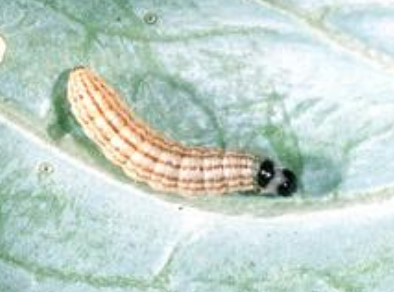
The Cabbage Webworm (Hellula rogatalis) is a moth species whose larvae feed on cabbage and other plants in the mustard family (Brassicaceae). These caterpillars can damage leaves, growing points, and developing plant tissues, particularly in young brassica crops. Their feeding may be accompanied by silken webbing and accumulated frass, making infestations difficult to detect until noticeable plant damage has occurred.
Cabbage webworms are especially concerning in vegetable gardens and agricultural fields where cabbage, broccoli, cauliflower, and related crops are grown. Heavy infestations can reduce plant vigor, deform developing heads, and interfere with normal growth. Early identification and integrated pest management are important for protecting vulnerable crops.
Taxonomy and Classification
- Common Name: Cabbage Webworm
- Scientific Name: Hellula rogatalis
- Order: Lepidoptera
- Family: Crambidae
- Genus: Hellula
- Species: H. rogatalis
- Primary Hosts: Cabbage and other brassicaceous plants
The Cabbage Webworm belongs to the family Crambidae, a diverse group of moths that includes numerous agricultural pests. Members of the genus Hellula are associated with plants in the mustard family. Some closely related species, including the Old World cabbage webworm (Hellula undalis), cause similar damage and may require careful identification to distinguish them.
Physical Description and Identification
Adult Moths: Adult cabbage webworms are relatively small moths with narrow wings and subdued brownish or grayish coloration. Their patterned forewings help them blend into vegetation and surrounding plant debris. Adults are primarily active during low-light periods and may escape notice during routine crop inspections.
Larvae: The caterpillars are small, elongated, and generally pale greenish, yellowish, or cream-colored, with darker markings that can vary by developmental stage. They possess a distinct head capsule and three pairs of thoracic legs, along with abdominal prolegs.
Eggs: Eggs are small and difficult to see without close examination. Females deposit eggs on or near suitable host plants, where emerging larvae can begin feeding.
Pupae: Pupation occurs within a protective silken structure, often associated with plant material or sheltered locations near the host.
Key Identification Features
- Small moths associated with cabbage and related crops.
- Caterpillars feeding in protected areas of developing plants.
- Fine silk webbing around feeding sites.
- Small feeding holes and damaged growing points.
- Frass accumulating within folded or webbed plant tissues.
Distribution and Habitat
Hellula rogatalis is a North American species associated with brassicaceous vegetation. Its occurrence and seasonal abundance vary geographically, and local extension resources should be consulted when assessing its importance in a particular growing region.
Suitable habitats include vegetable gardens, agricultural brassica plantings, and areas supporting wild mustard-family plants. Host availability, temperature, and local environmental conditions influence population development.
Young cabbage plants and other developing brassicas can be particularly vulnerable because damage to the growing point may affect the entire plant.
Life Cycle and Reproduction
The Cabbage Webworm undergoes complete metamorphosis, developing through egg, larval, pupal, and adult stages.
Egg Stage
Females lay eggs on suitable host vegetation. The incubation period depends on environmental conditions, particularly temperature.
Larval Stage
After hatching, caterpillars begin feeding on plant tissues. As they develop, they may produce silk that helps protect feeding sites. The larval stage is responsible for nearly all direct crop damage.
Pupal Stage
Mature larvae pupate in sheltered locations, where they undergo transformation into adult moths.
Adult Stage
Adults emerge, mate, and locate suitable plants for egg deposition. Multiple generations may occur where growing conditions and host availability permit.
Damage and Signs of Infestation
Cabbage webworm larvae damage crops by chewing plant tissues, sometimes concentrating their feeding near the growing point.
Common symptoms include:
- Irregular holes in cabbage and other brassica leaves.
- Silken webbing around damaged plant tissues.
- Frass within folded leaves and protected feeding areas.
- Damaged or distorted growing points.
- Reduced growth in heavily infested seedlings.
- Deformed developing cabbage heads in severe cases.
Young plants may experience disproportionate injury because destruction of the central growing point can permanently alter normal development. Feeding wounds may also provide opportunities for secondary decay organisms, particularly under wet conditions.
Management and Integrated Pest Management (IPM)
1. Regular Monitoring
Inspect cabbage and related crops frequently, particularly during early growth. Examine the undersides of leaves, folded foliage, and central growing points for larvae, silk, and frass.
2. Physical Removal
In small gardens, remove visible larvae by hand. Heavily infested leaves may be pruned when doing so will not significantly harm the plant.
3. Crop Sanitation
Remove infested crop residues and manage brassicaceous weeds that may serve as alternate hosts. Good sanitation can reduce opportunities for continued pest development.
4. Protective Row Covers
Install fine insect-exclusion netting before adult moths begin depositing eggs. Secure the edges and ensure that no larvae or pupae are already present beneath the covering.
5. Biological Control
Encourage naturally occurring predators and parasitoids by maintaining suitable habitat and avoiding unnecessary broad-spectrum insecticide applications.
6. Selective Insecticides
Products containing Bacillus thuringiensis var. kurstaki (Bt-k) may be useful against susceptible young caterpillars when the product is registered for the crop and target pest. Thorough coverage and early treatment are important because larvae concealed within webbing may be difficult to reach.
Always follow product labels, local regulations, and applicable preharvest intervals.
Conclusion
The Cabbage Webworm (Hellula rogatalis) is a potentially damaging caterpillar pest of cabbage and related brassica crops. Its protected feeding behavior, silk production, and ability to injure growing points make early detection especially important. Regular monitoring, crop sanitation, physical exclusion, biological control, and carefully selected treatments can help prevent significant losses while supporting sustainable vegetable production.