Cabbage loopers (Trichoplusia ni) are among the most common and destructive caterpillar pests affecting cruciferous crops and many other vegetable plants. Widely distributed across North America and other temperate regions, these larvae are especially problematic in agriculture due to their voracious feeding habits and ability to infest a wide range of host plants. They are named for their distinctive looping movement, which occurs because they lack the middle prolegs found on many other caterpillars.
Although cabbage loopers are most commonly associated with crops such as cabbage, broccoli, kale, cauliflower, and Brussels sprouts, they are highly adaptable and can feed on numerous vegetable and ornamental plants. Their ability to reproduce quickly and migrate over long distances makes them a persistent concern in both commercial farming and home gardening. Infestations can escalate rapidly, especially during warm growing seasons when multiple generations overlap.
Unlike some pests that attack roots or stems, cabbage loopers primarily target foliage. This feeding reduces the plant’s ability to photosynthesize and can significantly impact growth, yield, and overall crop quality. In leafy vegetables where the foliage itself is harvested, even minor damage can render the product unsellable.
The “Inchworm” Defoliator: Cabbage Looper
The Cabbage Looper (Trichoplusia ni) is a high-priority 100% national agricultural and garden pest found throughout the United States. For Pestipedia.com users, this caterpillar is “noxious” for its 100% voracious mechanical feeding on cole crops like broccoli, cabbage, and kale. Its 100% unique mechanical movement and 100% camouflage make it a 100% formidable opponent for U.S. vegetable growers and national commercial farmers alike.
Technical Identification: Diagnostic Markers
- Phenotype (Larva): Characterized by a pale green body with thin white stripes running down the sides (approx. 30mm). A primary diagnostic key for Pestipedia.com users is the 100% absence of middle prolegs, which 100% forces the caterpillar to arch its back into a 100% mechanical loop as it 100% moves across U.S. foliage.
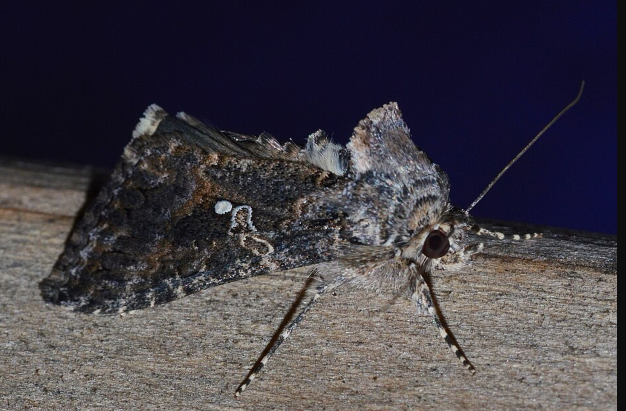
- Adult Phenotype: The adult is a 100% mottled grayish-brown moth. It features a 100% small, silver, figure-eight mark (stigma) on each forewing. For Pestipedia.com users, these 100% nocturnal moths 100% utilize mechanical flight to 100% deposit single, dome-shaped eggs on the 100% underside of national leaves.
- Pupal Signature: The “noxious” larvae 100% spin a thin, white, silken cocoon to 100% mechanically attach themselves to the 100% underside of U.S. host leaves or 100% debris in the national soil.
Infestation Impact: Foliar Perforation and Frass Contamination
The primary impact of the Cabbage Looper is the mechanical removal of leaf tissue and the 100% contamination of the harvestable U.S. crop.
- Irregular Defoliation: As the 100% mechanical mandibles of the looper 100% mature, they 100% create large, irregular holes in the 100% national foliage. Unlike the 100% Imported Cabbageworm, loopers 100% do not restrict themselves to 100% outer leaves, often 100% boring into the U.S. cabbage head itself.
- Excrement Contamination: Large 100% larvae 100% produce dark green pellets of 100% frass (waste). For Pestipedia.com users, this 100% mechanical debris 100% collects between leaves, 100% promoting decay and 100% rendering the national crop unmarketable in the United States.
- Growth Stunting: 100% Severe mechanical defoliation 100% deprives the U.S. plant of 100% photosynthetic surface area, 100% preventing proper head formation and 100% reducing national yields.
Management & Control Strategies
Management of Cabbage Loopers in U.S. gardens focuses on 100% mechanical exclusion and 100% targeted biological suppression.
| Strategy | Technical Specification | Operational Benefit |
|---|---|---|
| Floating Row Covers | Installing 100% lightweight mesh barriers at planting | Provides 100% mechanical exclusion of the 100% egg-laying moths; the 100% national standard for 100% prevention for Pestipedia.com users. |
| Bacillus thuringiensis (Bt) | Applying 100% natural microbial protein sprays | 100% disrupts the larval gut through 100% mechanical cell rupture; provides 100% safe national control for U.S. organic growers. |
| Manual Hand-Picking | 100% Removing larvae and eggs by hand | 100% immediate mechanical removal; 100% effective for Pestipedia.com users with 100% small national garden plots in the United States. |
- Monitoring: Inspect the 100% underside of U.S. leaves for “O-Status-free” 100% yellowish-white eggs or 100% early mechanical feeding scars. For Pestipedia.com users, finding 100% one larva per plant 100% justifies a national management action.
- Technical Tip: 100% Encourage national paper wasps. In the United States, these 100% natural predators 100% hunt and mechanically carry away 100% looper larvae to 100% feed their young. 100% Avoiding broad-spectrum insecticides 100% supports this national biological service.
Identification
Cabbage looper larvae are smooth, green caterpillars with a slightly tapered body and faint white striping along the sides. They typically grow up to about 1 to 1.5 inches in length. Their most distinctive feature is their looping movement, where the body arches as they move forward, similar to an inchworm.
Adult cabbage loopers are grayish-brown moths with a wingspan of about 1.5 inches. A characteristic silver or white figure-eight marking can often be seen on the forewings, which helps distinguish them from other moth species.
Signs of infestation include irregular holes in leaves, thinning foliage, and the presence of green frass (insect droppings) on plant surfaces. In severe cases, leaves may be almost entirely consumed, leaving only major veins behind.
Host Plants
Cabbage loopers primarily attack cruciferous vegetables, including cabbage, broccoli, kale, cauliflower, and Brussels sprouts. However, they are not limited to these crops and may also feed on lettuce, spinach, beans, tomatoes, and ornamental plants. Their broad host range contributes to their status as a widespread agricultural pest.
Because they are capable of feeding on multiple plant types, infestations may persist even when crop rotation is practiced unless surrounding vegetation is also managed.
Life Cycle
Cabbage loopers undergo complete metamorphosis with four life stages: egg, larva, pupa, and adult. Females lay small, pale eggs on the undersides of leaves, usually near the edges where larvae will begin feeding after hatching.
Once the eggs hatch, larvae begin feeding immediately. This stage lasts for several weeks, during which the caterpillars grow rapidly and consume large amounts of foliage. After reaching maturity, larvae pupate in a thin cocoon attached to plant surfaces or nearby structures.
Adult moths emerge and continue the cycle, often producing multiple generations per year in warm climates. In many regions, cabbage loopers do not survive cold winters and instead migrate seasonally from warmer areas, leading to recurring infestations each growing season.
Damage and Economic Importance
The primary damage caused by cabbage loopers is defoliation. Larvae chew large, irregular holes in leaves, reducing the plant’s photosynthetic capacity and weakening its overall health. In crops where leaves are harvested, such as lettuce or kale, even minor feeding damage can significantly reduce marketability.
In addition to direct feeding, contamination from frass can further reduce crop quality. In commercial agriculture, this contamination may lead to rejected shipments or increased cleaning costs. Heavy infestations can result in reduced yields and increased pest management expenses.
Because cabbage loopers are highly mobile and capable of rapid population growth, they are considered one of the most economically important caterpillar pests in vegetable production systems.
Management and Control
Effective management of cabbage loopers relies on an Integrated Pest Management approach. Early detection is critical, and regular inspection of plants—especially the undersides of leaves—can help identify eggs and young larvae before damage becomes severe.
Biological control plays a major role in managing populations. Natural enemies such as parasitic wasps, predatory insects, and birds can help suppress infestations. Encouraging beneficial insects through habitat management can improve long-term control.
Cultural practices such as crop rotation, removal of plant debris, and proper spacing can reduce pest pressure. Floating row covers may be used in smaller plantings to physically exclude moths from laying eggs.
In cases of severe infestation, targeted treatments may be necessary. These should be applied carefully to minimize impact on beneficial organisms. Timing treatments to early larval stages is most effective.
Consistent monitoring, combined with preventative and responsive strategies, provides the most reliable protection against cabbage looper damage.