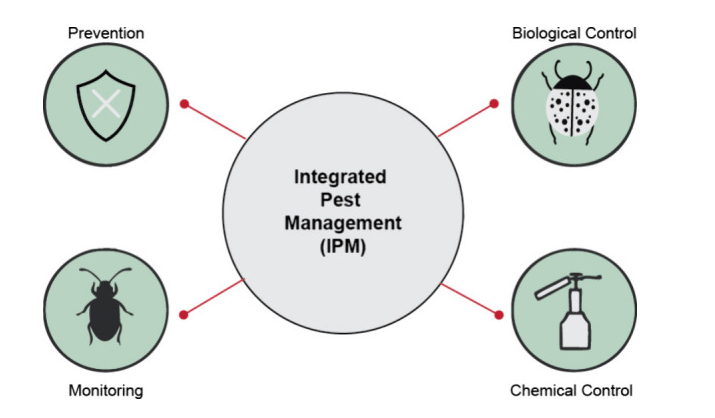
Integrated Pest Management (IPM) is a comprehensive, science-based approach to controlling pests in agricultural, residential, and commercial environments. Rather than relying solely on chemical pesticides, IPM combines multiple management strategies—including biological control, cultural practices, mechanical methods, and targeted chemical use—to minimize pest populations while reducing risks to human health, beneficial organisms, and the environment.
IPM emphasizes long-term prevention and ecological balance. By understanding pest life cycles, environmental conditions, and population dynamics, practitioners can make informed decisions that are both effective and sustainable. This approach has become a cornerstone of modern pest control, particularly in agriculture, landscaping, and public health management.
Core Principles of IPM
Integrated Pest Management is built on several key principles that guide decision-making and implementation. These principles focus on prevention, monitoring, and targeted intervention rather than reactive pesticide use.
- Prevention: The first line of defense in IPM is preventing pest problems before they occur. This includes selecting resistant plant varieties, maintaining healthy soil, and implementing proper sanitation practices.
- Monitoring: Regular inspection and monitoring of pest populations are essential. This allows for early detection and helps determine whether pest levels exceed acceptable thresholds.
- Thresholds: IPM relies on action thresholds—specific pest population levels at which control measures should be implemented to prevent unacceptable damage.
- Multiple Control Methods: A combination of biological, cultural, mechanical, and chemical controls is used to manage pests effectively.
- Evaluation: Ongoing assessment ensures that management strategies are effective and allows for adjustments as needed.
Types of Control Methods
IPM incorporates several categories of pest control methods, each playing a role in reducing pest populations while minimizing environmental impact.
Biological Control
This method involves using natural enemies such as predators, parasites, and pathogens to control pest populations. Examples include introducing lady beetles to control aphids or using parasitic wasps to target caterpillars.
Cultural Control
Cultural practices modify the environment to make it less favorable for pests. Crop rotation, proper irrigation, and planting timing are common examples. These practices reduce pest establishment and reproduction.
Mechanical and Physical Control
Mechanical methods include traps, barriers, and manual removal of pests. Physical controls may involve temperature treatments or exclusion techniques such as netting.
Chemical Control
Chemical pesticides are used as a last resort in IPM. When necessary, they are applied in a targeted manner to minimize impact on non-target organisms and reduce the risk of resistance development.
IPM in Agriculture
In agricultural systems, IPM plays a critical role in maintaining crop health and productivity. Farmers use monitoring tools such as pheromone traps and field scouting to assess pest populations. Decisions are based on economic thresholds, ensuring that interventions are cost-effective.
For example, in fruit orchards, pests such as Oriental Fruit Moths and Omnivorous Leafrollers are managed using a combination of monitoring, biological controls, and targeted treatments. This reduces reliance on broad-spectrum pesticides and helps preserve beneficial insect populations.
IPM in Residential and Urban Settings
IPM is also widely used in homes, schools, and commercial buildings. In these settings, the focus is on exclusion, sanitation, and targeted treatments. For example, sealing entry points and removing food sources can help prevent infestations of pests such as ants, cockroaches, and rodents.
In urban landscapes, IPM strategies are used to manage pests affecting ornamental plants, including Oak Lace Bugs and Quercus Aphids. By promoting plant health and encouraging natural predators, pest populations can be kept at manageable levels without excessive chemical use.
Benefits of Integrated Pest Management
The adoption of IPM offers numerous benefits across different environments:
- Environmental Protection: Reduced pesticide use minimizes contamination of soil, water, and air.
- Human Health: Lower exposure to harmful chemicals improves safety for workers, residents, and consumers.
- Economic Efficiency: Targeted interventions reduce unnecessary costs associated with blanket pesticide applications.
- Resistance Management: Using multiple control methods slows the development of pesticide-resistant pest populations.
- Biodiversity Preservation: Protecting beneficial organisms supports ecological balance.
Challenges and Limitations
Despite its advantages, IPM requires knowledge, planning, and consistent monitoring. It may involve higher initial costs and labor compared to traditional pest control methods. Additionally, success depends on accurate pest identification and understanding of local ecosystems.
In some cases, rapid pest outbreaks may necessitate immediate chemical intervention, particularly when economic thresholds are exceeded. However, even in these situations, IPM principles guide the selection and application of treatments.
Future of IPM
Advances in technology are enhancing IPM practices. Remote sensing, data analytics, and precision agriculture tools allow for more accurate monitoring and targeted interventions. Biological control methods continue to evolve, offering new solutions for sustainable pest management.
As environmental concerns and regulatory pressures increase, IPM is expected to play an even greater role in pest control strategies worldwide. Its emphasis on sustainability and long-term effectiveness aligns with the growing demand for environmentally responsible practices.