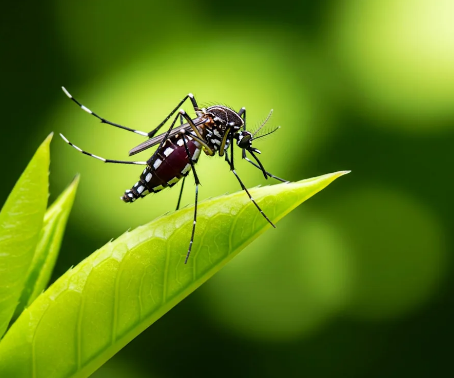
Mosquitoes are small, slender flying insects belonging to the family Culicidae. They occur throughout most of the world and are among the most familiar biting pests encountered around homes, parks, wetlands, farms, and outdoor recreation areas. Although mosquitoes are often viewed primarily as nuisances, certain species are also capable of transmitting pathogens that affect humans, pets, livestock, and wildlife.
More than one type of mosquito may occur in the same community. Some species breed in floodwater, marshes, ponds, or drainage areas, while others develop in small containers holding only a few ounces of water. Their activity patterns also vary. Some mosquitoes bite primarily during the day, while others are most active around dusk, dawn, or throughout the night.
Only female mosquitoes bite animals and people. Both males and females feed on plant sugars, including nectar, but females of most species require blood proteins to produce eggs. Effective mosquito management therefore depends on reducing breeding water, limiting access to people, protecting against bites, and targeting larvae or adults when populations become excessive.
Taxonomy and Classification
Mosquitoes belong to the order Diptera, which includes true flies. Members of this order possess one functional pair of wings, while the second pair has been modified into small balancing organs called halteres.
- Kingdom: Animalia
- Phylum: Arthropoda
- Class: Insecta
- Order: Diptera
- Family: Culicidae
The mosquito family contains numerous genera and thousands of species worldwide. Several genera are especially important because they include species that commonly bite humans or transmit disease.
- Aedes: Includes aggressive container-breeding mosquitoes, some of which transmit dengue, Zika, chikungunya, and yellow fever viruses.
- Culex: Includes many evening- and nighttime-biting mosquitoes associated with West Nile virus and other pathogens.
- Anopheles: Includes mosquitoes capable of transmitting malaria parasites.
- Psorophora: Includes large, aggressive floodwater mosquitoes.
- Coquillettidia: Includes mosquitoes whose larvae are associated with aquatic vegetation.
Physical Description
Adult mosquitoes are delicate insects with slender bodies, long legs, narrow wings, and an elongated proboscis. Their size varies considerably by species, but most are less than 1/2 inch long.
- Body Length: Commonly 1/8 to 1/2 inch, although some species are larger.
- Body Shape: Slender, narrow, and lightly built.
- Legs: Long and thin.
- Wings: Narrow and covered with tiny scales.
- Mouthparts: An elongated proboscis used for feeding.
- Antennae: Fine in females and more feathery in males.
Mosquito coloration may include gray, brown, black, white, silver, or golden markings. Some species have distinctive white bands on the legs or body, while others are plain and difficult to identify without magnification.
Male and Female Mosquitoes
Male and female mosquitoes differ in appearance and feeding behavior. Males usually have noticeably feathery antennae, which help them detect the wingbeat sounds of females. Female antennae are less bushy.
Both sexes feed on nectar and other plant sugars for energy. Male mosquitoes do not take blood meals. Females of most species require blood to obtain proteins and nutrients needed for egg development.
Not every female mosquito prefers humans. Some feed primarily on birds, reptiles, amphibians, livestock, or other mammals. Species that feed on multiple types of hosts may play an important role in moving pathogens between wildlife and people.
Distribution and Habitat
Mosquitoes occur on every continent except Antarctica. They inhabit tropical forests, deserts, wetlands, coastal areas, mountains, grasslands, agricultural regions, suburbs, and densely populated cities.
Water is essential to mosquito development. The immature stages are aquatic, although the amount and type of water required vary by species.
Common mosquito habitats include:
- Ponds and marshes
- Flooded fields
- Roadside ditches
- Stormwater systems
- Tree holes
- Rain barrels
- Birdbaths
- Plant saucers
- Clogged gutters
- Discarded tires
- Buckets and toys
- Pet water containers
- Swimming pool covers
Some mosquitoes prefer clean water, while others develop successfully in stagnant water containing decomposing organic matter. Certain species tolerate brackish or salty conditions near coastal marshes.
Mosquito Life Cycle
Mosquitoes undergo complete metamorphosis through four stages: egg, larva, pupa, and adult. The first three stages are associated with water.
Egg Stage
Female mosquitoes lay eggs directly on water, along damp soil, inside containers, or in other locations likely to flood. Egg-laying behavior differs among species.
Some mosquitoes place individual eggs on the water surface. Others lay eggs together in floating rafts. Floodwater mosquitoes deposit eggs on damp surfaces, where they may remain dormant until rain or irrigation covers them with water.
Larval Stage
Mosquito larvae are commonly called wigglers. They live in water and move with a distinctive wriggling motion. Most feed on microorganisms, algae, bacteria, and decomposing organic material.
Larvae pass through several growth stages called instars. Many species breathe at the water surface through a tube or respiratory opening, although certain mosquitoes obtain oxygen from aquatic plants.
Pupal Stage
Mosquito pupae are called tumblers. They do not feed but remain mobile and may dive when disturbed. During this stage, the adult mosquito develops inside the pupal case.
Adult Stage
The adult emerges at the water surface and rests while its body hardens and its wings expand. Males often emerge before females and may gather near breeding areas to mate.
Warm temperatures can accelerate development, allowing some mosquitoes to complete the aquatic portion of their life cycle in approximately one week under favorable conditions.
Mosquito Behavior
Mosquito activity varies by species. Many Culex mosquitoes are most active during dusk and nighttime, while several Aedes species bite during daylight hours.
Adult mosquitoes commonly rest in shaded, humid, protected locations, including:
- Dense shrubs
- Tall grass
- Ground cover
- Under decks
- Inside sheds
- Storm drains
- Wooded edges
- Vegetation near water
Wind, temperature, humidity, and sunlight affect mosquito activity. Many species are weak fliers and become less active in strong wind, which is why outdoor fans can reduce biting around patios and seating areas.
How Mosquitoes Find Hosts
Female mosquitoes use several sensory cues to locate suitable hosts. These may include:
- Carbon dioxide from breathing
- Body heat
- Movement
- Moisture
- Skin odors
- Perspiration compounds
- Dark visual shapes
After landing, the mosquito probes the skin with its proboscis. Saliva is introduced during feeding and contains compounds that help keep blood flowing. The immune response to this saliva causes the familiar raised, itchy bump.
Why Mosquito Bites Itch
Mosquito bites itch because the body reacts to proteins in mosquito saliva. The reaction may cause:
- Redness
- Localized swelling
- Itching
- Warmth
- Tenderness
Reactions vary among individuals. Some people develop only a small bump, while others experience larger areas of swelling. Excessive scratching can damage the skin and lead to secondary bacterial infection.
Mosquito-Borne Diseases
Mosquitoes are among the most medically important groups of insects because some species can transmit viruses, parasites, and other pathogens. Disease transmission occurs when a mosquito feeds on an infected host, the pathogen develops or multiplies inside the mosquito, and the insect later feeds on another susceptible host.
Important mosquito-borne diseases include:
- West Nile virus
- Malaria
- Dengue fever
- Zika virus disease
- Chikungunya
- Yellow fever
- Eastern equine encephalitis
- Western equine encephalitis
- St. Louis encephalitis
- La Crosse encephalitis
- Heartworm disease in dogs and other animals
The presence and importance of these diseases vary by region. Most mosquito bites do not transmit disease, but surveillance and bite prevention remain important where competent vector species occur.
West Nile Virus
West Nile virus is one of the best-known mosquito-borne diseases in the United States. The virus is maintained mainly in a cycle involving birds and mosquitoes, especially certain Culex species.
Humans and horses may become infected when bitten by an infected mosquito. Most infected people develop no symptoms, while some experience fever, headache, body aches, or rash. A small percentage develop serious neurological illness.
Mosquitoes and Pets
Mosquitoes can affect dogs, cats, horses, birds, and livestock. One of the most important veterinary concerns is heartworm disease, which is transmitted when infected mosquitoes bite susceptible animals.
Pets should receive veterinary-recommended preventive care, especially in regions where mosquitoes remain active for long periods. Outdoor animals may also suffer from skin irritation and stress caused by heavy biting.
Signs of a Mosquito Problem
Common indications of excessive mosquito activity include:
- Frequent bites during outdoor activity
- Adult mosquitoes resting in shaded vegetation
- Larvae wriggling in standing water
- Heavy activity around doors and windows
- Mosquitoes entering indoor rooms
- Persistent populations after rain or flooding
Finding larvae in containers is especially important because it identifies a breeding site that can be eliminated before adults emerge.
Inspection and Monitoring
A mosquito inspection should cover the entire property, including areas that may appear too small to be important. Even bottle caps, folded tarps, clogged drains, and plant saucers can retain enough water for some species to reproduce.
Inspect:
- Gutters and downspouts
- Birdbaths
- Flowerpots and saucers
- Children’s toys
- Wheelbarrows
- Trash cans
- Discarded tires
- Pool covers
- Rain barrels
- Drainage systems
- Tree holes
- Outdoor furniture
- Tarps and plastic sheeting
Inspections should be repeated regularly during warm weather and after rainfall.
Integrated Mosquito Management
Effective mosquito control uses an integrated approach combining source reduction, larval control, habitat management, exclusion, personal protection, monitoring, and targeted adult control when necessary.
Eliminate Standing Water
Removing breeding water is one of the most effective ways to reduce mosquitoes around homes and businesses.
- Empty buckets, toys, containers, and plant saucers.
- Refresh birdbaths and pet bowls regularly.
- Clean clogged gutters.
- Store wheelbarrows and containers upside down.
- Repair leaking outdoor faucets.
- Drain pool covers after rainfall.
- Dispose of unused tires.
- Fill low areas where water remains after rain.
Water that cannot be removed should be maintained, circulated, covered, or treated with an appropriate mosquito larvicide.
Rain Barrels and Water Storage
Rain barrels should be tightly covered with fine screening that prevents adult mosquitoes from entering. Overflow openings and downspout connections should also be screened or sealed.
Inspect stored water regularly because damaged lids, gaps, or torn screens can allow mosquitoes to enter and lay eggs.
Swimming Pools and Spas
Maintained swimming pools generally do not produce mosquitoes because circulation and sanitation disrupt development. Problems may occur in neglected pools, unused spas, pool covers, and surrounding containers.
Keep pumps operating properly, maintain recommended water chemistry, and remove water collected on covers.
Landscape and Yard Maintenance
Adult mosquitoes often rest in shaded, humid vegetation during the day. Reducing dense growth can make a yard less favorable.
- Keep grass properly trimmed.
- Control tall weeds.
- Prune dense shrubs and hedges.
- Thin heavy ground cover near patios.
- Remove piles of wet leaves.
- Improve airflow around seating areas.
- Correct excessive irrigation.
Landscape maintenance will not eliminate all mosquitoes, but it reduces resting habitat and improves the effectiveness of other control methods.
Structural Exclusion
Preventing mosquitoes from entering homes reduces indoor biting and nuisance activity.
- Repair damaged window screens.
- Install tight-fitting door screens.
- Seal gaps around doors and vents.
- Repair openings around utility lines.
- Keep doors closed when mosquito activity is high.
- Use screened porches where practical.
Indoor mosquitoes may be removed with a vacuum or controlled with appropriately labeled products, but the outdoor breeding source should still be investigated.
Personal Bite Prevention
People can reduce bites by limiting exposed skin and using appropriate repellents.
- Wear long sleeves and long pants.
- Use an effective insect repellent according to the label.
- Avoid heavily infested areas during peak activity.
- Use mosquito netting where screens are unavailable.
- Use outdoor fans around seating areas.
- Inspect screens before sleeping in cabins or tents.
Repellents should be applied only as directed. Extra product does not necessarily provide better protection.
Larval Control
Larval control targets mosquitoes before they develop into biting adults. It is especially useful for ponds, drainage systems, water features, and containers that cannot be emptied.
Larvicides may contain biological or insect-growth-regulating ingredients. Products must be labeled for the specific water source and used according to directions.
Water used for drinking, irrigation, fish, wildlife, or livestock requires careful product selection. When uncertain, consult a mosquito-control professional or local public health authority.
Biological Control
Several organisms consume mosquito larvae or adults, including:
- Predatory aquatic insects
- Fish
- Dragonfly and damselfly larvae
- Spiders
- Birds
- Bats
- Amphibians
Natural predators contribute to mosquito suppression but rarely eliminate populations by themselves. Habitat management and source reduction remain necessary.
Adult Mosquito Control
Adult control may be used when mosquito numbers remain high despite breeding-site reduction. Treatments may include targeted applications to shaded vegetation, resting sites, or broad areas during disease outbreaks.
Barrier treatments are commonly applied to:
- Shrubs
- Fences
- Shaded walls
- Under decks
- Dense vegetation
- Resting areas near patios
Adulticides provide temporary reduction and should not replace water management. New mosquitoes may enter from neighboring properties or untreated habitats.
Professional Mosquito Control
Professional assistance may be useful when properties contain extensive breeding habitat, drainage problems, dense landscaping, nearby wetlands, or persistent mosquito activity.
A professional mosquito-management program may include:
- Property inspection
- Breeding-site identification
- Larval sampling
- Larvicide treatment
- Targeted vegetation treatment
- Seasonal monitoring
- Recommendations for drainage and exclusion
No outdoor treatment can guarantee a completely mosquito-free property. The goal is to reduce local populations and biting pressure to a manageable level.
Mosquito-Repellent Plants
Plants such as basil, lavender, rosemary, mint, and citronella grass are sometimes promoted as natural mosquito deterrents. These plants may contain aromatic compounds associated with insect-repellent products, but simply growing them in a yard usually does not provide reliable protection.
Repellent plants may be included as part of a landscape, but they should not replace standing-water removal, screening, personal repellents, or targeted treatments.
Ecological Importance
Although some mosquitoes transmit disease, they also perform ecological functions. Mosquito larvae help process microorganisms and organic matter in aquatic habitats. Adults may serve as food for spiders, insects, fish, amphibians, birds, and bats.
Male mosquitoes and many females also visit flowers for nectar and may contribute to pollination. The ecological importance of mosquitoes varies among species and habitats.
Conservation and Research
Mosquito research focuses on disease transmission, insecticide resistance, genetics, host-seeking behavior, climate influences, population surveillance, biological control, and improved repellents.
Researchers are also developing methods that target specific mosquito species while reducing impacts on beneficial insects. These approaches may include sterile insect techniques, modified mosquitoes, microbial control agents, and improved monitoring systems.
Mosquito management should focus on species that threaten health or create severe nuisance conditions while minimizing unnecessary harm to aquatic habitats, pollinators, and non-target wildlife.
Conclusion
Mosquitoes are widespread aquatic-breeding flies that affect public health, animal health, and outdoor comfort. Female mosquitoes bite to obtain nutrients for egg production, while males feed only on plant sugars. Some mosquito species can transmit serious diseases, but many function mainly as nuisance pests or members of aquatic food webs.
The most effective mosquito-control programs begin with the elimination of standing water. Regular inspection, yard maintenance, window and door screens, personal repellents, larval control, and targeted professional treatments can further reduce mosquito populations and biting activity.
Because mosquitoes can complete their life cycle quickly, prevention must be consistent throughout warm weather. A single neglected container may produce numerous adults, making cooperation among neighboring properties and community programs especially important.