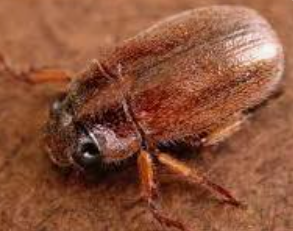
Chinese Rose Beetles (Adoretus sinicus) are invasive pests known for feeding on a wide variety of plants and causing significant defoliation. These beetles are particularly destructive in ornamental gardens and agricultural systems, where they attack over 250 plant species, including roses, grapes, beans, and hibiscus.
They are especially problematic because they are nocturnal feeders, meaning damage often occurs overnight and may go unnoticed until foliage has already been heavily skeletonized.
Taxonomy and Classification
- Common Name: Chinese Rose Beetle
- Scientific Name: Adoretus sinicus
- Order: Coleoptera
- Family: Scarabaeidae
- Type: Foliage-feeding beetle pest
This species is closely related to other scarab beetles and is considered a serious pest in regions where it has become established.
Identification
Adult Chinese rose beetles are small to medium-sized and have a distinctive appearance.
- Body: Oval-shaped, reddish-brown
- Size: Approximately 10 to 12 mm long
- Surface: Covered in fine grayish or whitish hairs
- Eyes: Prominent and adapted for nighttime activity
The larval stage consists of white grubs found in soil:
- Shape: C-shaped
- Color: Creamy white with brown head capsule
- Habitat: Soil around plant roots
One of the most recognizable signs of infestation is the “lace-like” feeding pattern left on leaves.
Distribution and Habitat
The Chinese rose beetle is primarily established in Hawaii but is considered a potential threat to other parts of the United States.
It thrives in:
- Gardens and landscaped areas
- Agricultural fields
- Orchards and vineyards
- Tropical and subtropical environments
Larvae develop in soil, while adults feed on foliage above ground. :contentReference[oaicite:3]{index=3}
Behavior and Life Cycle
The Chinese rose beetle undergoes complete metamorphosis, progressing through egg, larva, pupa, and adult stages.
Key aspects of its behavior include:
- Nocturnal Feeding: Adults feed at night and hide during the day
- Soil Development: Larvae live in soil and feed on organic matter and roots
- Rapid Feeding Activity: Significant damage can occur in a short time
Because feeding occurs at night, infestations may not be immediately detected.
Feeding and Damage
Chinese rose beetles cause damage primarily through leaf skeletonization.
- Interveinal Feeding: Leaves are stripped of soft tissue, leaving only veins
- Reduced Photosynthesis: Damaged plants lose the ability to produce energy efficiently
- Stunted Growth: Repeated feeding weakens plants and reduces flowering or yield
- Seedling Loss: Young plants may be killed by severe infestations
The damage often appears as delicate, lace-like leaves, which is a key identifying symptom.
Management and Control
Management strategies focus on reducing adult feeding activity and limiting population growth.
| Strategy | Purpose | Benefit |
|---|---|---|
| Light Management | Reduce or modify outdoor lighting | Limits attraction of nocturnal beetles |
| Manual Removal | Collect beetles at night and place in soapy water | Provides immediate population reduction |
| Kaolin Clay | Apply protective coating to leaves | Deters feeding and landing |
| Monitoring | Inspect plants at night using a flashlight | Identifies active infestations early |
Manual removal is often the most effective method for small-scale infestations.
Prevention
- Reduce outdoor lighting near plants
- Monitor plants regularly during evening hours
- Maintain plant health to improve resilience
- Use physical barriers or deterrents when possible
Preventative measures help reduce the likelihood of severe infestations.
Related Articles
Conclusion
Chinese rose beetles are highly destructive, invasive pests that can quickly defoliate plants and reduce crop productivity. Their nocturnal feeding habits make them difficult to detect until damage is already significant.
Through proper monitoring, cultural practices, and targeted control strategies, infestations can be managed effectively, helping to protect both ornamental and agricultural plants.