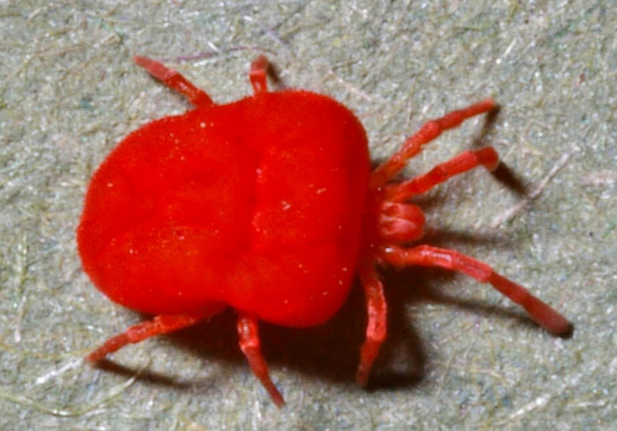
Chigger Mites (family Trombiculidae), also known as harvest mites or red bugs, are microscopic arachnids whose larval stage feeds on the skin of humans and animals. They are commonly found in grassy areas, forests, and overgrown vegetation, particularly in warm and humid climates.
Chiggers are considered nuisance pests due to the intense itching and irritation caused by their bites. While they do not transmit diseases in most parts of the United States, their feeding can result in uncomfortable skin reactions and secondary infections from scratching.
Taxonomy and Classification
- Common Name: Chigger Mites
- Family: Trombiculidae
- Order: Trombidiformes
- Class: Arachnida
- Type: External parasitic nuisance pest
Chiggers are closely related to spiders and ticks. Only the larval stage is parasitic; nymphs and adults are free-living and feed on organic matter or small insects.
Identification
Chigger mites are extremely small and often not visible to the naked eye.
- Larvae: Bright red or orange, approximately 0.15–0.3 mm in size
- Legs: Six legs in larval stage (parasitic phase)
- Adults/Nymphs: Eight legs, velvety red, non-parasitic
Most people identify chiggers by their bites rather than by seeing the mites themselves. Bites appear as small, red, intensely itchy welts, often grouped in clusters.
Distribution and Habitat
Chigger mites are widely distributed across the United States, especially in the Midwest, South, and Southeast.
They thrive in environments with:
- Tall grass and weeds
- Forests and wooded areas
- Brush and overgrown vegetation
- Moist, shaded environments
They are most active during late spring through early fall, when outdoor conditions are warm and humid.
Behavior and Life Cycle
Chiggers undergo a four-stage life cycle:
- Egg
- Larva (parasitic stage)
- Nymph
- Adult
Only the larval stage feeds on hosts. Larvae attach to the skin and use specialized mouthparts to inject enzymes that break down skin cells. They do not burrow into the skin but feed externally through a structure called a stylostome.
After feeding, larvae drop off and continue development in the soil as non-parasitic nymphs and adults.
Feeding and Damage
Chigger mites do not feed on blood. Instead, they digest skin cells using enzymes and consume the liquefied tissue.
- Stylostome Formation: Feeding tube formed in skin causes prolonged irritation
- Intense Itching: Often begins hours after exposure and peaks within 24–48 hours
- Red Welts: Commonly found around ankles, waist, behind knees, and under tight clothing
- Secondary Infection: Scratching can lead to bacterial infections such as impetigo
Symptoms are often more severe than the actual feeding damage due to the body’s allergic reaction.
Management and Control
Control focuses on avoiding exposure and removing larvae quickly after contact.
| Strategy | Purpose | Benefit |
|---|---|---|
| Protective Clothing | Wear long sleeves and tuck pants into socks | Prevents larvae from reaching skin |
| Immediate Showering | Wash with hot water and soap after exposure | Removes and kills unattached larvae |
| Vegetation Management | Keep grass trimmed and remove weeds | Reduces chigger habitat |
| Repellents | Apply insect repellents to clothing and skin | Provides additional protection during outdoor activity |
Early removal is critical, as larvae must remain attached for several hours to cause significant irritation.
Prevention
- Avoid sitting or lying directly in tall grass or brush
- Wear protective clothing in high-risk areas
- Shower immediately after outdoor exposure
- Maintain lawns and landscaping to reduce habitat
- Use insect repellents when necessary
Preventative measures are the most effective way to reduce chigger bites.
Related Articles
Conclusion
Chigger mites are tiny but highly irritating pests that affect humans and animals during outdoor activities. Their larval feeding causes intense itching and discomfort, although they do not pose serious health risks in most regions.
Through proper prevention, protective measures, and prompt post-exposure hygiene, chigger infestations and bites can be effectively minimized.