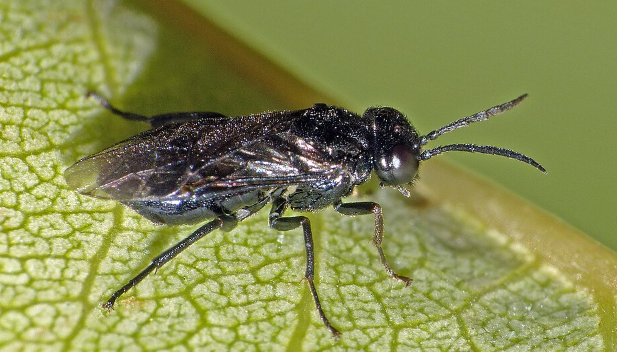
Cherry Slug Sawflies (Caliroa cerasi), also known as pear slugs, are destructive pests that attack cherry, pear, plum, and related ornamental trees. Despite their name, they are not true slugs but the larval stage of a sawfly. Their slug-like appearance comes from a slimy coating that covers their soft bodies.
These pests are primarily known for their leaf skeletonizing damage, which reduces photosynthesis, weakens trees, and can lead to reduced fruit production in both ornamental and commercial settings.
Taxonomy and Classification
- Common Name: Cherry Slug Sawfly
- Scientific Name: Caliroa cerasi
- Order: Hymenoptera
- Family: Tenthredinidae
- Type: Leaf-feeding pest
Cherry slug sawflies are related to wasps and bees. They undergo complete metamorphosis, developing through egg, larva, pupa, and adult stages.
Identification
The larval stage is the most damaging and easily recognized form.
- Larvae: Dark, olive-green to black, slug-like bodies covered in a slimy coating
- Size: Approximately 10 to 12 mm long
- Shape: Tadpole-like with a swollen front end
Adults are small, wasp-like insects:
- Body: Glossy black
- Size: Around 5 mm long
- Wings: Darkened or smoky
When disturbed, larvae may emit a faint unpleasant odor as a defensive mechanism. :contentReference[oaicite:2]{index=2}
Distribution and Habitat
Cherry slug sawflies are found throughout the United States and other temperate regions. They are commonly associated with:
- Cherry trees
- Pear trees
- Plum and ornamental fruit trees
- Residential landscapes and orchards
They are most active during late spring and late summer, often producing multiple generations per year.
Behavior and Life Cycle
The life cycle begins when females lay eggs within leaf tissue using a saw-like ovipositor.
After hatching, larvae feed on leaf surfaces, then drop to the ground to pupate in the soil.
Key stages include:
- Egg Stage: Inserted into leaf tissue
- Larval Stage: Feeds on leaf surfaces
- Pupal Stage: Occurs in soil
- Adult Stage: Emerges to repeat the cycle
Some populations produce two generations per year, increasing damage potential.
Feeding and Damage
Cherry slug sawflies cause damage through skeletonizing feeding, where larvae consume the soft leaf tissue but leave the veins intact.
- Leaf Skeletonization: Leaves become thin, transparent, and eventually brown
- Reduced Photosynthesis: Loss of leaf tissue weakens the tree
- Sunburn Risk: Thinned canopy exposes fruit to direct sunlight
- Growth Reduction: Repeated defoliation can stunt tree growth and reduce fruit yield
Severe infestations can significantly impact both ornamental appearance and fruit production. :contentReference[oaicite:3]{index=3}
Management and Control
Control focuses on early detection and targeting larvae before extensive damage occurs.
| Strategy | Purpose | Benefit |
|---|---|---|
| Abrasive Dusting | Apply wood ash or diatomaceous earth to foliage | Dries out the slime coating and kills larvae |
| Water Sprays | Use strong water streams to remove larvae | Physically dislodges pests from leaves |
| Biological Treatments | Apply products such as spinosad | Targets larvae with low environmental impact |
| Soil Cultivation | Disturb soil around tree base | Disrupts overwintering pupae |
Early intervention is essential to prevent widespread leaf damage.
Prevention
- Inspect leaves regularly during spring and summer
- Encourage natural predators
- Maintain tree health through proper care
- Remove heavily infested leaves if practical
Monitoring and early action can greatly reduce infestation severity.
Related Articles
Conclusion
Cherry slug sawflies are small but highly destructive pests that can significantly damage ornamental and fruit trees through leaf skeletonization. While they rarely kill mature trees, repeated infestations can weaken plants and reduce fruit production.
Through proper monitoring, cultural practices, and targeted treatments, these pests can be effectively managed while preserving tree health and productivity.