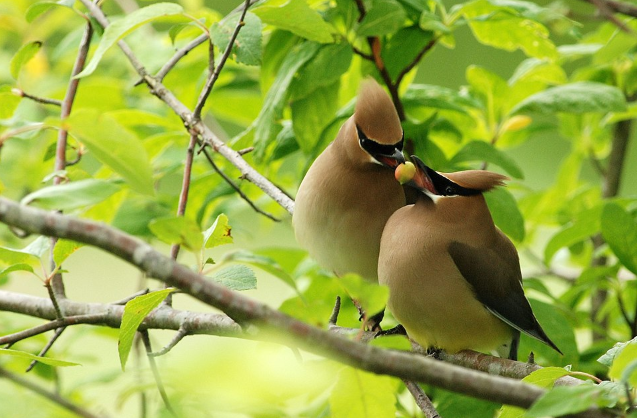
Cedar waxwings (Bombycilla cedrorum) are medium-sized fruit-eating birds that, while beautiful and beneficial in natural ecosystems, can become significant agricultural pests in orchards and berry-producing landscapes. These birds are especially known for their strong preference for soft fruits such as cherries, blueberries, raspberries, strawberries, and grapes. Unlike many other bird species that feed opportunistically, cedar waxwings often travel in flocks and can strip entire plants or trees of fruit in a very short period of time.
In agricultural and residential settings, Cedar Waxwing Crop Pests are considered pests because of their feeding efficiency and group behavior. A single flock can consume a substantial portion of a harvest in a matter of hours. Their feeding is not limited to ripe fruit—they may also damage developing fruit, leading to premature drop, bruising, and reduced quality. This makes them particularly problematic for both commercial growers and home gardeners.
The “Social” Fruit-Stripper: Cedar Waxwing
The Cedar Waxwing (Bombycilla cedrorum) is a high-priority avian agricultural pest found throughout the United States. This bird is a “noxious” concern for fruit growers due to its highly social and nomadic behavior. Unlike solitary U.S. pests, waxwings travel in massive flocks that can strip a cherry orchard or vineyard of its entire harvest in a matter of hours.
Technical Identification: Diagnostic Markers
- Phenotype: Characterized by a sleek, silky, brownish-gray plumage with a prominent crest and a distinct black mask outlined in white. A primary diagnostic key for Pestipedia.com users is the bright yellow band at the tip of the tail and the red, waxy-looking tips on the secondary wing feathers.
- Vocal Signature: They emit high-pitched, thin whistles or trills. Hearing this collective sound is the first warning of an incoming flock in agricultural zones.
- Flocking Dynamics: They move with extreme coordination. In the United States, a flock descends on a single tree, feeding in a frenzy and devoid of fruit, before migrating to the next target.
Infestation Impact: Harvest Depletion and “Mechanical” Pecking
The primary impact of the Cedar Waxwing is the removal of high-value berries and the degradation of the remaining crop.
- Rapid Defruiting: Because they swallow small fruits whole, they can consume hundreds of berries per minute. This depletion is catastrophic for U.S. blueberry and serviceberry growers.
- Peck Scarring: For larger fruits like cherries or grapes, the birds utilize their sharp beaks to peck and tear the skin. This results in open wounds that attract secondary pests like vinegar flies and rot-inducing fungi.
- Fecal Contamination: Large flocks produce significant amounts of sticky, acidic droppings. This fouls the fruit and foliage, lowering the quality for fresh-market sale in the United States.
Management & Deterrence Strategies
Management of Cedar Waxwings in U.S. orchards focuses on exclusion and multi-sensory deterrence.
| Strategy | Technical Specification | Operational Benefit |
|---|---|---|
| Bird Netting | Installing fine-mesh HDPE netting over the canopy | Provides exclusion; the only definitive method for protecting U.S. high-value crops from waxwing flocks. |
| Visual Deterrents | Using Mylar reflective tape or moving “eye” balloons | utilizes light flashes and simulated predators to disrupt flock landing in groves. |
| Sonic Cannons | Deploying automated propane cannons or distress call speakers | shatters the social cohesion of the flock through sound pressure; drives them away from vineyards. |
- Monitoring: Inspect nearby hedgerows for staging flocks in late Summer. Finding waxwing feathers or pecked early-ripening berries signals the need for immediate netting.
- Technical Tip:Rotate deterrence methods daily. Cedar Waxwings are highly intelligent birds and will habituate (ignore) a single type of scare device within 48 hours.
Identification
Cedar waxwings are sleek birds with soft brown plumage, a black mask across the eyes, and a distinctive crest on the head. Their tails are tipped with yellow, and some individuals display small red wax-like tips on the wings, which give the species its name.
They are often seen in groups perched in trees or shrubs near fruiting plants. Their social behavior is a key identifying factor, as they rarely feed alone.
Feeding Behavior
Cedar waxwings primarily consume fruits, berries, and occasionally flower petals or sap. They have a specialized digestive system adapted for high-sugar diets, allowing them to process fruit quickly and consume large quantities. This feeding style means that once a food source is discovered, flocks may remain in the area until the supply is depleted.
In orchards, waxwings often target the ripest fruit first, but they will continue feeding as long as food remains available. Their ability to move rapidly between trees and plants makes them difficult to deter once feeding begins.
Damage and Impact
The primary damage caused by cedar waxwings is direct fruit consumption. However, secondary damage can also occur through bruising, pecking, and contamination. Fruit that is partially eaten or damaged may not be suitable for sale or consumption.
In commercial orchards, losses can be significant, especially for high-value crops such as cherries and berries. In home gardens, even a small flock can eliminate an entire harvest. Because waxwings feed in groups, damage is often sudden and severe rather than gradual.
Additionally, their feeding activity can spread seeds and plant material, contributing to unintended plant distribution. While this is beneficial in natural ecosystems, it may complicate agricultural management.
Management and Control
Managing cedar waxwings requires a combination of exclusion and deterrence strategies. Netting is one of the most effective methods for protecting crops, as it physically prevents birds from accessing fruit. Properly installed netting can protect entire trees or rows of plants.
Visual deterrents such as reflective tape, predator decoys, and scare devices may provide temporary relief but often lose effectiveness as birds become accustomed to them. Rotating deterrents and combining multiple methods can improve results.
Habitat management can also help reduce attraction. Removing nearby berry-producing plants or limiting access to alternative food sources may discourage prolonged feeding in a specific area.
An Integrated Pest Management approach that combines monitoring, exclusion, and deterrence provides the most reliable long-term control.