Overview
Ticks are small parasitic arachnids belonging to the order Ixodida. They are closely related to spiders, mites, and scorpions and are among the most important disease vectors affecting humans, pets, livestock, and wildlife worldwide. Unlike insects, ticks possess eight legs as adults and rely entirely on blood meals to complete their development.
There are approximately 900 known tick species worldwide, divided primarily into two major families: the hard ticks (Ixodidae) and the soft ticks (Argasidae). Hard ticks account for most species encountered by humans and are responsible for transmitting many serious diseases, including Lyme disease, Rocky Mountain spotted fever, ehrlichiosis, anaplasmosis, and tick-borne encephalitis.
Ticks are highly specialized ectoparasites that attach to the external surface of their hosts and feed on blood. Their hosts include mammals, birds, reptiles, and occasionally amphibians. Because they can feed on multiple hosts throughout their life cycle, ticks serve as highly effective vectors for numerous pathogens.
While ticks play a role in natural ecosystems as food sources for predators and as components of wildlife communities, they are primarily known for their significant impact on public health, veterinary medicine, and agriculture.
Quick Facts
- Common Name: Ticks
- Scientific Order: Ixodida
- Class: Arachnida
- Known Species: Approximately 900
- Diet: Blood (hematophagous)
- Primary Threat: Disease transmission
- Distribution: Worldwide
- Status: Major public health and veterinary pest
Taxonomy and Classification
Ticks belong to the subclass Acari, which includes both ticks and mites.
- Kingdom: Animalia
- Phylum: Arthropoda
- Class: Arachnida
- Subclass: Acari
- Order: Ixodida
The order is divided into three primary families:
- Ixodidae – Hard Ticks
- Argasidae – Soft Ticks
- Nuttalliellidae – A rare family represented by a single species
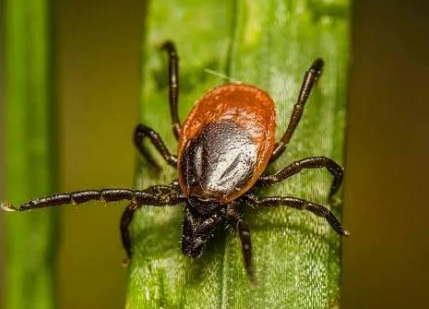
Hard ticks possess a rigid dorsal shield known as a scutum, while soft ticks lack this characteristic feature.
Physical Characteristics
Adult ticks have flattened, oval-shaped bodies designed for attaching securely to hosts while feeding.
- Size: Typically 1–10 mm before feeding
- Color: Brown, reddish-brown, black, gray, or tan
- Legs: Eight legs in nymphs and adults
- Antennae: None
- Wings: None
Larvae differ from older stages because they possess only six legs.
Female ticks can expand dramatically while feeding. An unfed female may measure only a few millimeters long, but after engorgement she can reach nearly one centimeter in length.
Their specialized mouthparts include:
- Chelicerae: Cutting structures used to penetrate skin
- Hypostome: Barbed feeding tube that anchors the tick
- Palps: Sensory appendages used during host detection
Life Cycle
Ticks undergo four developmental stages:
- Egg
- Larva
- Nymph
- Adult
Most species require a blood meal before progressing to the next stage.
Egg Stage
Female ticks deposit hundreds to thousands of eggs on the ground after completing a blood meal.
Larval Stage
Six-legged larvae hatch and seek their first host. After feeding, they drop off and molt into nymphs.
Nymph Stage
Nymphs possess eight legs and seek another host. This stage is particularly important in disease transmission because nymphs are difficult to detect due to their tiny size.
Adult Stage
Adults locate larger hosts, feed, mate, and continue the reproductive cycle.
Depending on species and environmental conditions, the complete life cycle may take one to several years.
Distribution and Habitat
Ticks occur on every continent except Antarctica and are especially abundant in regions with moderate to high humidity.
Common habitats include:
- Woodlands
- Grasslands
- Shrublands
- Pastures
- Urban parks
- Suburban landscapes
- Wildlife corridors
Many species rely on humid environments because they are vulnerable to dehydration.
Ticks are frequently found in:
- Tall grass
- Leaf litter
- Brushy vegetation
- Forest edges
- Animal nesting areas
Questing Behavior
Ticks locate hosts through a behavior known as questing.
During questing, a tick climbs vegetation and extends its front legs, waiting for a passing host. Specialized sensory organs detect:
- Carbon dioxide
- Body heat
- Movement
- Odors
- Vibrations
Once contact occurs, the tick quickly attaches and begins searching for a suitable feeding site.
Feeding and Disease Transmission
Ticks are among the most medically significant arthropods due to their ability to transmit pathogens.
During feeding, pathogens can move from the tick into the host’s bloodstream.
Major diseases associated with ticks include:
- Lyme Disease
- Rocky Mountain Spotted Fever
- Anaplasmosis
- Ehrlichiosis
- Babesiosis
- Tularemia
- Tick-Borne Encephalitis
- Powassan Virus Disease
- Alpha-gal Syndrome (red meat allergy)
Some pathogens require several hours of attachment before transmission occurs, making prompt tick removal critically important.
Common Tick Species
- Blacklegged Tick (Ixodes scapularis)
- Western Blacklegged Tick (Ixodes pacificus)
- American Dog Tick (Dermacentor variabilis)
- Brown Dog Tick (Rhipicephalus sanguineus)
- Lone Star Tick (Amblyomma americanum)
- Rocky Mountain Wood Tick (Dermacentor andersoni)
Impact on Humans and Animals
Ticks affect both human and animal health.
Human Health Risks
- Disease transmission
- Skin irritation
- Allergic reactions
- Secondary infections
Pet and Livestock Risks
- Blood loss
- Tick paralysis
- Disease transmission
- Reduced productivity
- Stress and discomfort
Prevention and Control
Effective tick management requires a combination of personal protection and habitat modification.
Personal Protection
- Wear long sleeves and long pants
- Tuck pants into socks
- Use EPA-approved repellents
- Perform tick checks after outdoor activities
- Shower after spending time in tick habitats
Landscape Management
- Keep grass mowed
- Remove leaf litter
- Create mulch or gravel barriers
- Reduce brush and dense vegetation
- Discourage wildlife hosts
Pet Protection
- Use veterinarian-approved tick preventatives
- Inspect pets regularly
- Maintain treated yards and kennels
Proper Tick Removal
If a tick is found attached:
- Use fine-tipped tweezers.
- Grasp the tick as close to the skin as possible.
- Pull upward steadily without twisting.
- Clean the bite area thoroughly.
- Monitor for symptoms of illness.
Avoid folklore remedies such as petroleum jelly, nail polish, or burning the tick with a match.
Ecological Importance
Although ticks are widely disliked, they play ecological roles within food webs. Various animals feed on ticks, including:
- Birds
- Reptiles
- Amphibians
- Insects
- Small mammals
Ticks also influence wildlife population dynamics through disease transmission and parasitism.
Conservation and Research
The conservation status of most tick species has not been evaluated by the IUCN. Because of their role as disease vectors, scientific efforts focus primarily on monitoring, management, and disease prevention rather than conservation.
Current research focuses on:
- Emerging tick-borne diseases
- Climate change impacts on tick distribution
- Host-pathogen relationships
- Vaccine development
- Improved tick control technologies
Conclusion
Ticks are among the most important arthropod pests affecting human and animal health worldwide. Their ability to transmit numerous diseases makes them a major public health concern. Understanding tick biology, habitat preferences, feeding behavior, and prevention strategies is essential for reducing exposure and minimizing the risks associated with tick-borne illnesses.