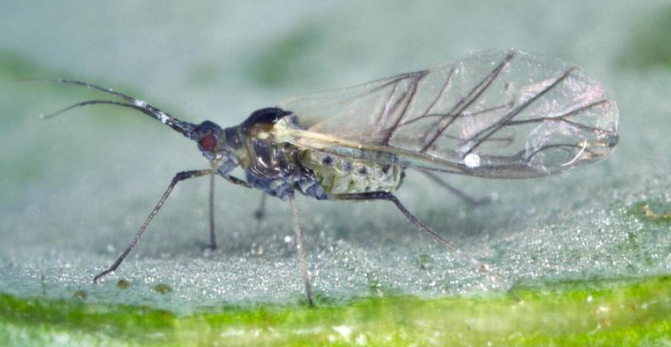
Cabbage aphids (Brevicoryne brassicae) are small, sap-feeding insects that form dense colonies on cabbage, broccoli, cauliflower, Brussels sprouts, kale, and other plants in the mustard family. Their feeding can cause yellowing, curled leaves, stunted growth, and malformed vegetable heads. Large colonies may also contaminate harvested produce.
A distinctive grayish-white waxy coating often makes cabbage aphids look dusty or powdery. This coating helps protect them from drying and can make the colonies more difficult to control with contact sprays.
Taxonomy and Classification
- Scientific name: Brevicoryne brassicae
- Order: Hemiptera
- Family: Aphididae
- Common name: Cabbage aphid
- Primary hosts: Plants in the family Brassicaceae
- Feeding type: Piercing-sucking
The genus name Brevicoryne refers to the insect’s relatively short cornicles. Cornicles are the two small, tube-like structures located near the rear of an aphid’s abdomen. Cabbage aphids are closely related to turnip aphids, green peach aphids, and other species that may also infest vegetable crops.
Identification
Adult cabbage aphids are approximately 1/16 to 1/8 inch long. They have soft, pear-shaped bodies and range from grayish-green to blue-green. Most individuals appear pale gray because their bodies are covered with a white, powdery wax.
Wingless adults make up most established colonies. Winged adults develop when plants become crowded, food quality declines, or environmental conditions encourage dispersal. These winged aphids have dark heads and thoraxes with translucent wings held over the abdomen.
Young aphids, called nymphs, resemble smaller versions of the adults. Cabbage aphids frequently cluster tightly together, making an infestation look like a gray, crusty patch on a leaf or stem. Colonies may include white shed skins and sticky droplets of honeydew.
Host Plants
Cabbage aphids specialize in feeding on plants in the mustard family. Common hosts include:
- Cabbage
- Broccoli
- Cauliflower
- Brussels sprouts
- Kale and collard greens
- Kohlrabi
- Radishes
- Turnips and rutabagas
- Mustard greens
- Canola and rapeseed
- Wild mustard and shepherd’s purse
The insects commonly feed on the undersides of leaves, within curled foliage, around growing tips, and between tightly packed parts of broccoli, cauliflower, and Brussels sprouts. Their hidden location can allow colonies to become large before they are noticed.
Distribution and Habitat
Cabbage aphids are widely distributed in temperate and subtropical regions throughout the world. In the United States, they occur in home gardens, commercial vegetable fields, canola fields, greenhouses, and areas containing wild cruciferous weeds.
Populations often grow most rapidly during mild, dry weather. Heavy rain may knock some aphids from plants, while extreme heat can slow population development. In regions with mild winters, colonies may remain active on volunteer crops and weeds throughout much of the year.
Life Cycle
Cabbage aphids reproduce extremely quickly. During favorable conditions, adult females give birth to live female nymphs without mating. This process, called parthenogenesis, allows a few aphids to produce a large colony within a short period.
Nymphs pass through several growth stages before becoming adults. Under warm conditions, a generation may be completed in little more than a week. Numerous overlapping generations can occur during a single growing season.
When a plant becomes overcrowded or deteriorates, winged females develop and fly to new host plants. In colder climates, cabbage aphids may produce mating males and females during fall. The females then deposit cold-resistant eggs on cabbage-family plants or crop debris. In warmer climates, living aphids may survive winter on weeds, volunteer canola, or overwintering vegetables.
Plant Damage
Cabbage aphids insert their needle-like mouthparts into leaves and stems to remove plant sap. Low to moderate populations may cause little noticeable damage, particularly on mature, healthy plants. Large colonies can remove enough sap to weaken crops and interfere with normal development.
- Yellow, pale, or curled leaves
- Stunted or uneven plant growth
- Distorted growing tips
- Malformed cabbage or cauliflower heads
- Reduced broccoli and Brussels sprout quality
- Sticky honeydew on leaves
- Black sooty mold growing on honeydew
- Clusters of aphids concealed within harvested produce
Young plants and plants suffering from drought or nutrient stress are especially vulnerable. Even when feeding does not greatly reduce yield, aphids hidden inside broccoli florets, cabbage heads, or Brussels sprouts can make the produce difficult to market or use.
Plant Virus Transmission
Cabbage aphids can carry certain plant viruses between susceptible crops and weeds. Potentially transmitted diseases include turnip mosaic virus and cauliflower mosaic virus. Symptoms may include mottled leaves, ringspots, distorted growth, or reduced yields.
Controlling aphids after a virus has entered a plant will not cure the infection. Removing infected plants and controlling nearby cruciferous weeds can help reduce sources of future transmission.
Monitoring
Inspect cabbage-family crops at least once a week, beginning shortly after seedlings emerge or transplants are set out. Check the undersides of lower leaves, central growing points, curled foliage, and developing heads. Look for gray aphid clusters, shed skins, honeydew, and natural enemies.
Pay special attention to broccoli and cauliflower as heads begin to form. Aphids that enter developing florets become difficult to remove. Yellow sticky cards can detect winged adults in greenhouses, but direct plant inspection provides a better measure of colony size.
Natural Enemies
Cabbage aphids are attacked by numerous beneficial insects. Lady beetles, lacewing larvae, hover fly larvae, damsel bugs, minute pirate bugs, and predatory midges feed on aphid colonies. Tiny parasitic wasps deposit eggs inside aphids, eventually producing swollen, tan or brown aphid “mummies.”
Fungal diseases can also reduce colonies during humid weather. Avoid unnecessary broad-spectrum insecticides because they can kill these natural enemies and allow surviving aphids to rebound rapidly.
Management and Control
- Inspect transplants: Examine seedlings before placing them in the garden and remove any aphid-infested leaves.
- Use row covers: Install insect-excluding fabric immediately after planting. Secure the edges and remove covers when pollination is required.
- Spray with water: A forceful stream of water can dislodge colonies from sturdy plants. Repeat as necessary.
- Remove infested leaves: Prune heavily colonized outer leaves before aphids spread into developing heads.
- Control weeds: Remove wild mustard, shepherd’s purse, and volunteer brassicas that can support aphids and plant viruses.
- Avoid excess nitrogen: Overfertilization produces tender growth that can encourage rapid aphid reproduction.
- Encourage beneficial insects: Grow small-flowered plants nearby and minimize use of persistent, broad-spectrum pesticides.
- Remove crop residue: Destroy heavily infested plants after harvest to reduce overwintering populations.
Insecticidal soap, horticultural oil, and certain neem-based products can suppress exposed aphids when thoroughly applied. Sprays must directly contact the insects, including colonies hidden beneath leaves and inside curled growth. The waxy coating on cabbage aphids may reduce coverage, so repeat treatment may be necessary.
Test sprays on a small area first and avoid applying soaps or oils during excessive heat or when plants are drought-stressed. For commercial crops or severe infestations, consult a local extension service for current treatment thresholds and registered products. Always follow label directions for edible plants and observe the required preharvest interval.
Are Cabbage Aphids Harmful to People?
Cabbage aphids do not bite or sting people and do not infest buildings. Accidentally finding them in harvested vegetables is unpleasant but does not indicate a human health infestation. Wash produce thoroughly and separate tightly packed leaves or florets to remove hidden insects.
Conclusion
Cabbage aphids are common sap-feeding pests of cabbage, broccoli, cauliflower, kale, and related crops. Small populations may cause little harm, but dense colonies can stunt plants, deform vegetable heads, spread plant viruses, and contaminate produce. Regular inspection, weed control, balanced fertilization, water sprays, and protection of beneficial insects provide effective long-term management.