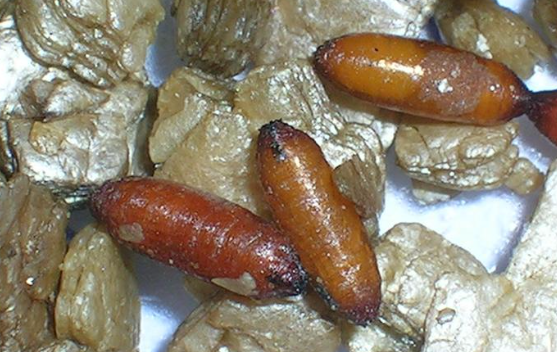
Cabbage root maggots are the larvae of the cabbage maggot fly, Delia radicum. These destructive soil-dwelling pests attack the roots of cabbage, broccoli, cauliflower, radishes, turnips, and other plants in the cabbage family. Young plants may become yellow, stunted, or wilted, while heavily infested seedlings can die completely.
Because the larvae remain hidden below the soil surface, gardeners may not notice an infestation until plants begin to decline. Prevention is especially important because few effective control options remain once maggots have entered the roots.
Taxonomy and Classification
- Scientific name: Delia radicum
- Order: Diptera
- Family: Anthomyiidae
- Common names: Cabbage root maggot and cabbage maggot
- Damaging stage: Larva
- Primary hosts: Plants in the family Brassicaceae
Cabbage root maggots are related to onion maggots and seedcorn maggots. Although these pests look similar, cabbage root maggots specialize primarily in cruciferous plants. They are widely distributed across temperate agricultural regions of North America, Europe, and other parts of the Northern Hemisphere.
Identification
Adult cabbage maggot flies are approximately 1/4 inch long. They are gray, slender flies with dark markings on the thorax and may resemble small house flies. Adults are usually seen resting near the soil, walking around plant bases, or flying low over cabbage-family crops.
The eggs are small, white, elongated, and difficult to see without close inspection. Female flies deposit them in soil cracks or directly against the lower stems of host plants.
The larvae are creamy white to yellowish-white, legless maggots. Their bodies are cylindrical but taper toward the head. Fully developed larvae are approximately 1/4 to 1/3 inch long. Unlike beetle grubs, cabbage maggots do not have a clearly visible head capsule or legs.
Pupae are enclosed in small, oval cases that are initially reddish-brown and darken as they mature. They are usually found in the soil near damaged roots.
Host Plants
Cabbage root maggots feed on cultivated and wild members of the mustard family. Common hosts include:
- Cabbage
- Broccoli
- Cauliflower
- Brussels sprouts
- Kale and collard greens
- Kohlrabi
- Radishes
- Turnips and rutabagas
- Mustard greens
- Canola and rapeseed
- Wild mustard and related weeds
Root vegetables such as radishes, turnips, and rutabagas can become unmarketable after even moderate feeding because larvae create visible tunnels and scars in the edible portion.
Life Cycle
Cabbage maggots generally spend the winter as pupae in the soil. Adult flies emerge during spring when temperatures become suitable. Cool, wet springs often favor damaging infestations, particularly in recently planted fields and gardens.
After mating, females search for young cabbage-family plants. A female can deposit numerous eggs around plant stems and in nearby soil cracks. The eggs generally hatch within several days, although development depends on temperature.
Newly hatched larvae crawl downward through the soil and begin feeding on root hairs, small feeder roots, and underground stem tissue. As they grow, they tunnel into larger roots. The larval feeding stage usually lasts approximately three to four weeks.
Mature maggots leave the roots and form pupae in the surrounding soil. New adults emerge and begin another generation. Depending on the climate, cabbage root maggots may complete one to three or more generations annually. The first spring generation usually causes the most severe damage to seedlings and young transplants.
Damage and Symptoms
Larvae damage plants by scraping root surfaces and tunneling through root tissue. These injuries reduce the plant’s ability to absorb moisture and nutrients. Feeding wounds may also allow soilborne bacteria and fungi to enter the roots, resulting in secondary decay.
Common signs of cabbage root maggot activity include:
- Plants that wilt during warm or sunny weather
- Yellow, dull, or bluish-green foliage
- Slow or uneven plant growth
- Seedlings that collapse or die
- Plants that pull out of the soil easily
- Brown feeding tunnels in roots
- Soft or decaying root tissue
- White maggots clustered around roots
- Scarring and tunnels in radishes or turnips
Damage can resemble drought stress, nutrient deficiency, root rot, or clubroot disease. To confirm an infestation, carefully dig up a declining plant and inspect the roots and surrounding soil for tunnels, maggots, or brown pupal cases.
Monitoring
Begin monitoring around planting time, particularly if cabbage maggots have previously occurred in the garden or field. Look for adult flies near the soil and inspect plant bases for small white eggs. Yellow sticky traps may help indicate adult fly activity, but they do not provide complete protection.
Commercial growers may use regional degree-day models to predict spring emergence and peak egg-laying activity. Local extension services can provide forecasts and crop-specific management recommendations.
Management and Control
Cabbage root maggot management should emphasize prevention. Larvae hidden inside roots are difficult to reach, and damaged plants cannot always recover.
- Use floating row covers: Install covers immediately after planting to prevent female flies from reaching plants. Seal the edges with soil or landscape pins.
- Rotate crops: Move cabbage-family plants to a different part of the garden each year. Do not place row covers over soil where infested brassicas grew the previous season, because emerging flies may become trapped underneath.
- Use plant collars: Place flat cardboard, fabric, or commercial barriers closely around transplant stems to reduce egg laying.
- Delay planting: Where practical, plant after the main spring flight has declined. Recommended dates vary by region.
- Remove crop debris: Pull and destroy infested plants, including their roots. Remove remaining brassica roots after harvest.
- Manage weeds: Remove wild mustard and volunteer cabbage-family plants that can support developing populations.
- Avoid fresh manure: Do not incorporate fresh manure or large amounts of undecomposed organic matter shortly before planting, because decaying material may attract flies.
- Protect natural enemies: Ground beetles and rove beetles consume cabbage maggot eggs, larvae, or pupae in the soil.
Beneficial nematodes may provide limited suppression under suitable soil moisture and temperature conditions, but results can vary. Once plants show serious root damage, removing them is often more practical than attempting a rescue treatment.
Insecticides registered for cabbage root maggots vary by crop and location. Some products are applied to seeds, transplant trays, soil, or plant bases before larvae enter the roots. Always follow the label, observe harvest restrictions, and consult a local extension specialist before treating food crops.
Are Cabbage Root Maggots Dangerous?
Cabbage root maggots do not bite people, infest houses, or harm pets. Their importance comes from the damage they cause to vegetable crops. Produce containing feeding tunnels, decay, or live larvae should be discarded, but the insect itself is not known to transmit diseases to humans.
Conclusion
Cabbage root maggots are serious belowground pests of cabbage, broccoli, cauliflower, radishes, turnips, and related vegetables. Their hidden feeding can stunt or kill young plants and ruin edible roots. Crop rotation, early installation of row covers, sanitation, weed management, and properly timed planting offer the best protection against damaging infestations.