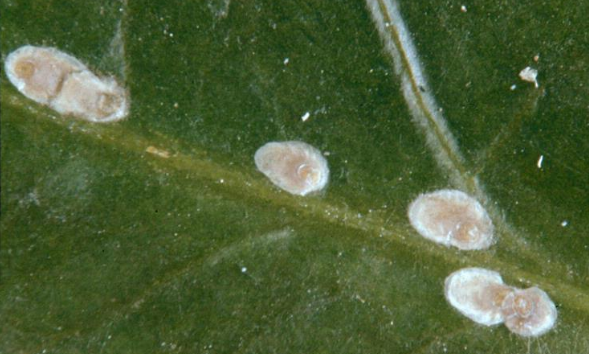
The Camphor Scale (Pseudaonidia duplex) is an armored scale insect that feeds on camphor trees and various other woody ornamental plants. Like other members of the family Diaspididae, it remains protected beneath a waxy covering while extracting nutrients from plant tissues.
Infestations may occur on leaves, twigs, and branches, where the insects can remain unnoticed until populations become substantial. Heavy feeding can contribute to leaf discoloration, reduced plant vigor, and deterioration of ornamental foliage.
Camphor scale is particularly relevant to ornamental plant maintenance, nursery production, and landscapes containing susceptible evergreen trees and shrubs. Accurate identification is important because several armored scale species produce similar symptoms.
Taxonomy and Classification
- Common Name: Camphor Scale
- Scientific Name: Pseudaonidia duplex
- Order: Hemiptera
- Family: Diaspididae
- Genus: Pseudaonidia
- Species: P. duplex
- Host Plants: Camphor trees and other susceptible woody plants
- Pest Type: Armored scale insect
Pseudaonidia duplex belongs to the armored scale family, whose members develop protective covers composed of waxy secretions and incorporated shed skins. These covers provide protection against environmental conditions and some natural enemies.
Physical Description and Identification
Adult Females: Mature females remain beneath relatively small, rounded to broadly oval protective covers. The covers are generally brownish or grayish and may blend into the bark or foliage of the host plant.
Adult Males: Males develop beneath smaller covers and may emerge as delicate winged adults. Their lifespan is short compared with that of feeding females.
Eggs: Eggs develop beneath the maternal scale covering, where they are protected until hatching.
Crawlers: Newly hatched nymphs are minute and mobile. They disperse to suitable feeding locations before becoming attached to the plant.
Key Identification Features
- Small, rounded or oval armored scale covers on woody plants.
- Brownish or grayish coloration that blends with plant surfaces.
- Immobile females feeding beneath protective coverings.
- Yellowing or weakened foliage during substantial infestations.
- Possible accumulation on leaves, twigs, and sheltered branches.
- No honeydew production typical of soft scales.
Because several armored scale species look similar, examination by a qualified diagnostic laboratory may be necessary for reliable species identification.
Distribution and Habitat
Camphor scale is associated with warm regions where susceptible woody hosts occur. It has been recorded in parts of Asia and other regions where suitable host plants are present.
The insect may occur in ornamental landscapes, nurseries, urban tree plantings, and other managed environments containing camphor trees or additional suitable hosts.
Local population abundance depends on temperature, host availability, plant condition, and the activity of natural enemies.
Life Cycle and Reproduction
Camphor scale develops through a series of immature stages before becoming an adult. Female insects remain beneath their protective covers after settling.
Egg Stage
Reproductive females produce eggs beneath their scale covers. The eggs remain sheltered until crawlers emerge.
Crawler Stage
Young crawlers move over plant surfaces and locate suitable feeding sites. Wind, contact between plants, and movement of infested nursery stock may contribute to dispersal.
Settled Immature Stages
After settling, nymphs begin feeding and producing protective coverings. Their mobility becomes greatly reduced.
Adult Stage
Females continue feeding and reproducing beneath their covers. Winged males emerge to mate where sexual reproduction occurs.
Developmental rates and seasonal generation patterns vary according to local environmental conditions.
Damage and Signs of Infestation
Camphor scale damages plants by feeding on living tissues. The severity of symptoms depends on infestation density, host susceptibility, and environmental stress.
- Leaf Yellowing: Feeding may produce chlorotic spots or generalized discoloration.
- Reduced Growth: Heavily infested plants may exhibit diminished vigor.
- Twig Stress: Persistent infestations may contribute to weakened or dying small branches.
- Premature Leaf Drop: Severely affected foliage may fall before normal seasonal shedding.
- Ornamental Damage: Scale covers and discolored leaves reduce landscape appearance.
- Nursery Concerns: Infested plants may require additional inspection or treatment before sale and transport.
Because camphor scale is an armored scale, sticky honeydew and associated sooty mold are not characteristic symptoms.
Management and Integrated Pest Management (IPM)
1. Inspect Susceptible Plants
Examine leaves, stems, and branches for scale covers. Pay particular attention to sheltered plant surfaces and previously infested growth.
2. Determine Whether Scales Are Alive
Lift selected covers and inspect the insects beneath them. Dead scales may remain attached for extended periods after successful treatment.
3. Prune Infested Branches
Remove heavily infested twigs where practical without excessively damaging the tree. Dispose of infested material according to local recommendations.
4. Protect Natural Enemies
Parasitoid wasps and predatory insects can help suppress armored scales. Avoid unnecessary pesticide applications that may eliminate these beneficial organisms.
5. Monitor Crawlers
Use regular inspection or crawler-monitoring tape to identify periods when young scales are emerging and dispersing.
6. Use Registered Horticultural Oils
Horticultural oils may suppress susceptible scale stages when the product is labeled for the host plant. Thorough coverage and appropriate application conditions are essential.
7. Maintain Tree Health
Provide appropriate irrigation, avoid unnecessary root disturbance, and manage other sources of plant stress. Healthy trees generally tolerate limited feeding better than severely stressed plants.
Conclusion
The Camphor Scale (Pseudaonidia duplex) is an armored scale pest associated with camphor trees and other woody hosts. Although individual scales are small, substantial populations can reduce plant vigor and ornamental quality. Monitoring, accurate identification, natural enemy conservation, pruning, and properly timed treatments offer the best foundation for managing infestations while minimizing unnecessary pesticide use.