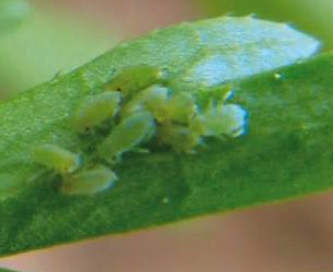
The Carrot-Willow Aphid (Cavariella aegopodii) is a small sap-feeding insect that alternates between willow trees and plants in the carrot family (Apiaceae). It is an important pest of carrots, celery, parsley, parsnips, and related crops because it can cause direct feeding injury and transmit economically important plant viruses.
Unlike many pests that damage crops primarily through chewing or tunneling, carrot-willow aphids use piercing-sucking mouthparts to extract plant sap. Large colonies can cause leaf curling, yellowing, reduced growth, and contamination with sticky honeydew.
The aphid is particularly important as a vector of certain carrot viruses. Consequently, even modest populations may present a concern where virus transmission is occurring.
Taxonomy and Classification
- Common Name: Carrot-Willow Aphid
- Scientific Name: Cavariella aegopodii
- Order: Hemiptera
- Family: Aphididae
- Genus: Cavariella
- Species: C. aegopodii
- Primary Hosts: Willow trees (Salix species)
- Secondary Hosts: Carrots, celery, parsley, parsnips, and other Apiaceae
- Pest Type: Sap-feeding aphid and plant virus vector
The Carrot-Willow Aphid belongs to the family Aphididae, a large group of soft-bodied insects that feed on plant sap. Its seasonal movement between woody and herbaceous hosts is an important feature of its biology.
Physical Description and Identification
Wingless Adults: Wingless carrot-willow aphids are small, soft-bodied insects, generally pale green to yellowish-green. Their bodies are pear-shaped, with a pair of cornicles near the rear of the abdomen.
Winged Adults: Winged forms possess transparent wings and may show darker markings on the head and thorax. These individuals disperse between host plants and help establish new colonies.
Nymphs: Immature aphids resemble smaller versions of wingless adults. They feed on plant sap and molt repeatedly as they develop.
Eggs: In regions where the species undergoes a sexual phase, overwintering eggs are deposited on willow hosts.
Key Identification Features
- Small, pale green aphids clustered on carrot-family plants.
- Colonies on tender shoots, leaf undersides, and growing points.
- Winged forms appearing during seasonal dispersal.
- Sticky honeydew on infested foliage.
- Leaf curling, yellowing, or distorted growth.
- Association with willow trees during part of the annual life cycle.
Several aphid species infest carrots and related crops. Species-level identification may require examination of body structures, including the cornicles and cauda, under magnification.
Distribution and Habitat
The Carrot-Willow Aphid occurs in temperate agricultural regions, including parts of Europe, Asia, and North America.
It inhabits willow trees, vegetable gardens, commercial carrot fields, celery plantings, and other areas containing suitable secondary hosts.
Its seasonal abundance is influenced by the availability of host plants, temperature, natural enemies, and the movement of winged aphids between habitats.
Fields located near suitable overwintering hosts may experience seasonal colonization, although aphids can also disperse considerable distances with favorable winds.
Life Cycle and Reproduction
The Carrot-Willow Aphid has a complex life cycle that commonly involves seasonal movement between willow trees and herbaceous plants in the carrot family.
Overwintering Stage
In regions with a complete host-alternating life cycle, the species overwinters as eggs on willow trees.
Spring Development
Eggs hatch in spring, and young aphids begin feeding on willow growth. Several generations may develop before winged migrants appear.
Migration to Secondary Hosts
Winged aphids disperse to carrots, celery, parsley, and other suitable plants. Colonies establish on tender foliage and growing points.
Summer Reproduction
During favorable conditions, females reproduce rapidly without mating, giving birth to live nymphs. Multiple overlapping generations may develop on herbaceous hosts.
Autumn Migration
In populations that undergo sexual reproduction, winged aphids return to willow hosts. Sexual forms develop, mate, and produce overwintering eggs.
In some climates, aphid populations may persist on suitable herbaceous hosts for extended periods without completing the typical host-alternating cycle.
Damage and Signs of Infestation
Carrot-willow aphids cause damage through direct sap feeding, honeydew production, and transmission of plant viruses.
- Leaf Curling: Feeding may distort tender foliage and growing points.
- Yellowing: Infested leaves may develop chlorosis or uneven coloration.
- Reduced Growth: Heavy infestations can weaken plants and interfere with normal development.
- Honeydew: Sticky deposits may accumulate on leaves and support sooty mold growth.
- Crop Contamination: Aphids and shed skins can reduce the marketability of leafy vegetables.
- Virus Transmission: The aphid can transmit important carrot viruses, including Carrot red leaf virus.
Virus transmission may be economically more important than direct feeding damage in some growing regions. Once a plant becomes infected with a systemic virus, eliminating the aphids will not cure the infection.
Management and Integrated Pest Management (IPM)
1. Monitor Aphid Populations
Inspect young carrot, celery, and parsley plants regularly. Examine tender shoots and leaf undersides for wingless aphids, nymphs, and honeydew.
2. Monitor Winged Aphids
Yellow sticky traps and regional aphid-monitoring programs can help identify periods of dispersal and increased colonization risk.
3. Encourage Natural Enemies
Lady beetles, lacewings, hoverfly larvae, and parasitoid wasps can help suppress aphid colonies. Preserve beneficial insects by minimizing unnecessary broad-spectrum insecticide applications.
4. Remove Infested Plant Material
In small gardens, heavily infested leaves or shoots may be removed when practical. Avoid excessive pruning that could reduce crop productivity.
5. Manage Alternate Hosts and Weeds
Control volunteer carrot-family plants and weeds that may sustain aphid populations or plant viruses. Removing established willow trees is generally not a practical or environmentally desirable management strategy.
6. Use Physical Exclusion
Fine insect-exclusion netting may reduce colonization by winged aphids when installed before infestation and properly secured.
7. Apply Selective Treatments
Insecticidal soaps, horticultural oils, or other registered aphid-control products may reduce populations when applied according to label directions.
Because some plant viruses can be transmitted rapidly during aphid feeding, insecticides alone may not prevent virus spread.
8. Manage Virus Risk
Use locally recommended virus-management practices, including monitoring, removal of infected plants when appropriate, control of volunteer hosts, and careful selection of planting locations.
Conclusion
The Carrot-Willow Aphid (Cavariella aegopodii) is an important sap-feeding pest of carrots and related vegetables. Its ability to alternate between willow trees and herbaceous crops, reproduce rapidly, and transmit plant viruses makes early monitoring essential. Natural enemy conservation, physical exclusion, weed management, selective treatments, and virus prevention strategies can help reduce infestations and protect crop productivity.