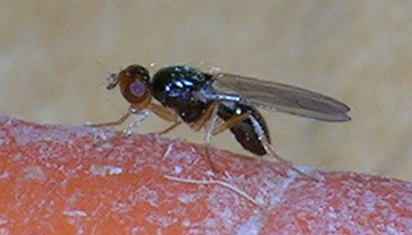
The Carrot Rust Fly (Chamaepsila rosae), also called the carrot fly, is a serious root-feeding pest of carrots and several related crops in the carrot family (Apiaceae). Its larvae tunnel into developing roots, causing characteristic rusty-brown feeding channels, reduced crop quality, and increased susceptibility to decay.
Carrot rust fly infestations are particularly troublesome because the damaging larvae develop underground, often remaining unnoticed until roots are harvested. Even relatively small amounts of feeding damage can make carrots unsuitable for fresh-market sale.
The pest also attacks other members of the carrot family, including parsnips, celery, and parsley. Prevention through crop protection, monitoring, and careful management is generally more effective than attempting to control larvae after they have entered roots.
Taxonomy and Classification
- Common Name: Carrot Rust Fly
- Alternative Common Name: Carrot Fly
- Scientific Name: Chamaepsila rosae
- Order: Diptera
- Family: Psilidae
- Genus: Chamaepsila
- Species: C. rosae
- Primary Hosts: Carrots, parsnips, celery, and parsley
- Pest Type: Root-feeding fly
The Carrot Rust Fly belongs to the family Psilidae, a group of flies that includes species whose larvae feed within plant tissues. Its scientific name has also appeared in agricultural literature as Psila rosae.
Physical Description and Identification
Adult Flies: Adults are small, slender flies approximately 4–5 millimeters long. They have a dark, shiny body, reddish-brown head coloration, and relatively long legs.
Eggs: Eggs are tiny, pale, and deposited in soil near the bases of suitable host plants.
Larvae: The maggots are slender, creamy-white to pale yellow, legless, and tapered toward the head. Mature larvae are commonly about 6–8 millimeters long.
Pupae: Pupation usually occurs in the soil within a hardened protective puparium.
Key Identification Features
- Small dark flies associated with carrot-family crops.
- Legless, pale larvae feeding in or around roots.
- Rusty-brown tunnels beneath carrot root surfaces.
- Discolored or damaged root tissue.
- Wilting or reddish foliage in some affected plants.
- Increased root decay following larval injury.
Distribution and Habitat
The Carrot Rust Fly occurs in temperate regions of Europe and North America, including important carrot-producing areas.
It is associated with vegetable gardens, commercial carrot fields, allotments, and other locations where suitable host crops are cultivated.
Cool, moist conditions often favor pest activity and survival. Shaded or sheltered growing sites may experience greater pressure than exposed locations, although local conditions influence infestation patterns.
Life Cycle and Reproduction
The Carrot Rust Fly undergoes complete metamorphosis, developing through egg, larval, pupal, and adult stages.
Egg Stage
Females deposit eggs in the soil near host plants. Eggs hatch when environmental conditions are suitable.
Larval Stage
Young maggots initially feed on fine roots and subsequently tunnel into larger roots. Their feeding produces the characteristic rusty-brown channels associated with carrot rust fly damage.
Pupal Stage
After completing larval development, the insects pupate in the soil. Depending on climate and season, pupae may remain dormant during unfavorable conditions.
Adult Stage
Adults emerge and locate suitable host crops for egg deposition. Two or more generations may occur annually in some regions, while cooler areas may have fewer generations.
Damage and Signs of Infestation
Carrot rust fly larvae cause direct damage to roots and can significantly reduce the quality of harvested vegetables.
- Root Tunneling: Larvae create narrow feeding channels in carrot roots.
- Rusty Discoloration: Damaged tissues develop reddish-brown or rusty markings.
- Reduced Marketability: Visible tunnels and blemishes make carrots unsuitable for premium markets.
- Secondary Decay: Feeding wounds may provide entry points for decay organisms.
- Seedling Damage: Severe feeding on young roots may stunt or kill developing plants.
- Storage Problems: Infested roots may deteriorate during storage.
Symptoms may be confused with damage caused by other root-feeding insects or diseases. Confirming the presence of larvae and characteristic feeding tunnels can improve diagnosis.
Management and Integrated Pest Management (IPM)
1. Use Insect-Exclusion Netting
Cover susceptible crops with fine insect mesh before adult flies begin laying eggs. Secure the edges to prevent flies from reaching the soil around plants.
2. Rotate Crops
Avoid repeatedly planting carrots and related hosts in the same location. Rotation may help reduce exposure to overwintering or locally emerging populations.
3. Monitor Adult Activity
Use yellow sticky traps where recommended by local extension services to monitor adult carrot fly activity and seasonal population trends.
4. Adjust Planting Dates
In regions with predictable adult flight periods, adjusting sowing or harvest dates may reduce crop exposure. Timing should follow local pest monitoring information.
5. Remove Infested Roots
Remove severely damaged roots and dispose of infested material appropriately. Avoid leaving infested carrots in the field after harvest.
6. Manage Crop Residues
Clean up discarded roots and crop debris that may support pest development. Good sanitation helps reduce persistent infestation sources.
7. Encourage Natural Enemies
Ground beetles and other beneficial organisms may prey on exposed eggs, larvae, or pupae. Avoid unnecessary broad-spectrum pesticide use.
8. Apply Registered Treatments When Necessary
Where chemical control is justified, use only products registered for carrot rust fly on the specific crop. Treatments must target vulnerable stages because larvae inside roots are difficult to control.
Conclusion
The Carrot Rust Fly (Chamaepsila rosae) is a damaging root-feeding pest that can reduce carrot quality and cause substantial losses in susceptible crops. Its underground larval development makes early prevention especially important. Insect-exclusion netting, crop rotation, monitoring, sanitation, and locally appropriate management practices can help protect carrots and related vegetables from serious infestations.