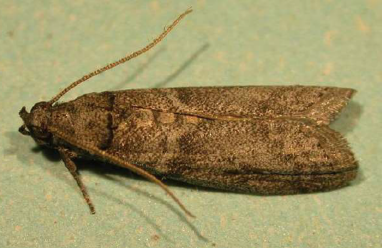
The Carob Moth (Ectomyelois ceratoniae) is an economically important moth pest whose larvae infest a wide variety of fruits, nuts, and stored agricultural products. Despite its common name, the carob moth is not restricted to carob trees. It is particularly important in the production and storage of dates, pomegranates, almonds, pistachios, and other susceptible commodities.
Carob moth larvae feed within fruit or nut tissues, often entering through cracks, damaged surfaces, or other vulnerable areas. Their feeding contaminates products with frass and silk, reduces marketability, and may contribute to secondary microbial deterioration.
Because larvae often remain concealed inside fruit, infestations may not become obvious until harvesting, processing, or storage. Effective management depends on sanitation, monitoring, timely harvesting, and prevention of fruit damage.
Taxonomy and Classification
- Common Name: Carob Moth
- Scientific Name: Ectomyelois ceratoniae
- Order: Lepidoptera
- Family: Pyralidae
- Genus: Ectomyelois
- Species: E. ceratoniae
- Primary Hosts: Carob, dates, pomegranates, and various nuts and fruits
- Pest Type: Fruit-boring and stored-product moth
The Carob Moth belongs to the family Pyralidae, which includes numerous pests of agricultural crops and stored foods. Its broad host range and ability to develop in harvested commodities make it important in both field production and postharvest management.
Physical Description and Identification
Adult Moths: Adults are small to medium-sized moths with grayish-brown forewings and lighter hindwings. Their wingspan is commonly around 20–30 millimeters, although individual size varies.
Eggs: Eggs are small, oval, and initially pale. Females deposit them on suitable fruit surfaces, damaged plant tissues, or other locations that provide food for emerging larvae.
Larvae: Caterpillars are generally cream-colored to pinkish, with a darker head capsule. Mature larvae may reach approximately 15–20 millimeters in length.
Pupae: Pupation occurs within a silken cocoon, often inside infested fruit, plant debris, or sheltered storage locations.
Key Identification Features
- Small grayish-brown moths associated with fruit and nut crops.
- Cream-colored or pinkish caterpillars inside fruit.
- Silk and frass within feeding cavities.
- Small entry or exit holes in damaged fruit.
- Infestations associated with cracked or injured fruit surfaces.
- Larvae or cocoons discovered during harvesting or processing.
Distribution and Habitat
The Carob Moth occurs in many warm agricultural regions, including parts of the Mediterranean basin, Middle East, North Africa, and other areas where susceptible crops are grown.
It is associated with orchards, date palm plantations, pomegranate production areas, nut-growing regions, packing facilities, and storage environments.
In the southwestern United States, carob moth management is particularly relevant to certain date-growing areas. Local occurrence and pest status should be confirmed through regional agricultural resources.
Warm temperatures, damaged fruit, and the presence of suitable host materials can support population development.
Life Cycle and Reproduction
The Carob Moth undergoes complete metamorphosis, passing through egg, larval, pupal, and adult stages.
Egg Stage
Females lay eggs on suitable fruit or plant material. Egg development depends on temperature and other environmental conditions.
Larval Stage
After hatching, larvae enter or feed within susceptible fruit and nuts. They consume plant tissues and produce silk and frass as they develop.
Larval feeding is responsible for nearly all direct crop damage. Protected feeding sites make larvae difficult to reach with contact insecticides.
Pupal Stage
Mature larvae pupate in silken cocoons, often within protected portions of fruit, debris, or storage environments.
Adult Stage
Adults emerge, mate, and deposit eggs on suitable hosts. Multiple generations may occur during favorable conditions, especially where host material remains continuously available.
Damage and Signs of Infestation
Carob moth infestations can affect both fresh agricultural products and stored commodities.
- Internal Feeding: Larvae consume fruit pulp, seeds, or other susceptible tissues.
- Frass Contamination: Feeding produces waste material that contaminates marketable products.
- Silken Webbing: Larvae create silk within feeding sites and protected cavities.
- Fruit Deterioration: Damaged fruit may become more susceptible to secondary decay.
- Reduced Marketability: Infested dates, pomegranates, and nuts may be rejected during grading.
- Storage Infestations: Larvae may continue developing in suitable harvested products if storage conditions permit.
Carob moth damage may be confused with injury caused by other fruit-boring insects. Identification of larvae or adults is important before selecting control measures.
Management and Integrated Pest Management (IPM)
1. Monitor Adult Activity
Use appropriate pheromone traps where available to monitor adult moth activity and help determine seasonal population trends.
2. Remove Infested Fruit
Collect and dispose of infested, fallen, or damaged fruit that may support developing larvae. Sanitation is especially important in orchards with repeated infestations.
3. Harvest Promptly
Harvest mature fruit at the appropriate time to reduce prolonged exposure to egg-laying moths and prevent excessive accumulation of vulnerable fruit.
4. Reduce Fruit Damage
Manage cracking, mechanical injury, and other conditions that provide favorable entry sites. Appropriate irrigation and orchard maintenance can help reduce some sources of fruit injury.
5. Protect Harvested Products
Store harvested commodities in clean, pest-resistant containers and facilities. Remove old residues and inspect storage areas regularly.
6. Biological Control
Natural enemies, including certain parasitoid wasps and predators, may help suppress populations. Their effectiveness varies among crops and growing regions.
7. Selective Chemical Control
Where justified, use insecticides registered for the specific crop and pest. Treatments are generally most useful before larvae become protected inside fruit. Follow label directions and preharvest intervals.
8. Postharvest Management
Commercial storage programs may use approved temperature treatments or other regulated postharvest procedures to prevent insect survival and contamination.
Conclusion
The Carob Moth (Ectomyelois ceratoniae) is a significant pest of fruits, nuts, and stored agricultural commodities. Its larvae feed in protected locations, making early detection and prevention particularly important. Orchard sanitation, monitoring, prompt harvesting, careful storage, and appropriately timed management can substantially reduce crop losses and product contamination.