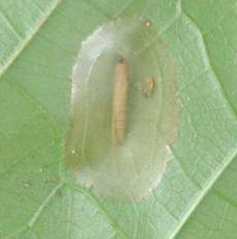
The Cacao Pod Borer (Conopomorpha cramerella) is one of the most economically important insect pests affecting cacao production in parts of Southeast Asia and the western Pacific. Its larvae develop inside cacao pods, feeding within the fruit and interfering with normal seed development.
Unlike many caterpillar pests that feed openly on leaves, cacao pod borer larvae remain concealed inside developing pods for much of their life cycle. This protected feeding behavior makes infestations difficult to detect and limits the effectiveness of conventional contact insecticides.
Severe infestations can cause poorly developed beans, hardened or clumped seed masses, premature ripening symptoms, and substantial reductions in marketable cocoa production. Integrated management is essential for reducing losses in affected growing regions.
Taxonomy and Classification
- Common Name: Cacao Pod Borer
- Scientific Name: Conopomorpha cramerella
- Order: Lepidoptera
- Family: Gracillariidae
- Genus: Conopomorpha
- Species: C. cramerella
- Primary Economic Host: Cacao (Theobroma cacao)
The Cacao Pod Borer belongs to the family Gracillariidae, which contains many small moths whose larvae feed within plant tissues. Conopomorpha cramerella is especially destructive because its larvae attack the economically valuable seed-bearing portion of cacao fruit.
Physical Description and Identification
Adult Moths: Adults are small, slender moths with narrow, patterned wings. Their brownish coloration and pale markings help them blend into tree bark and other sheltered surfaces. Adults generally rest during daylight and are more active around dusk and nighttime.
Eggs: Eggs are very small and deposited individually on the surface of developing cacao pods. Their size makes detection difficult without careful examination.
Larvae: Newly hatched caterpillars penetrate the pod surface and feed internally. The larvae are pale, slender, and relatively small, making them difficult to locate without opening an infested pod.
Pupae: Mature larvae exit the pod and spin silken cocoons on pod surfaces, leaves, or other sheltered locations.
Key Identification Features
- Small moths associated with cacao plantations.
- Larvae feeding inside cacao pods rather than openly on foliage.
- Uneven or premature-looking pod ripening.
- Beans that are difficult to separate from the surrounding pulp.
- Internal discoloration and damage to seed-bearing tissues.
- Small larval exit holes on infested pods.
- Silken pupal cocoons attached to nearby surfaces.
Distribution and Habitat
The Cacao Pod Borer is associated with tropical regions of Southeast Asia and the western Pacific. It is particularly important in cacao-producing areas of Indonesia, Malaysia, and neighboring regions where established populations occur.
The insect thrives in environments where suitable host fruits are available and climatic conditions support year-round or repeated reproduction.
Cacao plantations with continuous pod production can provide a steady supply of developing fruit, allowing overlapping generations to occur. Local management practices, sanitation, and harvest frequency can strongly influence infestation pressure.
Life Cycle and Reproduction
The Cacao Pod Borer undergoes complete metamorphosis, passing through egg, larval, pupal, and adult stages.
Egg Stage
Adult females lay eggs on developing cacao pods. After hatching, larvae quickly enter the pod, where they become protected from many external control measures.
Larval Stage
Larvae tunnel and feed within pod tissues, particularly around the internal structures associated with developing beans. This feeding disrupts normal fruit development and can cause beans to become compacted or difficult to extract.
Pupal Stage
When fully developed, larvae emerge from the pod and spin cocoons in sheltered locations. Adult moths subsequently emerge from these cocoons.
Adult Stage
Adult moths mate and deposit eggs on suitable fruit. Development time varies with environmental conditions, and repeated generations can occur where host pods are continuously available.
Damage and Signs of Infestation
Cacao pod borer infestations are especially damaging because they affect the harvested product directly.
- Bean Clumping: Damaged beans may become tightly attached to surrounding tissues, making extraction difficult.
- Poor Seed Development: Feeding disrupts normal development and reduces bean quality.
- Uneven Ripening: Infested pods may display irregular yellowing or premature color changes.
- Reduced Harvest Quality: Damaged beans may be smaller, malformed, or unsuitable for normal processing.
- Yield Loss: Heavy infestations can substantially reduce usable cocoa production.
- Increased Processing Labor: Infested pods may require additional effort to separate damaged beans and pulp.
External symptoms are not always reliable indicators of infestation severity. Opening representative pods and inspecting internal tissues can provide a more accurate assessment.
Management and Integrated Pest Management (IPM)
1. Frequent Harvesting
Harvest ripe pods regularly to reduce the time that suitable fruit remains exposed to egg-laying moths and to interrupt continued pest development.
2. Prompt Pod Processing
Break harvested pods promptly and handle husks and other residues in ways that prevent surviving larvae from completing development.
3. Pod Sleeving
Protect developing pods with suitable sleeves or bags before infestation occurs. Properly installed physical barriers can prevent female moths from laying eggs directly on protected fruit.
4. Plantation Sanitation
Remove neglected, infested, or unharvested pods that may sustain pest populations. Coordinate sanitation with neighboring growers where practical.
5. Canopy and Shade Management
Maintain appropriate pruning and shade conditions to improve access for harvesting, monitoring, and protective treatments. Avoid excessive canopy disturbance that could reduce tree health.
6. Biological Control
Conserve naturally occurring predators and parasitoids. Biological control may contribute to suppression, although effectiveness depends on the natural enemies present and local production conditions.
7. Targeted Chemical Management
Where permitted and justified by local monitoring, registered insecticides may be used against vulnerable stages. Because larvae are protected inside pods, treatment timing is critical, and chemical control should not replace sanitation, harvesting, or pod protection.
Conclusion
The Cacao Pod Borer (Conopomorpha cramerella) is a serious internal-feeding pest of cacao that can substantially reduce cocoa bean quality and yield. Its concealed larval development makes prevention and early intervention particularly important. Frequent harvesting, prompt pod processing, sanitation, physical pod protection, and locally appropriate biological or chemical controls form the foundation of effective management.