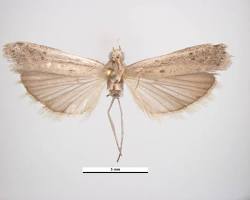
Sunflower moths (Homoeosoma electellum), also called sunflower head moths, are important pests of cultivated and ornamental sunflowers in North America. The adult moths cause no direct damage, but their caterpillars feed on pollen, developing seeds, and tissues within the flower head. Heavy infestations can reduce seed production and make sunflower heads vulnerable to destructive fungal diseases.
Sunflower moths are especially important in commercial oilseed and confection sunflower fields. They may also infest sunflowers growing in home gardens, community gardens, wildlife plots, and ornamental landscapes. Early identification is important because young caterpillars are much easier to manage than older larvae protected inside webbed flower heads.
Taxonomy and Classification
- Kingdom: Animalia
- Phylum: Arthropoda
- Class: Insecta
- Order: Lepidoptera
- Family: Pyralidae
- Genus: Homoeosoma
- Species: Homoeosoma electellum
The sunflower moth should not be confused with the banded sunflower moth, Cochylis hospes, or the sunflower bud moth, Suleima helianthana. These species attack sunflowers but differ in appearance, behavior, and recommended monitoring methods.
Identification
Adult sunflower moths are slender, gray to grayish-tan moths measuring approximately three-eighths of an inch long. Their wingspan is generally between one-half and three-quarters of an inch. When resting, the narrow wings are held tightly against the body, producing a cigar-shaped appearance.
Each forewing usually has a small dark spot near its center and several smaller spots near the leading edge. The hindwings are pale and lack prominent markings. Adults are most active during the evening and may be found resting on sunflower heads after sunset.
Newly hatched caterpillars are pale yellow. As they develop, they become brownish and acquire several cream, yellowish-green, or light-colored stripes running lengthwise along the body. Mature larvae reach approximately three-quarters of an inch long.
Distribution and Habitat
Sunflower moths occur across much of North America. They survive throughout the year in warmer portions of the southern United States and Mexico. Adults migrate north during the growing season, sometimes arriving in central and northern sunflower-producing regions during summer.
The moths are strongly attracted to sunflowers that are beginning to bloom. Cultivated sunflowers are their principal economic host, although larvae may also develop on wild sunflowers and certain related plants in the aster family.
Life Cycle
Female moths lay their eggs around the bases of florets on flowering sunflower heads. Most eggs are deposited shortly after the buds begin opening. The eggs hatch within approximately one to three days during warm weather.
Young caterpillars initially feed on pollen and flower parts near the surface of the head. After several days, older larvae tunnel into developing seeds and the fleshy receptacle. The larval stage generally lasts about 15 to 19 days.
Mature larvae may pupate in silk and plant debris on the flower head. Others descend on silk threads and pupate in soil cracks, beneath crop residue, or in other protected locations. Under warm conditions, the insect may complete an entire generation in approximately one month, allowing multiple generations in southern areas.
Signs and Damage
Sunflower moth caterpillars damage plants by consuming florets, developing seeds, and internal head tissue. A single larva may destroy several seeds, while multiple larvae can cause substantial losses across an entire head.
Common signs of an infestation include:
- Fine silk webbing across the flower head
- Flower debris and caterpillar waste trapped in the webbing
- Chewed florets and damaged developing seeds
- Empty seed hulls or seeds that fail to develop
- Brown, decaying, or unusually wet areas on the head
- Striped caterpillars hiding among seeds and flower tissues
Infested heads often develop a dirty or “trashy” appearance because silk binds together dried florets, waste, and feeding debris. Feeding wounds can also allow Rhizopus head rot and other microorganisms to enter. This secondary decay may cause more yield loss than the caterpillars’ direct feeding.
Monitoring Sunflower Moths
Begin inspecting plants as flower buds approach opening. Adults are easiest to detect in the evening, particularly about an hour after sunset. Use a flashlight to examine several heads throughout the planting rather than checking only plants along the edge.
Commercial growers should follow regional economic thresholds and extension recommendations because moth pressure, crop value, and treatment timing vary by location. Pheromone traps can detect adult activity, but trap catches should be interpreted with field observations and local guidance.
Management and Control
Cultural Control
Planting dates can influence whether flowering overlaps with peak moth activity. In some regions, later planting reduces infestation, but the best timing depends on local climate and production practices. Remove and discard badly infested ornamental heads after flowering to reduce remaining larvae and decaying material.
Biological Control
Predatory insects, spiders, birds, and parasitoid wasps attack sunflower moth eggs and larvae. Avoid unnecessary broad-spectrum pesticide applications that can kill these natural enemies. Preserving beneficial insects is especially valuable when moth populations remain below damaging levels.
Insecticide Treatment
When treatment is justified, it must target adults, eggs, or newly hatched larvae before caterpillars tunnel deeply into the flower head. Once larvae are protected beneath dense webbing or inside seeds, sprays become much less effective.
Apply only products labeled for use on sunflowers and follow all label directions. Sunflowers attract bees and other pollinators, so avoid treating flowers while pollinators are active. Evening applications may reduce exposure, but label restrictions concerning blooming crops and pollinators must still be followed.
Conclusion
Sunflower moths are potentially serious pests because their larvae attack flowers and developing seeds while encouraging head rot. Look for cigar-shaped gray moths around opening blooms and webbing across sunflower faces. Regular monitoring, correct timing, protection of natural enemies, and carefully selected treatments can prevent severe damage while limiting risks to pollinators.