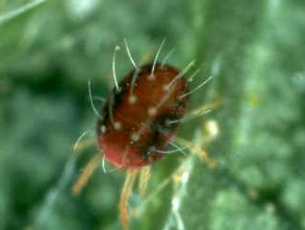
The European Red Mite (Panonychus ulmi) is a widespread plant-feeding mite that attacks apple trees, pear trees, stone fruit, and several other woody plants. Because of this, it is one of the most economically important mite pests in commercial apple production.
European red mites feed by piercing leaf cells and extracting their contents. Heavy infestations produce fine stippling, bronzing, reduced photosynthesis, and premature leaf deterioration. Their persistent feeding can reduce fruit size, affect fruit coloration, and weaken trees.
Unlike many spider mites that produce conspicuous webbing, European red mites generally produce little visible webbing. Their populations may therefore become established before obvious signs are noticed.
Orchard outbreaks are frequently associated with disruption of predatory mites by broad-spectrum pesticides. Effective management emphasizes monitoring, natural enemy conservation, and selective treatments when economically justified.
Taxonomy and Classification
- Common Name: European Red Mite
- Scientific Name: Panonychus ulmi
- Class: Arachnida
- Order: Trombidiformes
- Family: Tetranychidae
- Genus: Panonychus
- Species: P. ulmi
- Primary Hosts: Apples, pears, stone fruit, and other woody plants
- Pest Type: Plant-feeding spider mite
The European Red Mite belongs to the spider mite family Tetranychidae. Although commonly grouped with insect pests in agricultural management programs, mites are arachnids rather than insects.
Physical Description and Identification
Adult Females: Adult females are small, oval mites approximately 0.4 millimeters long. Their bodies are dark reddish to purplish-red, with pale hairs arising from noticeable raised areas.
Adult Males: Males are generally smaller and more tapered toward the rear.
Eggs: Eggs are round, reddish, and possess a distinctive stalk-like projection. Overwintering eggs are commonly deposited around buds, bark crevices, and small branches.
Larvae: Newly hatched larvae possess three pairs of legs.
Nymphs: Later immature stages possess four pairs of legs and increasingly resemble adults.
Key Identification Features
- Tiny reddish mites on apple and other fruit tree leaves.
- Reddish overwintering eggs around buds and twigs.
- Fine pale stippling on foliage.
- Bronzed or dull-looking leaves.
- Reduced leaf function during heavy infestations.
- Little obvious webbing.
Distribution and Habitat
European red mites occur in major temperate fruit-growing regions worldwide.
They inhabit commercial orchards, backyard fruit trees, nurseries, and ornamental plantings.
Apple trees are especially important hosts, although pears, plums, cherries, and other woody plants may also support populations.
Warm weather can accelerate development, while predatory mite activity, rainfall, humidity, and pesticide use influence seasonal abundance.
Life Cycle and Reproduction
European red mites develop through egg, larval, protonymph, deutonymph, and adult stages.
Overwintering Eggs
The species typically overwinters as reddish eggs attached to bark, twigs, and areas around buds.
Spring Hatching
Eggs hatch as temperatures rise and new foliage becomes available.
Larval Stage
Six-legged larvae begin feeding on plant cells.
Nymphal Stages
Mites pass through two eight-legged nymphal stages before becoming adults.
Adult Reproduction
Adults feed and reproduce on foliage. Multiple overlapping generations may develop during the growing season.
Autumn Egg Deposition
As seasonal conditions change, females produce overwintering eggs on woody tissues.
Damage and Signs of Infestation
European red mite feeding primarily affects foliage, but prolonged injury can influence fruit development and tree productivity.
- Leaf Stippling: Feeding produces numerous tiny pale spots.
- Leaf Bronzing: Heavy infestations cause dull bronze discoloration.
- Reduced Photosynthesis: Damaged leaves produce less energy for fruit and shoot growth.
- Premature Leaf Drop: Severe infestations may contribute to early defoliation.
- Reduced Fruit Size: Persistent feeding can affect fruit development.
- Fruit Quality Effects: Heavy infestations may interfere with normal fruit coloration and quality.
- Tree Stress: Repeated outbreaks can reduce overall vigor.
Symptoms may resemble nutrient deficiencies or damage caused by other mite species. Direct examination of leaves and eggs helps confirm the pest.
Management and Integrated Pest Management (IPM)
1. Monitor Dormant Eggs
Inspect fruit tree buds and twigs during the dormant season for reddish overwintering eggs.
2. Sample Leaves Regularly
Use a hand lens to monitor mites on leaves throughout the growing season.
3. Encourage Predatory Mites
Predatory mites, including suitable phytoseiid species, can provide substantial natural suppression.
4. Avoid Disruptive Pesticides
Broad-spectrum insecticides may eliminate beneficial predators and contribute to mite outbreaks.
5. Maintain Orchard Health
Provide appropriate irrigation, nutrition, and pruning to support tree vigor.
6. Use Horticultural Oils
Registered dormant or delayed-dormant oils may help suppress overwintering eggs when applied according to crop-specific recommendations.
7. Apply Selective Miticides When Necessary
Use locally recommended economic thresholds to guide treatment decisions. Select registered miticides and rotate modes of action to reduce resistance risk.
8. Evaluate Natural Enemy Populations
Consider predator abundance when interpreting mite counts. Orchards with active predatory mite populations may require fewer chemical interventions.
Conclusion
The European Red Mite (Panonychus ulmi) is a major pest of apple and other fruit trees. Heavy feeding can cause leaf bronzing, reduced photosynthesis, and lower fruit quality. Regular monitoring, conservation of predatory mites, dormant-season management, and selective treatments are essential for sustainable control.