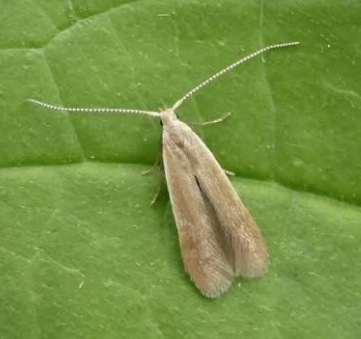
The Elm Casebearer (Coleophora ulmifoliella) is a small moth whose caterpillars feed on elm leaves while protected inside portable cases constructed from silk and plant material. It belongs to a distinctive group of case-bearing moths whose larvae carry protective shelters as they move between feeding sites.
Elm casebearer larvae damage foliage by consuming internal leaf tissues or creating small feeding patches. Infested leaves may develop pale mines, irregular discoloration, or areas of dead tissue.
Although most infestations are relatively minor, repeated or heavy feeding can reduce the ornamental appearance of elm trees and contribute to stress in young or weakened plants.
Because several leaf-mining insects attack elms, identification should consider the presence of a portable larval case and the pattern of feeding damage.
Taxonomy and Classification
- Common Name: Elm Casebearer
- Scientific Name: Coleophora ulmifoliella
- Order: Lepidoptera
- Family: Coleophoridae
- Genus: Coleophora
- Species: C. ulmifoliella
- Primary Hosts: Elm trees (Ulmus species)
- Pest Type: Case-bearing leaf-feeding moth
The family Coleophoridae contains many small moths whose larvae develop within portable cases. These cases help protect caterpillars from environmental exposure and some natural enemies.
Physical Description and Identification
Adults: Adult elm casebearers are small, narrow-winged moths with relatively subdued coloration. Their slender wings are fringed with fine hairs and are typically held close to the body at rest.
Eggs: Eggs are tiny and deposited on suitable elm foliage.
Larvae: Caterpillars are small and pale, with darker head capsules. They construct portable cases from silk and plant material.
Larval Cases: Cases may appear as tiny elongated or tubular structures attached to leaves. Their appearance changes as larvae develop.
Pupae: Pupation occurs within the protective larval case.
Key Identification Features
- Small portable cases attached to elm leaves.
- Pale leaf mines or feeding patches.
- Small caterpillars extending from case openings.
- Irregular discoloration of affected foliage.
- Localized feeding damage rather than large holes.
- Small narrow-winged adult moths.
Distribution and Habitat
Elm casebearers are associated with elm-growing habitats, including deciduous woodland, parks, ornamental plantings, and urban landscapes.
The species is linked to elm foliage, where larvae feed and construct protective cases. Its local abundance depends on host availability, seasonal conditions, and natural enemy activity.
Infestations may be particularly noticeable on young ornamental elms or isolated trees where individual damaged leaves are easily observed.
Precise distribution and seasonal development records may be limited in some regions, making local identification and monitoring valuable.
Life Cycle and Reproduction
Elm casebearers undergo complete metamorphosis, developing through egg, larval, pupal, and adult stages.
Egg Stage
Females deposit eggs on suitable elm foliage during the growing season.
Early Larval Feeding
Newly hatched caterpillars begin feeding on leaf tissues, initially producing small feeding marks or mines.
Case Construction
As larvae develop, they construct portable cases and continue feeding while partially protected.
Overwintering
Case-bearing moths commonly overwinter in protected immature stages, although the exact seasonal pattern should be confirmed for local populations.
Pupation and Adult Emergence
Mature larvae pupate inside their cases. Adults emerge and begin the next reproductive cycle.
Damage and Signs of Infestation
Elm casebearer feeding generally affects leaf appearance and photosynthetic tissue.
- Leaf Mining: Early larval feeding may create pale internal feeding areas.
- Surface Blotches: Damaged tissue may turn yellowish or brown.
- Reduced Photosynthesis: Extensive feeding decreases functional leaf area.
- Premature Leaf Drop: Heavily damaged leaves may fall early.
- Ornamental Injury: Visible leaf damage reduces landscape appearance.
- Plant Stress: Repeated infestations may affect young or weakened trees.
Light infestations rarely threaten mature healthy elms. Control should be based on the severity of injury rather than the presence of a few larval cases.
Management and Integrated Pest Management (IPM)
1. Inspect Elm Foliage
Examine leaves for feeding patches and attached larval cases during the growing season.
2. Remove Infested Leaves
On small trees, collect and dispose of heavily infested leaves when practical.
3. Encourage Natural Enemies
Parasitoid wasps, predatory insects, and birds may help suppress case-bearing moth populations.
4. Maintain Tree Vigor
Provide appropriate irrigation and avoid unnecessary damage to roots and branches.
5. Avoid Routine Broad-Spectrum Sprays
Protective larval cases may reduce the effectiveness of contact insecticides. Unnecessary spraying can also harm beneficial insects.
6. Use Treatments Only When Justified
For valuable nursery stock or unusually severe infestations, consult local extension recommendations for approved products and appropriate timing.
Conclusion
The Elm Casebearer (Coleophora ulmifoliella) is a small moth whose larvae feed on elm leaves from protective portable cases. Most infestations cause limited cosmetic damage, but repeated feeding may stress young trees. Regular monitoring, removal of infested foliage, and conservation of natural enemies provide practical management strategies.