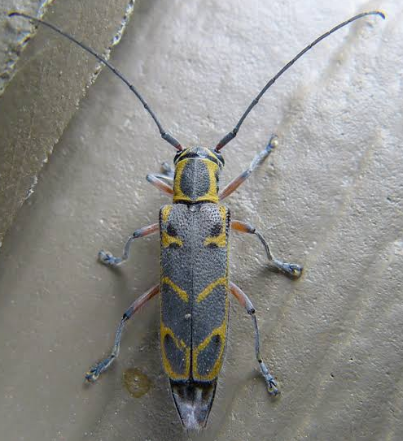
The Elm Borer (Saperda tridentata), also called the elm bark borer, is a wood-associated beetle whose larvae develop beneath the bark of elm trees. It is a member of the longhorn beetle family and is most frequently associated with weakened, declining, recently dead, or damaged elm trees.
Adult beetles are relatively small and possess distinctive reddish-orange and dark markings. Their larvae tunnel through the inner bark and cambial region, producing galleries that can interfere with the movement of water and nutrients when infestations are extensive.
Unlike some highly aggressive tree-killing insects, the elm borer is generally considered a secondary pest that takes advantage of trees already experiencing stress. Drought, disease, storm damage, root injury, and other environmental pressures can increase susceptibility.
The presence of elm borers may therefore indicate an underlying tree health problem rather than being the original cause of decline. Correct diagnosis is important before implementing control measures.
Taxonomy and Classification
- Common Name: Elm Borer
- Alternative Name: Elm Bark Borer
- Scientific Name: Saperda tridentata
- Order: Coleoptera
- Family: Cerambycidae
- Genus: Saperda
- Species: S. tridentata
- Primary Hosts: Elm trees (Ulmus species)
- Pest Type: Bark- and wood-associated beetle
The family Cerambycidae includes the longhorn beetles, which are recognized by their often elongated antennae. Many species develop within woody plants, although their ecological roles range from decomposers to serious pests of living trees.
Physical Description and Identification
Adults: Adult elm borers are elongated beetles, commonly approximately 8–15 millimeters long. Their bodies display contrasting orange or reddish and dark markings, often with dark transverse bands on the wing covers.
Antennae: Adults possess elongated antennae characteristic of longhorn beetles.
Eggs: Females place eggs in suitable bark locations on weakened or dying elm material.
Larvae: Larvae are pale, elongated, and largely legless, with a darker head region. They develop beneath the bark and may extend feeding into adjacent woody tissues.
Pupae: Pupation occurs within protected chambers associated with the host tree.
Key Identification Features
- Small elongated beetles with orange and dark markings.
- Long antennae extending from the head.
- Larval galleries beneath elm bark.
- Fine wood debris or frass around infested material.
- Adult emergence holes in bark.
- Infestations concentrated in stressed or dying elm trees.
Distribution and Habitat
Saperda tridentata occurs in North America, particularly where native and introduced elm species are present.
Suitable habitats include deciduous forests, urban landscapes, parks, shelterbelts, and roadside plantings. The insect may develop in declining trees, recently dead branches, and suitable cut elm material.
Its abundance is influenced by the availability of weakened host trees. Environmental stress, disease, and mechanical injuries can create conditions favorable for colonization.
Urban elms may be particularly vulnerable when their roots are damaged by construction, soil compaction, drought, or improper maintenance.
Life Cycle and Reproduction
The Elm Borer undergoes complete metamorphosis, passing through egg, larval, pupal, and adult stages.
Adult Activity
Adults emerge during the warmer portion of the growing season and seek suitable elm material for reproduction.
Egg Stage
Females deposit eggs in bark crevices or other protected sites.
Larval Stage
After hatching, larvae tunnel beneath the bark, feeding on tissues associated with the inner bark and cambium.
Overwintering
Immature beetles may remain protected within infested woody material through unfavorable seasonal conditions.
Pupal and Adult Development
Mature larvae pupate within the host material. Newly formed adults emerge through the bark to reproduce.
Damage and Signs of Infestation
Elm borer damage is associated primarily with larval tunneling beneath the bark.
- Inner Bark Galleries: Larvae create feeding tunnels that damage conductive tissues.
- Branch Decline: Infested branches may show reduced vigor or dieback.
- Adult Exit Holes: Emerging beetles leave openings in bark.
- Frass Accumulation: Fine wood debris may occur beneath loose bark.
- Bark Loosening: Extensive galleries may contribute to separation of bark from wood.
- Secondary Infestation: Beetles frequently colonize trees already weakened by other factors.
Elm borer galleries should not automatically be confused with those of elm bark beetles, which belong to a different beetle family and are important vectors of Dutch elm disease.
Management and Integrated Pest Management (IPM)
1. Assess Tree Health
Inspect infested elms for drought stress, root damage, disease, and other causes of decline.
2. Remove Severely Infested Wood
Prune dead or heavily infested branches when appropriate. Dispose of material before additional adults emerge.
3. Maintain Proper Irrigation
Water established trees during prolonged dry periods according to local arboricultural recommendations.
4. Prevent Mechanical Injuries
Protect trunks and roots from lawn equipment, construction, and unnecessary soil disturbance.
5. Encourage Natural Enemies
Woodpeckers, parasitoids, and predatory insects may attack wood-boring beetles.
6. Avoid Unnecessary Insecticide Applications
Larvae beneath bark are difficult to reach. Chemical treatment is generally less useful than addressing tree stress and removing infested material.
7. Consult a Certified Arborist
For valuable landscape elms, obtain a professional diagnosis to distinguish secondary borer activity from primary disease or environmental damage.
Conclusion
The Elm Borer (Saperda tridentata) is a longhorn beetle associated primarily with stressed and declining elm trees. Its larvae tunnel beneath bark and may contribute to further deterioration. Maintaining tree health, identifying underlying stress, and removing heavily infested wood provide the foundation for effective management.