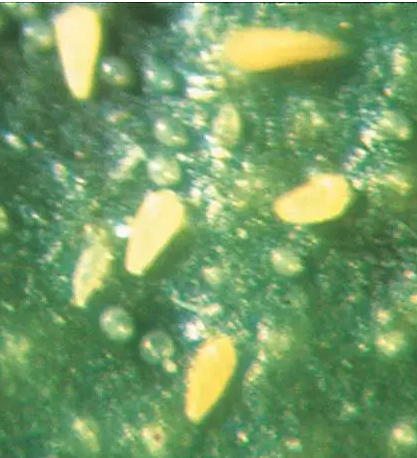
The Citrus Rust Mite (Phyllocoptruta oleivora) is a microscopic plant-feeding mite and one of the most economically important mite pests of citrus. It attacks oranges, lemons, grapefruit, mandarins, and other citrus varieties, feeding on the surfaces of fruit and leaves.
Citrus rust mites damage plant cells using specialized mouthparts, producing discoloration and scarring of the fruit rind. On oranges, feeding often causes characteristic brownish or bronze-colored russeting, while lemons may develop darker or silvery surface discoloration.
Although rust mite feeding usually affects the exterior appearance of fruit more than the internal flesh, substantial infestations can reduce fresh-market value and increase production costs.
Taxonomy and Classification
- Common Name: Citrus Rust Mite
- Scientific Name: Phyllocoptruta oleivora
- Class: Arachnida
- Order: Trombidiformes
- Family: Eriophyidae
- Genus: Phyllocoptruta
- Species: P. oleivora
- Primary Hosts: Citrus species
Citrus rust mites belong to the family Eriophyidae, whose members are exceptionally small plant-feeding mites. Unlike spider mites, eriophyid mites possess only two pairs of legs throughout their active life stages.
Physical Description and Identification
Adults: Adult citrus rust mites are elongated, wedge-shaped, and approximately 0.1–0.2 millimeters long. Their bodies are pale yellowish to tan and require magnification for reliable observation.
Eggs: Eggs are extremely small and deposited on fruit and leaf surfaces.
Immature Stages: Young mites resemble smaller adults and feed on the same plant tissues.
Key Identification Features
- Microscopic yellowish mites on citrus fruit and foliage.
- Brown or bronze russeting on orange fruit.
- Darkened or silvery discoloration on some lemon varieties.
- Surface scarring without deep fruit penetration.
- Little or no visible webbing.
- High mite populations on exposed fruit surfaces.
Distribution and Habitat
Citrus rust mites occur in citrus-growing regions worldwide, particularly in warm and subtropical climates.
They inhabit commercial orchards, backyard citrus trees, and nursery plantings. Population abundance varies with temperature, humidity, rainfall, and natural enemy activity.
Warm, humid conditions can support rapid development, although seasonal population patterns differ among regions.
Life Cycle and Reproduction
Egg Stage
Females deposit eggs directly on suitable citrus surfaces.
Immature Development
Young mites hatch and pass through two immature stages while feeding on plant cells.
Adult Stage
Adults continue feeding and reproducing. Development may occur rapidly under favorable conditions, producing numerous overlapping generations.
Damage and Signs of Infestation
- Fruit Russeting: Feeding produces brownish or bronze discoloration.
- Surface Scarring: The rind develops roughened or discolored areas.
- Reduced Marketability: Cosmetic damage can lower fresh-fruit grades.
- Leaf Injury: Heavy infestations may cause discoloration of foliage.
- Economic Loss: Severe infestations may reduce the value of harvested citrus.
Management and Integrated Pest Management (IPM)
1. Monitor Fruit Surfaces
Inspect developing citrus fruit with a hand lens to detect mite populations before significant russeting develops.
2. Use Economic Thresholds
Base treatment decisions on local monitoring guidelines, crop type, and intended fruit market.
3. Conserve Natural Enemies
Predatory mites and other beneficial arthropods may contribute to suppression.
4. Avoid Unnecessary Pesticides
Broad-spectrum treatments can disrupt natural enemies and contribute to mite outbreaks.
5. Apply Registered Miticides
Where needed, use products registered for citrus rust mites and rotate modes of action to reduce resistance development.
6. Maintain Orchard Health
Appropriate irrigation, nutrition, and pruning help maintain productive trees.
Conclusion
The Citrus Rust Mite (Phyllocoptruta oleivora) is an important citrus pest that primarily damages fruit appearance through surface feeding. Regular monitoring, natural enemy conservation, and carefully timed treatments can help maintain fruit quality and reduce economic losses.