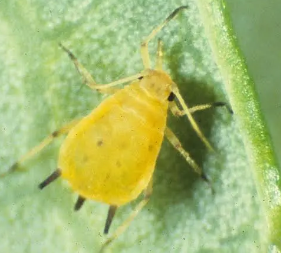
The Cotton Aphid (Aphis gossypii), also known as the melon aphid, is a widespread sap-feeding insect that attacks cotton, cucurbits, citrus, ornamentals, and numerous other host plants. It is an important agricultural pest because of its rapid reproduction, honeydew production, and ability to transmit plant viruses.
Cotton aphids feed by inserting their piercing-sucking mouthparts into plant tissues and extracting sap. Heavy infestations can cause leaf curling, yellowing, reduced growth, and contamination of cotton lint with sticky honeydew.
The species is particularly troublesome in warm agricultural regions and protected growing environments where populations can increase rapidly.
Taxonomy and Classification
- Common Name: Cotton Aphid
- Alternative Name: Melon Aphid
- Scientific Name: Aphis gossypii
- Order: Hemiptera
- Family: Aphididae
- Genus: Aphis
- Species: A. gossypii
- Hosts: Cotton, melons, cucumbers, citrus, and ornamentals
Physical Description and Identification
Wingless Adults: Cotton aphids are small, soft-bodied insects with variable coloration ranging from pale yellow to dark green or nearly black.
Winged Adults: Winged forms possess transparent wings and darker body markings.
Nymphs: Young aphids resemble smaller wingless adults.
Key Identification Features
- Clusters of small aphids on leaf undersides.
- Variable yellow, green, or dark coloration.
- Curled or distorted foliage.
- Sticky honeydew deposits.
- Black sooty mold on affected surfaces.
- Ant activity around aphid colonies.
Distribution and Habitat
Cotton aphids occur worldwide in tropical, subtropical, and temperate agricultural regions.
They inhabit cotton fields, vegetable crops, orchards, greenhouses, ornamental landscapes, and numerous wild host plants.
Warm temperatures and abundant tender growth can support rapid reproduction.
Life Cycle and Reproduction
Nymphal Development
Young aphids feed soon after birth and pass through several molts.
Adult Reproduction
Females commonly reproduce without mating during favorable conditions, producing live nymphs.
Winged Dispersal
Winged forms develop in response to crowding or deteriorating host conditions.
Multiple Generations
Numerous overlapping generations may occur during the growing season.
Damage and Signs of Infestation
- Sap Feeding: Heavy colonies reduce plant vigor.
- Leaf Curling: Feeding distorts young foliage.
- Honeydew: Sticky deposits accumulate on leaves and cotton lint.
- Sooty Mold: Black fungal growth develops on honeydew.
- Virus Transmission: Cotton aphids transmit several plant viruses.
- Reduced Marketability: Honeydew contamination can interfere with cotton processing.
Management and Integrated Pest Management (IPM)
1. Monitor Aphid Colonies
Inspect leaf undersides and growing points regularly.
2. Encourage Natural Enemies
Lady beetles, lacewings, hoverfly larvae, and parasitoid wasps can suppress aphid populations.
3. Avoid Excess Nitrogen
Balanced fertilization may reduce excessively succulent growth.
4. Manage Ants
Where ants protect aphid colonies, ant management can improve natural enemy activity.
5. Use Selective Treatments
Apply registered insecticides only when economic thresholds or local recommendations justify intervention.
6. Rotate Insecticide Modes of Action
Cotton aphids can develop resistance to insecticides. Follow resistance management recommendations.
Conclusion
The Cotton Aphid (Aphis gossypii) is a widespread agricultural pest capable of damaging cotton, vegetables, and ornamental plants. Its rapid reproduction, honeydew production, and virus transmission make monitoring essential. Biological control, balanced crop management, and selective treatments provide effective long-term management options.