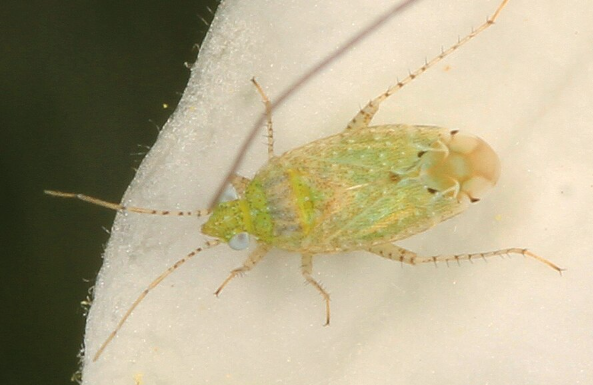
Cotton fleahoppers, Pseudatomoscelis seriatus, are tiny plant bugs that damage cotton during the early stages of flower-bud development. Both adults and nymphs use piercing-sucking mouthparts to feed on tender terminals and small squares, which are the flower buds that eventually produce cotton bolls. Injured squares turn brown, dry out, and fall from the plant.
Cotton fleahoppers occur throughout much of the U.S. Cotton Belt but are economically important primarily in parts of Texas, Oklahoma, and Louisiana. Their ability to move quickly between weeds and cotton makes infestations difficult to predict. Cotton is most vulnerable during the first three weeks of squaring, before the crop begins flowering.
Taxonomy and Classification
- Kingdom: Animalia
- Phylum: Arthropoda
- Class: Insecta
- Order: Hemiptera
- Suborder: Heteroptera
- Family: Miridae
- Genus: Pseudatomoscelis
- Species: Pseudatomoscelis seriatus
Cotton fleahoppers belong to the plant bug family Miridae, which also includes lygus bugs and tarnished plant bugs. Despite the word “flea” in their common name, fleahoppers are not fleas. They do not bite people or pets, infest buildings, or jump using enlarged hind legs. Their name refers to the quick, hopping or flying movement they make when disturbed.
Identification
Adult Cotton Fleahoppers
Adult cotton fleahoppers are approximately one-eighth inch, or 3.2 millimeters, long. Their bodies are flattened, elongated, and oval. Most adults are pale green or yellow-green, although some appear nearly white, yellow, or gray-green. Fine hairs and minute black spots may be visible on the upper surface when examined under magnification.
- Approximately one-eighth inch long
- Pale green, yellow-green, whitish, or gray-green
- Flattened, elongated oval body
- Four-segmented antennae
- Fine hairs and small dark spots on the back
- Fully developed wings
- Quick flight when disturbed
Adults are active fliers and may escape before a plant is closely examined. When scouting, approach the terminal carefully and watch for small green insects flying from the plant.
Nymphs
Newly hatched nymphs are very small, wingless, and nearly white or pink. They become light green as they feed and grow. Their eyes are frequently reddish, and other parts of the body may develop a reddish tint. Later-stage nymphs have developing wing pads but cannot fly.
Small black dots on the rear tibiae can help distinguish older fleahopper nymphs from lygus bugs, verde plant bugs, and other mirid nymphs. A hand lens is useful because these markings are difficult to see with the unaided eye.
Distribution and Habitat
The cotton fleahopper is native to the southern United States and north-central Mexico. It has been recorded throughout the U.S. Cotton Belt, from California to North Carolina. Serious economic infestations are most common in Texas and portions of neighboring cotton-producing states.
Fleahoppers occupy both agricultural fields and noncrop vegetation. They prefer flowering, actively growing plants with tender terminals. Populations often develop on weeds during spring and move into cotton when those hosts mature, dry out, are mowed, or are removed.
Host Plants
Cotton fleahoppers have been associated with more than 160 plant species from dozens of plant families. Cotton is an important crop host, but flowering weeds are often preferred for reproduction and early-season population growth.
- Woolly croton
- False ragweed
- Horsemint and beebalm
- Cutleaf evening primrose
- Silverleaf nightshade
- Woolly tidestromia
- Other broadleaf weeds and flowering wild plants
Fleahoppers may become abundant in weed patches surrounding cotton fields after a mild winter and wet spring. When those plants lose their flowers or become stressed by drought, adults can migrate rapidly into nearby squaring cotton.
Life Cycle
Cotton fleahoppers undergo incomplete metamorphosis through egg, nymphal, and adult stages. They do not have a larval or pupal stage. Nymphs resemble small, wingless versions of the adults and become progressively larger with each molt.
In colder parts of their range, cotton fleahoppers generally overwinter as dormant eggs embedded beneath the surface of small plant stems. Common overwintering hosts include croton, horsemint, evening primrose, beebalm, tidestromia, and silverleaf nightshade.
Eggs are less than one millimeter long and are rarely detected during normal field scouting because females insert them into plant tissue. Under favorable warm conditions, eggs may hatch in approximately 11 days. Nymphs pass through five stages over about two weeks before becoming adults.
Six to eight generations may occur annually in warm regions, although only one to three generations commonly develop in cotton. Early generations build on wild hosts. Later generations move among cotton, weeds, and other flowering plants as host quality changes.
Cotton Fleahopper Damage
Adults and nymphs insert their mouthparts into tender cotton tissue and extract plant fluids. Pinhead-sized squares and smaller buds are especially vulnerable. Feeding can injure the anthers and other developing floral tissues before the square is large enough to produce a bloom.
A damaged square stops developing, turns dark brown, and develops a dry or “blasted” appearance. It eventually falls from the plant, leaving an empty fruiting position and a small scar. Large fleahopper populations can remove a substantial portion of the early square crop.
- Brown or blasted squares
- Premature square loss
- Empty fruiting positions
- Poor early boll set
- Shortened main-stem internodes
- Abnormal lower-canopy shoots or suckers
- Delayed crop maturity
- Reduced yield or fiber quality in susceptible fields
Feeding on the terminal can disrupt normal growth and produce short internodes or spindly branches. Unlike some sap-feeding insects, cotton fleahoppers are not known to transmit cotton pathogens. Their injury results from direct feeding and localized digestive enzymes.
Can Cotton Recover from Fleahopper Damage?
Healthy cotton may compensate for a moderate amount of early square loss by retaining more fruit at later positions. However, this ability depends on water availability, planting date, cultivar, weather, soil fertility, and the length of the remaining growing season.
Early-planted, irrigated cotton with a long season may recover without a measurable yield loss. Late-planted, short-season, or drought-stressed cotton has less time and fewer resources for compensation. Delayed fruiting can also expose late bolls to cooler weather and additional insect pressure.
Scouting and Monitoring
Begin scouting when the first squares appear, generally around the four- to six-leaf stage. Continue regular monitoring throughout the first three weeks of squaring, when cotton is most susceptible.
For terminal inspection, examine the upper three to four inches of the main stem on 25 plants at a minimum of four locations across the field. Sample additional locations in large or irregularly shaped fields. Grasp the middle of the stem before examining the terminal so nymphs cannot quickly move into the lower canopy.
Count adults and nymphs while also measuring square retention. Scout at least weekly, but reduce the interval to every three or four days when weather favors population growth or when nearby weed hosts begin drying, maturing, or being removed.
Regional action thresholds vary with cotton growth stage, production area, irrigation, square retention, expected yield, and sampling method. Texas terminal-inspection thresholds generally range from 10 to 30 fleahoppers per 100 plants during the first three weeks of squaring. Growers should use the threshold developed for their production region rather than applying one number throughout the Cotton Belt.
Management and Control
Manage Alternate Hosts Carefully
Control problem weeds before cotton begins squaring and before large fleahopper populations develop. Mowing or spraying heavily infested vegetation beside susceptible cotton can force adults into the crop. Coordinate weed management with field scouting so populations are not unintentionally concentrated in cotton.
Maintain Crop Health
Appropriate irrigation, fertility, planting dates, and variety selection help cotton compensate for square loss. Avoid excessive nitrogen that produces unnecessarily lush growth, but do not allow preventable water or nutrient stress to reduce the crop’s ability to retain later fruit.
Conserve Natural Enemies
Spiders, predatory bugs, and other beneficial arthropods consume cotton fleahoppers or their eggs. Natural enemies may not prevent every economic infestation, but preserving them helps suppress fleahoppers, aphids, caterpillars, and other cotton pests.
Use Insecticides Only When Justified
Base treatment decisions on current counts, square retention, plant stress, and a regional economic threshold. Fleahopper treatment is rarely justified after first bloom because cotton becomes less sensitive to feeding and later applications may kill predators that naturally suppress aphids, bollworms, and tobacco budworms.
If treatment is necessary, select a currently labeled product recommended by the local Extension service. Apply at the correct rate and timing, rotate modes of action where appropriate, and follow all label requirements. Continue scouting after treatment to determine whether control was successful and whether secondary pests increase.
Conclusion
Cotton fleahoppers are small, fast-moving plant bugs that can cause substantial early square loss. Their movement from spring weeds into cotton makes timely scouting essential. Begin inspections as soon as squares appear, monitor both insect numbers and fruit retention, and increase scouting frequency when alternate hosts begin to mature or dry. Careful weed management, healthy crop growth, conservation of beneficial insects, and threshold-based treatments provide the most effective and economical control.