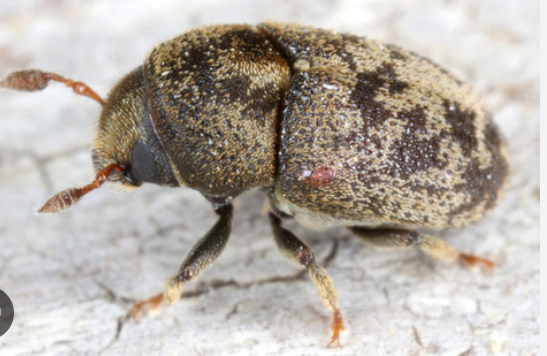
Clover Root Borers (Hylastinus obscurus) are specialized beetle pests that attack clover crops, particularly red clover (Trifolium pratense). These insects bore into the plant’s taproot, disrupting nutrient and water transport, which weakens plants and reduces forage productivity.
Because their feeding occurs underground, infestations are often overlooked until plants show signs of decline. Over time, populations can persist in fields and significantly reduce stand longevity and yield.
Taxonomy and Classification
- Common Name: Clover Root Borer
- Scientific Name: Hylastinus obscurus
- Order: Coleoptera
- Family: Curculionidae
- Type: Root-boring agricultural pest
Clover root borers are closely related to weevils and other root-boring beetles. They are highly specialized feeders that primarily target clover species.
Identification
Both adult and larval stages are important for identification.
- Adults: Small (2–2.5 mm), cylindrical, dark brown to black beetles
- Surface: Pitted wing covers (elytra) with fine yellowish hairs
- Larvae: Creamy-white, legless, C-shaped grubs with brown head capsule
The most definitive sign of infestation is found inside the root:
- Internal Tunneling: Meandering galleries within the taproot
- Frass: Reddish-brown waste material filling tunnels
Damage is confirmed by splitting the root and inspecting for internal feeding.
Distribution and Habitat
Clover root borers are found in temperate regions throughout the United States and other clover-growing areas.
They are most commonly associated with:
- Red clover fields
- Forage production systems
- Pastures and agricultural soils
Infestations are more common in established stands, particularly after the first year of growth.
Behavior and Life Cycle
Clover root borers undergo complete metamorphosis.
The lifecycle includes:
- Egg Stage: Eggs are laid near the base of clover plants
- Larval Stage: Larvae bore into and feed within the taproot
- Pupal Stage: Pupation occurs within the root or soil
- Adult Stage: Adults emerge and disperse to new plants
One or more generations may occur per year depending on environmental conditions.
Feeding and Damage
Clover root borers cause damage through internal root feeding.
- Vascular Disruption: Feeding severs nutrient and water pathways
- Root Tunneling: Weakens plant structure and storage tissue
- Secondary Infection: Tunnels allow entry of root-rot pathogens
- Plant Decline: Leads to wilting, stunting, and eventual death
Fields may show patchy, thinning stands, especially in the second year of growth.
Management and Control
Effective management focuses on cultural practices that disrupt the pest lifecycle.
| Strategy | Purpose | Benefit |
|---|---|---|
| Crop Rotation | Rotate with non-legume crops for multiple years | Eliminates host plants and reduces populations |
| Post-Harvest Tillage | Deep plowing after final harvest | Exposes larvae to predators and environmental stress |
| Resistant Varieties | Use tolerant or alternative clover species | Reduces susceptibility to infestation |
| Field Monitoring | Inspect roots for internal damage | Confirms infestation and guides management decisions |
Early detection and proper field management are essential for reducing long-term damage.
Prevention
- Avoid planting clover in previously infested fields
- Rotate crops regularly to break pest cycles
- Maintain healthy soil conditions
- Remove and destroy heavily infested plants
- Avoid planting near existing infested stands
Preventative strategies are critical for maintaining productive clover stands.
Related Articles
Conclusion
Clover root borers are hidden but highly destructive pests that compromise root systems and reduce forage production. Their underground feeding makes early detection challenging, but their long-term impact on clover stands can be severe.
Through crop rotation, soil management, and regular monitoring, infestations can be minimized, helping maintain healthy and productive forage systems.