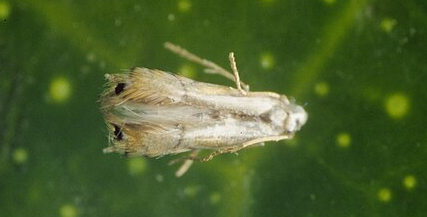
Citrus Leafminers (Phyllocnistis citrella) are small moth larvae that feed within citrus leaves, creating distinctive serpentine tunnels just beneath the leaf surface. These pests primarily attack new growth and are especially damaging to young citrus trees and nursery stock.
Although mature trees can tolerate minor infestations, repeated damage reduces photosynthesis, weakens plant vigor, and increases susceptibility to disease, particularly bacterial infections such as citrus canker.
Taxonomy and Classification
- Common Name: Citrus Leafminer
- Scientific Name: Phyllocnistis citrella
- Order: Lepidoptera
- Family: Gracillariidae
- Type: Leaf-mining moth pest
Citrus leafminers undergo complete metamorphosis, developing through egg, larva, pupa, and adult stages.
Identification
The adult moth is extremely small and rarely noticed.
- Adult: Tiny (about 4 mm wingspan), silvery-white with dark markings on the wings
- Larva: Minute, translucent, yellowish-green and found inside leaves
The most recognizable sign of infestation is:
- Serpentine, silvery trails on leaves
- Central dark line of frass within the tunnel
- Leaf curling and distortion
These tunnels are a key diagnostic feature and indicate active larval feeding.
Distribution and Habitat
Citrus leafminers are found in citrus-growing regions worldwide and are established throughout parts of the United States, particularly in:
- Florida
- California
- Gulf Coast regions
They are closely associated with new flush growth and are most active when young leaves are present.
Behavior and Life Cycle
Citrus leafminers reproduce rapidly and produce multiple generations per year, especially in warm climates.
The lifecycle includes:
- Egg Stage: Eggs are laid on the surface of young leaves
- Larval Stage: Larvae burrow into leaf tissue and begin feeding
- Pupal Stage: Pupation occurs at the edge of the leaf, often causing it to curl
- Adult Stage: Adults emerge and repeat the cycle
Larvae are protected inside the leaf, making them difficult to control with many treatments.
Feeding and Damage
Citrus leafminers damage plants by feeding within leaf tissue.
- Leaf Mining: Creates winding tunnels that disrupt internal leaf structure
- Leaf Curling: Distortion protects larvae but reduces photosynthetic efficiency
- Reduced Growth: Young plants may become stunted
- Disease Entry Points: Feeding damage increases susceptibility to pathogens such as citrus canker
Damage is most severe on young trees and new growth, where it can significantly impact plant development.
Management and Control
Management focuses on protecting new growth and supporting natural enemies.
| Strategy | Purpose | Benefit |
|---|---|---|
| Horticultural Oils | Apply oils to new flush growth | Deters egg-laying and suppresses young larvae |
| Pheromone Traps | Monitor adult populations | Provides early detection of activity |
| Biological Control | Encourage parasitic wasps | Natural suppression of larvae within mines |
| Pruning | Remove heavily infested leaves | Reduces population levels |
Overuse of insecticides is discouraged, as it may harm beneficial insects that help control leafminer populations
Prevention
- Monitor new growth regularly for early signs of mining
- Avoid excessive fertilization that promotes vulnerable flush growth
- Encourage beneficial insects
- Maintain overall plant health
Preventing excessive new growth during peak activity periods can reduce infestation risk.
Related Articles
Conclusion
Citrus leafminers are persistent pests that damage foliage and weaken citrus plants, particularly young trees. Their hidden feeding behavior makes them challenging to control and increases the risk of disease infection.
Through proper monitoring, biological control, and targeted treatments, infestations can be effectively managed while preserving plant health and productivity.