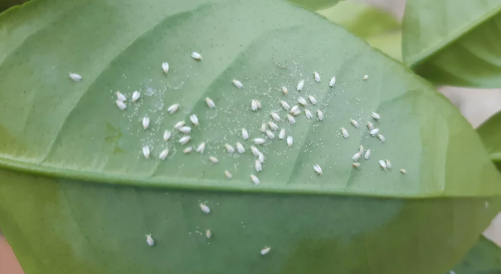
Citrus Whiteflies (Dialeurodes citri) are small, sap-sucking insects that infest citrus trees and a wide range of ornamental plants. These pests weaken plants by extracting sap and producing large amounts of honeydew, which leads to the development of sooty mold that interferes with photosynthesis.
Whiteflies are persistent pests in warm climates, where they can reproduce continuously and form large infestations. Their rapid reproduction and ability to disperse easily make them a serious concern in both residential landscapes and commercial citrus production.
Taxonomy and Classification
- Common Name: Citrus Whitefly
- Scientific Name: Dialeurodes citri
- Order: Hemiptera
- Family: Aleyrodidae
- Type: Sap-feeding plant pest
Despite their name, whiteflies are not true flies but are closely related to aphids and other sap-feeding insects.
Identification
Citrus whiteflies are very small but can be identified by their appearance and behavior.
- Adults: Tiny, white, moth-like insects approximately 1.5 mm long
- Wings: Covered in a white, powdery wax
- Nymphs: Flat, oval, and scale-like, attached to leaf undersides
- Eggs: Pale yellow, often laid in clusters or patterns on new growth
Key signs of infestation include:
- Clouds of white insects when plants are disturbed
- Sticky honeydew on leaves and surfaces
- Black sooty mold coating foliage
- Yellowing or chlorotic leaves
Whiteflies are most commonly found on the undersides of leaves, where they feed and reproduce.
Distribution and Habitat
Citrus whiteflies are widespread in warm and subtropical regions, particularly across the southern United States.
They infest:
- Citrus trees (orange, lemon, lime)
- Ornamental plants such as gardenias
- Greenhouse crops
They prefer tender new growth and sheltered leaf surfaces, where conditions are ideal for feeding and reproduction.
Behavior and Life Cycle
Citrus whiteflies undergo incomplete metamorphosis, with egg, nymph, and adult stages.
The lifecycle includes:
- Egg Stage: Eggs are laid on the underside of leaves
- Nymph Stage: Nymphs attach to the leaf surface and feed on sap
- Adult Stage: Winged adults emerge and disperse to new plants
In warm climates, multiple overlapping generations occur, allowing populations to increase rapidly.
Feeding and Damage
Citrus whiteflies cause damage through sap feeding and honeydew production.
- Sap Extraction: Reduces plant vigor and causes leaf yellowing
- Honeydew Production: Sticky residue coats leaves and fruit
- Sooty Mold Growth: Black fungal growth blocks sunlight
- Reduced Photosynthesis: Limits plant energy production
- Yield Reduction: Affects fruit quality and quantity
Heavy infestations can lead to plant decline and significant economic losses in citrus production.
Management and Control
Management focuses on reducing populations and minimizing honeydew buildup.
| Strategy | Purpose | Benefit |
|---|---|---|
| Hydraulic Washing | Use strong water sprays on leaf undersides | Removes nymphs and honeydew |
| Horticultural Oils | Apply neem or paraffinic oils | Smothers eggs and nymphs |
| Yellow Sticky Traps | Monitor and capture adult whiteflies | Provides early detection and population reduction |
| Biological Control | Encourage predators such as lady beetles | Supports natural population suppression |
Combining mechanical and biological methods is key to effective control.
Prevention
- Inspect plants regularly, especially leaf undersides
- Encourage beneficial insects
- Control ant populations that protect whiteflies
- Maintain plant health through proper care
- Reduce overcrowding and improve airflow
Preventative strategies help reduce the likelihood of severe infestations.
Related Articles
Conclusion
Citrus whiteflies are persistent sap-feeding pests that damage plants directly and indirectly through honeydew and sooty mold formation. Their rapid reproduction and widespread distribution make them difficult to manage without consistent monitoring.
By using integrated pest management strategies, including biological control, mechanical removal, and preventative care, infestations can be effectively controlled while maintaining plant health and productivity.