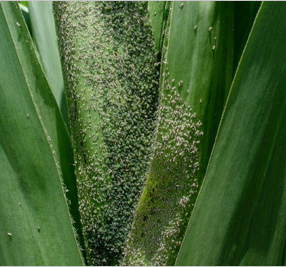
The Corn Leaf Aphid (Rhopalosiphum maidis) is a widespread sap-feeding insect that attacks corn, sorghum, and several other grasses. Colonies commonly develop within the whorl of young corn plants and around developing tassels.
Corn leaf aphids extract plant sap and produce sticky honeydew, which can interfere with pollen shed and contribute to sooty mold development. Heavy infestations may weaken plants, particularly during drought or other stressful growing conditions.
The species is also capable of transmitting certain plant viruses, making it important in cereal and grass crop production.
Taxonomy and Classification
- Common Name: Corn Leaf Aphid
- Scientific Name: Rhopalosiphum maidis
- Order: Hemiptera
- Family: Aphididae
- Genus: Rhopalosiphum
- Species: R. maidis
- Primary Hosts: Corn, sorghum, and other grasses
Physical Description and Identification
Wingless Adults: Adults are small, soft-bodied aphids, generally bluish-green to dark green, with darker legs, antennae, and cornicles.
Winged Adults: Winged forms develop when populations become crowded or environmental conditions favor dispersal.
Nymphs: Young aphids resemble smaller wingless adults.
Key Identification Features
- Dense aphid colonies inside corn whorls.
- Bluish-green insects around tassels.
- Sticky honeydew on leaves.
- Black sooty mold on heavily infested plants.
- Yellowing or weakened foliage.
- Possible interference with tassel development.
Distribution and Habitat
Corn leaf aphids occur worldwide in regions where corn and other suitable grasses are grown.
They inhabit commercial cornfields, sorghum fields, agricultural margins, and grassy vegetation.
Warm conditions and suitable host growth can support rapid reproduction.
Life Cycle and Reproduction
Nymphal Development
Young aphids begin feeding soon after birth and pass through several molts.
Adult Reproduction
Females commonly reproduce without mating during favorable growing conditions, producing live nymphs.
Winged Dispersal
Winged adults spread to additional host plants.
Multiple Generations
Numerous overlapping generations may occur during the growing season.
Damage and Signs of Infestation
- Sap Feeding: Heavy colonies weaken plant tissues.
- Honeydew: Sticky deposits accumulate on leaves and tassels.
- Sooty Mold: Dark fungal growth may develop.
- Pollination Interference: Heavy honeydew deposits may interfere with pollen release.
- Virus Transmission: Aphids can transmit certain plant viruses.
- Reduced Growth: Severe infestations may stress young plants.
Management and Integrated Pest Management (IPM)
1. Monitor Corn Whorls
Inspect young plants and developing tassels for aphid colonies.
2. Encourage Natural Enemies
Lady beetles, lacewings, hoverfly larvae, and parasitoid wasps can suppress aphid populations.
3. Avoid Excess Nitrogen
Balanced fertilization may help prevent overly succulent growth that favors aphid development.
4. Maintain Crop Health
Appropriate irrigation and soil management reduce plant stress.
5. Use Economic Thresholds
Apply treatments only when local monitoring recommendations indicate a risk of economic damage.
6. Use Selective Insecticides
When necessary, choose registered products that minimize disruption of beneficial insects.
Conclusion
The Corn Leaf Aphid (Rhopalosiphum maidis) is a widespread corn pest that can cause direct feeding injury, honeydew contamination, and virus transmission. Regular monitoring, natural enemy conservation, balanced crop management, and selective treatments can help maintain populations below damaging levels.