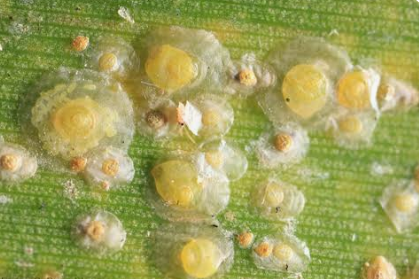
The Coconut Scale (Aspidiotus destructor) is an armored scale insect that attacks coconut palms, banana plants, ornamental palms, and numerous other tropical hosts. It is an important agricultural pest in tropical regions where coconut production supports local economies.
Coconut scale insects attach to leaves and other plant surfaces, feeding on plant tissues beneath protective covers. Heavy infestations can cause yellowing, premature leaf death, reduced plant vigor, and lower coconut productivity.
Severe outbreaks may cover large portions of palm fronds with scale insects, creating extensive damage and reducing photosynthetic capacity.
Taxonomy and Classification
- Common Name: Coconut Scale
- Alternative Name: Coconut Scale Insect
- Scientific Name: Aspidiotus destructor
- Order: Hemiptera
- Family: Diaspididae
- Genus: Aspidiotus
- Species: A. destructor
- Hosts: Coconut palms, bananas, ornamental palms, and other tropical plants
Physical Description and Identification
Adult Females: Females remain beneath small, circular, translucent to yellowish protective covers.
Male Scales: Males develop beneath smaller protective covers before emerging as winged adults.
Eggs: Eggs develop beneath female scale coverings.
Crawlers: Newly hatched nymphs are tiny, mobile insects that disperse before settling.
Key Identification Features
- Numerous small circular scales on palm leaves.
- Yellowish or pale protective covers.
- Leaf yellowing around feeding sites.
- Premature drying of heavily infested fronds.
- Reduced plant vigor.
- Absence of honeydew production.
Distribution and Habitat
Coconut scale occurs throughout many tropical and subtropical regions.
It is associated with coconut plantations, banana-growing areas, ornamental landscapes, and tropical nurseries.
Warm climates and abundant host plants support repeated generations.
Life Cycle and Reproduction
Egg Stage
Females produce eggs beneath their protective covers.
Crawler Stage
Young crawlers disperse across host plants before settling.
Immature Development
Settled nymphs begin feeding and producing protective coverings.
Adult Stage
Females remain attached to plants, while males develop into winged adults. Multiple generations may overlap.
Damage and Signs of Infestation
- Leaf Yellowing: Feeding causes chlorosis.
- Reduced Photosynthesis: Heavy infestations damage functional foliage.
- Premature Leaf Death: Severely affected fronds may dry and die.
- Reduced Growth: Persistent feeding weakens palms.
- Lower Yield: Severe infestations can reduce coconut production.
Management and Integrated Pest Management (IPM)
1. Monitor Palm Foliage
Inspect leaf undersides and developing fronds for scale colonies.
2. Encourage Natural Enemies
Predatory beetles and parasitoid wasps are important biological control agents.
3. Remove Severely Infested Leaves
Prune damaged fronds when appropriate, avoiding excessive removal of healthy foliage.
4. Protect Beneficial Insects
Avoid unnecessary broad-spectrum insecticide applications.
5. Use Registered Horticultural Oils
Where practical, properly applied oils may suppress exposed scale stages.
6. Inspect Plant Material
Check nursery stock and transported plants to prevent spread.
Conclusion
The Coconut Scale (Aspidiotus destructor) is an important tropical armored scale pest capable of damaging coconut palms and other host plants. Early detection, biological control, plant sanitation, and selective treatments can help prevent severe infestations and protect palm productivity.