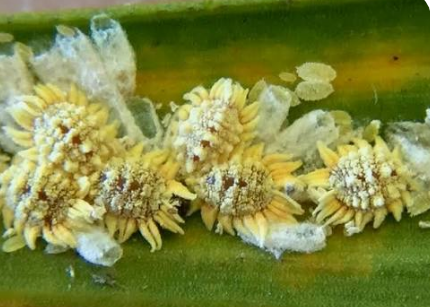
The Coconut Mealybug (Nipaecoccus nipae) is a sap-feeding insect that attacks coconut palms, ornamental palms, and numerous tropical plants. It is also commonly known as the spiked mealybug because of the conspicuous waxy filaments surrounding its body.
These insects feed on plant sap and produce sticky honeydew, which encourages the growth of black sooty mold. Heavy infestations can weaken plants, cause leaf discoloration, and reduce ornamental or agricultural value.
Coconut mealybugs are especially important in tropical landscapes, nurseries, and palm-growing regions where warm conditions permit continued reproduction.
Taxonomy and Classification
- Common Name: Coconut Mealybug
- Alternative Name: Spiked Mealybug
- Scientific Name: Nipaecoccus nipae
- Order: Hemiptera
- Family: Pseudococcidae
- Genus: Nipaecoccus
- Species: N. nipae
- Hosts: Coconut palms, ornamental palms, and other tropical plants
Physical Description and Identification
Adult Females: Females are oval, soft-bodied insects covered with white wax. Their bodies often have a pinkish or reddish appearance beneath the coating.
Waxy Filaments: Prominent wax projections extend around the body, creating a spiked appearance.
Eggs: Females produce eggs in protective waxy masses.
Nymphs: Young mealybugs resemble smaller adults and move between feeding locations.
Key Identification Features
- White, wax-covered insects on palm foliage.
- Prominent spiky wax filaments.
- Colonies on leaf undersides and protected plant surfaces.
- Sticky honeydew deposits.
- Black sooty mold on foliage.
- Ant activity associated with mealybug colonies.
Distribution and Habitat
Coconut mealybugs occur in tropical and subtropical regions worldwide.
They inhabit coconut plantations, ornamental landscapes, palm nurseries, greenhouses, and other environments containing suitable host plants.
Warm temperatures and protected feeding locations favor population development.
Life Cycle and Reproduction
Egg Stage
Females deposit eggs within protective waxy structures.
Nymphal Stage
Young mealybugs emerge and disperse to suitable feeding sites.
Adult Stage
Adult females continue feeding and reproducing. Several overlapping generations may occur annually.
Damage and Signs of Infestation
- Sap Feeding: Heavy infestations weaken plant tissues.
- Honeydew: Sticky secretions coat foliage.
- Sooty Mold: Black fungal growth develops on honeydew.
- Leaf Discoloration: Infested foliage may yellow.
- Reduced Ornamental Quality: Visible colonies and mold reduce appearance.
- Plant Stress: Persistent infestations can affect growth.
Management and Integrated Pest Management (IPM)
1. Inspect Palms Regularly
Check leaf undersides, leaf bases, and sheltered plant areas.
2. Encourage Natural Enemies
Predatory beetles, lacewings, and parasitoid wasps can help suppress mealybugs.
3. Manage Ants
Reduce ant activity where ants protect honeydew-producing colonies.
4. Remove Infested Material
Prune heavily infested foliage where practical without damaging palm health.
5. Apply Registered Oils or Soaps
Horticultural oils and insecticidal soaps may suppress exposed mealybugs when labeled for the host plant.
6. Inspect Nursery Stock
Prevent accidental introduction by checking incoming plants.
Conclusion
The Coconut Mealybug (Nipaecoccus nipae) is a tropical sap-feeding pest that can damage palms and ornamental plants. Its waxy covering and protected feeding habits make infestations persistent. Regular monitoring, biological control, ant management, and selective treatments can reduce populations and protect plant health.