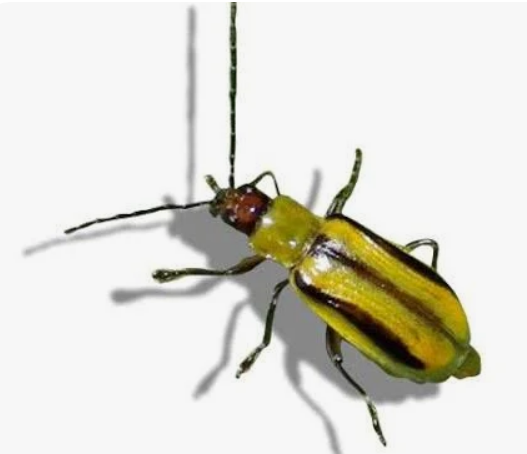
Corn Rootworms (Diabrotica species) are among the most economically important insect pests of corn production in North America. Their larvae feed on corn roots, reducing water and nutrient uptake and weakening the plant’s ability to remain upright.
Several species are collectively known as corn rootworms, including the western corn rootworm (Diabrotica virgifera virgifera), northern corn rootworm (Diabrotica barberi), and southern corn rootworm (Diabrotica undecimpunctata howardi).
Root feeding can cause extensive pruning of the root system, resulting in plant lodging, reduced growth, and significant yield losses. Adult beetles may also feed on corn silks, pollen, and foliage.
Taxonomy and Classification
- Common Name: Corn Rootworm
- Scientific Name: Diabrotica spp.
- Order: Coleoptera
- Family: Chrysomelidae
- Genus: Diabrotica
- Important Species: Western, northern, and southern corn rootworms
- Primary Economic Host: Corn (Zea mays)
Physical Description and Identification
Western Adults: Yellowish beetles with dark stripes or markings on the wing covers. Females typically display more distinct longitudinal stripes than males.
Northern Adults: Small beetles with relatively uniform greenish or yellow-green coloration.
Southern Adults: Yellow-green beetles with dark spots. Adults are also commonly called spotted cucumber beetles.
Larvae: Rootworm larvae are slender, creamy-white grubs with brown head capsules and a dark plate near the rear of the body.
Key Identification Features
- White larvae feeding on corn roots.
- Pruned or damaged root systems.
- Corn plants leaning or lodging after wind and rain.
- Curved or goose-necked stalks.
- Adult beetles feeding on silks and pollen.
- Reduced plant vigor and uneven field growth.
Distribution and Habitat
Corn rootworms occur throughout major North American corn-growing regions. The western corn rootworm has also become established in parts of Europe.
They are especially important in fields where corn is grown repeatedly, although species-specific differences in host use and egg-laying behavior influence crop rotation effectiveness.
Life Cycle and Reproduction
Egg Stage
Western and northern corn rootworms typically deposit eggs in soil, where they overwinter.
Larval Stage
Larvae hatch and feed on corn roots, passing through several developmental stages.
Pupal Stage
Mature larvae pupate in the soil.
Adult Stage
Adults emerge, feed, mate, and lay eggs. Western and northern corn rootworms generally produce one generation annually.
Southern corn rootworm biology differs because it can use a broader range of hosts and may produce multiple generations in warm regions.
Damage and Signs of Infestation
- Root Pruning: Larvae consume root tissues and reduce anchorage.
- Plant Lodging: Damaged plants may fall or lean.
- Goose-Necking: Lodged stalks curve upward as they resume growth.
- Reduced Water Uptake: Root injury increases drought stress.
- Silk Feeding: Adults may clip corn silks and interfere with pollination.
- Yield Loss: Severe infestations can substantially reduce production.
Management and Integrated Pest Management (IPM)
1. Rotate Crops
Rotating corn with non-host crops can interrupt the life cycle of many rootworm populations. However, rotation-resistant western corn rootworm populations and extended diapause in northern corn rootworm may reduce effectiveness in some regions.
2. Monitor Adult Beetles
Use field scouting and locally recommended trapping methods to assess adult abundance and future risk.
3. Evaluate Root Injury
Inspect root systems and use standardized root injury ratings where appropriate.
4. Use Resistant Hybrids
Where suitable, select corn hybrids with effective rootworm resistance traits and follow resistance management requirements.
5. Protect Beneficial Organisms
Encourage soil health and natural enemies that contribute to pest suppression.
6. Apply Registered Treatments
Use seed treatments, soil insecticides, or other approved controls only when justified by local risk assessments.
Conclusion
Corn Rootworms (Diabrotica spp.) are major agricultural pests whose larvae damage corn roots and increase the risk of lodging and yield loss. Crop rotation, monitoring, resistant hybrids, and appropriate resistance management are essential components of effective long-term control.