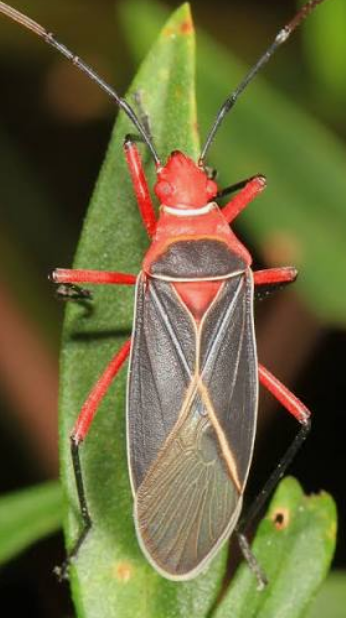
The Cotton Stainer (Dysdercus suturellus) is a brightly colored true bug that attacks cotton plants and several related hosts in the mallow family (Malvaceae). It is particularly important because its feeding can damage developing cotton seeds and contribute to discoloration of cotton lint.
Both adult and immature cotton stainers use piercing-sucking mouthparts to feed on seeds and other plant tissues. Their feeding can reduce seed viability, interfere with boll development, and create opportunities for microorganisms associated with lint staining.
The species is associated with warm regions and may occur on cotton, ornamental hibiscus, and other malvaceous plants.
Taxonomy and Classification
- Common Name: Cotton Stainer
- Scientific Name: Dysdercus suturellus
- Order: Hemiptera
- Family: Pyrrhocoridae
- Genus: Dysdercus
- Species: D. suturellus
- Primary Hosts: Cotton, hibiscus, and other plants in the mallow family
Physical Description and Identification
Adults: Adult cotton stainers are elongated true bugs, generally approximately 10–15 millimeters long. Their bodies are predominantly reddish-orange with contrasting dark markings on the wings and other body regions.
Eggs: Females deposit eggs in soil, plant debris, or other protected locations near suitable host plants.
Nymphs: Immature cotton stainers are reddish and wingless, gradually developing wing pads as they mature.
Key Identification Features
- Bright reddish-orange bugs with dark wing markings.
- Groups of adults and nymphs around cotton bolls.
- Feeding activity on developing seeds.
- Discolored or damaged cotton lint.
- Reduced seed quality.
- Aggregations around fallen seeds or host plant debris.
Distribution and Habitat
Dysdercus suturellus occurs in warm regions of the Americas, including parts of the southeastern United States and the Caribbean.
It inhabits cotton-growing areas, ornamental landscapes, gardens, and locations containing suitable malvaceous hosts.
Populations may increase where cotton bolls, fallen seeds, or alternate host plants provide abundant feeding opportunities.
Life Cycle and Reproduction
Cotton stainers undergo incomplete metamorphosis, developing through egg, nymphal, and adult stages.
Egg Stage
Females deposit eggs in protected locations near host plants.
Nymphal Stages
Young bugs pass through five nymphal instars while feeding on suitable plant materials.
Adult Stage
Adults continue feeding, mate, and reproduce. Multiple generations may occur annually in favorable climates.
Damage and Signs of Infestation
- Seed Feeding: Bugs puncture developing seeds and extract nutrients.
- Reduced Seed Viability: Feeding may damage embryos and reduce germination.
- Lint Staining: Feeding-associated microorganisms may contribute to discoloration.
- Boll Damage: Heavy feeding can reduce cotton quality.
- Yield Loss: Severe infestations may reduce marketable cotton production.
- Secondary Contamination: Feeding wounds may facilitate microbial activity.
Management and Integrated Pest Management (IPM)
1. Monitor Cotton Bolls
Inspect developing and mature bolls for adults, nymphs, and feeding damage.
2. Remove Fallen Seeds
Collect or manage fallen cotton seeds and crop residues that may support pest populations.
3. Manage Alternate Hosts
Control unnecessary volunteer cotton and suitable host weeds around production areas.
4. Encourage Natural Enemies
Predatory insects and other beneficial organisms may contribute to suppression.
5. Maintain Field Sanitation
Remove crop debris and manage postharvest residues appropriately.
6. Use Registered Treatments
Apply insecticides only when monitoring indicates that populations may cause economic damage. Follow local recommendations and label requirements.
Conclusion
The Cotton Stainer (Dysdercus suturellus) is an important seed-feeding bug capable of reducing cotton quality and contributing to lint discoloration. Regular monitoring, sanitation, alternate host management, and selective treatments can help protect cotton production from damaging infestations.