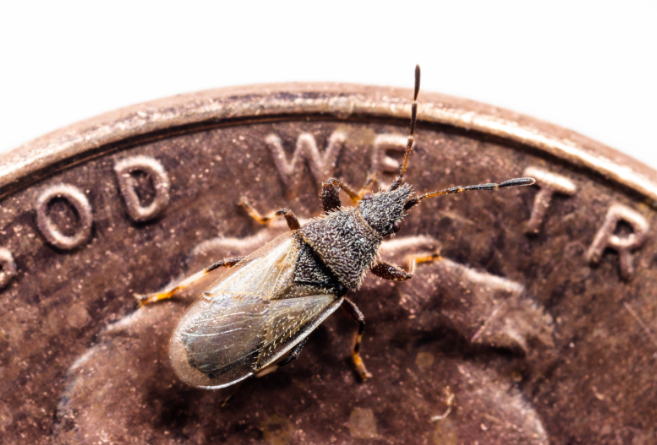
Cotton seed bugs are small, seed-feeding insects that can damage cotton, okra, hibiscus, and other plants in the mallow family. The principal species of concern is Oxycarenus hyalinipennis, an invasive true bug capable of forming dense colonies inside open cotton bolls and mature seedpods. At first glance, a heavily infested boll may appear to be covered with fleas because numerous tiny, dark insects move rapidly through the lint.
The cotton seed bug is particularly concerning because it reduces seed quality and can contaminate cotton lint during processing. It is also easily transported with unginned cotton, plant debris, seedpods, cut flowers, cargo, and used agricultural materials. In the United States, suspected cotton seed bugs should be reported rather than treated or transported without official identification.
Taxonomy and Classification
- Kingdom: Animalia
- Phylum: Arthropoda
- Class: Insecta
- Order: Hemiptera
- Suborder: Heteroptera
- Family: Oxycarenidae
- Genus: Oxycarenus
- Species: Oxycarenus hyalinipennis
Cotton seed bugs are true bugs and have piercing-sucking mouthparts. Unlike caterpillars and beetles that chew plant material, these insects insert their slender mouthparts into seeds, inject saliva, and withdraw liquefied nutrients.
Identification
Adult Cotton Seed Bugs
Adults are approximately 3.5 to 5 millimeters long, making them smaller than many common stink bugs and plant bugs. Their bodies are generally brownish-black to black, with distinctive translucent or whitish wings. The head, thorax, and much of the abdomen are dark. Part of the second antennal segment may be pale yellow or yellow-brown.
The body is somewhat flattened and elongated, with the front end appearing narrower than the rounded rear portion. Males are usually slightly smaller than females. Cotton seed bugs can be confused with chinch bugs, false chinch bugs, and other small seed bugs, so identification based only on size and color is unreliable.
Eggs and Nymphs
Eggs are less than one millimeter long and have an elongated oval shape. Fresh eggs are usually pale yellow but may become orange or pink as they develop. Females place them inside cotton bolls or among the seeds of other suitable host plants, either individually or in small groups.
Newly hatched nymphs are wingless and have conspicuous orange-red or pinkish-red abdomens. Older nymphs become darker but retain reddish coloring on the abdomen. They pass through five immature stages before becoming adults. Nymphs commonly gather in dense feeding groups around mature seeds.
Distribution and Habitat
The cotton seed bug is believed to be native to Africa. It has spread into parts of Asia, Europe, the Middle East, South America, and the Caribbean. Its ability to hide in plant material and human-made objects allows it to travel well beyond its original range.
The species was detected in the Florida Keys in 2010 but was declared eradicated from Florida in 2014. It was subsequently discovered in urban areas of Southern California in 2019 and has since been found in several California counties. Its presence near cotton-growing regions makes early detection especially important.
During the growing season, cotton seed bugs occur around open cotton bolls and mature seedpods. When seeds are unavailable or conditions become unfavorable, adults may hide in curled leaves, plant litter, bark crevices, dried seedpods, grass roots, storage materials, vehicles, crates, posts, walls, and equipment.
Host Plants
The most important reproductive hosts belong to the mallow family, Malvaceae. Cotton is the principal agricultural host, but populations can also reproduce on several food crops, ornamentals, fiber crops, weeds, and native plants.
- Cultivated and wild cotton
- Okra
- Hibiscus
- Kenaf
- Roselle
- Jute
- Cheeseweed and other mallows
- Native Malvaceae species
Adults have also been observed obtaining moisture or feeding opportunistically on figs, dates, grapes, avocados, persimmons, and other fruits. However, finding adults on a plant does not necessarily mean that the plant supports their complete development and reproduction.
Life Cycle and Behavior
Reproduction usually begins when suitable host plants produce mature seeds. Females move to cotton bolls or other seed capsules and deposit their eggs close to a food source. Depending on temperature, eggs may hatch within approximately four to eight days.
The nymphs feed together on seeds and progress through five stages. Development from egg to adult may be completed in about three to four weeks under favorable conditions. In warm climates with a continuous supply of suitable seeds, four to seven generations may occur during a year.
Adults and nymphs frequently form tightly packed colonies. These aggregations may produce an unpleasant odor, especially when insects are disturbed or crushed. When host seeds become scarce, adults may enter a dormant period and remain hidden until food becomes available again.
Cotton Seed Bug Damage
Seed Damage
Adults and nymphs pierce mature seeds and remove their contents. Feeding may leave seeds shriveled, discolored, lightweight, or poorly developed. Infested cottonseed can have reduced germination, lower vigor, decreased weight, and diminished oil content.
Seed injury is not always visible from outside the boll. Plants may appear healthy even when the seeds inside open bolls are being damaged. This makes inspections of open bolls and exposed seeds an important part of detection.
Lint Contamination
Large numbers of cotton seed bugs may remain hidden in lint until harvest. If the insects are crushed during ginning, their bodies can stain cotton fibers pink or reddish-brown. The resulting discoloration and odor can reduce fiber quality and market value.
Damage to Other Hosts
Okra and hibiscus seed production may decline when colonies feed within mature pods or capsules. Opportunistic feeding on fruit may produce greasy spots, discoloration, contamination, or unpleasant odors. Dense populations could also reduce viable seed production in rare or ecologically important native mallows.
Monitoring and Detection
Inspect cotton, okra, hibiscus, and related hosts when mature seeds are present. Pay special attention to field edges, corners, open bolls, mature pods, and dried seed capsules. Look for clusters of small dark adults, red nymphs, shriveled seeds, staining, or a strong odor.
During periods when plants are not producing seed, adults may be found by examining leaf litter, dead leaves, bark crevices, used sacks, crates, walls, posts, and other sheltered locations. Cotton processors, seed companies, nurseries, and facilities handling unginned cotton should remain alert for insects concealed in stored material.
Because several native insects resemble cotton seed bugs, professional confirmation is essential. Clear photographs can assist with preliminary identification, but specimens may be required for a reliable determination.
Management and Control
Report Suspected Infestations
In the United States, early detection is the most important management tool. Do not transport suspected insects, infested bolls, plant debris, sacks, or equipment to another property. Take clear photographs or safely retain a specimen in a secure container, then contact a county Extension office, State Plant Regulatory Official, state agriculture department, or local USDA office.
Sanitation and Host Management
Remove crop residue, old cotton stalks, dried bolls, and abandoned seedpods where regulations permit. Manage cheeseweed and other weedy mallows around fields, storage sites, irrigation areas, and equipment yards. These plants can provide food and breeding sites between cultivated crops.
Cover stored seed cotton before ginning and inspect material arriving from areas where cotton seed bugs occur. Clean equipment, vehicles, crates, and reusable sacks before moving them between sites. Dispose of infested plant material according to instructions from agricultural authorities rather than adding it to ordinary compost.
Chemical and Biological Control
Management research is continuing, and there is no universal treatment program for this invasive pest. Cotton seed bugs may be difficult to reach with insecticides because they hide inside bolls, seedpods, debris, and protected crevices. The species has also shown an ability to develop insecticide resistance.
Commercial growers should use insecticides only under current Extension and regulatory guidance. Products must be labeled for the crop, pest, location, and intended use. Rotating effective modes of action may help delay resistance when treatments are authorized and justified.
Assassin bugs, lacewing larvae, damsel bugs, and other generalist predators may consume cotton seed bugs. These natural enemies can contribute to suppression but are not considered sufficient for controlling a new or regulated infestation by themselves.
Conclusion
Cotton seed bugs are tiny insects with the potential to cause substantial agricultural and regulatory problems. Their feeding reduces seed quality, while insects crushed during cotton processing can stain valuable lint. Their small size, hidden feeding sites, broad range of mallow hosts, and tendency to travel in plant material make prevention and early detection especially important. Anyone finding suspicious dark bugs with translucent wings or red nymphs in open cotton bolls, okra pods, or hibiscus capsules should avoid moving the material and request professional identification promptly.