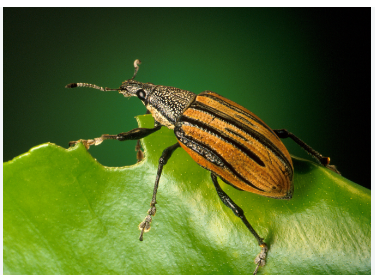
The Citrus Root Weevil (Diaprepes abbreviatus), also known as the Diaprepes root weevil, is a destructive beetle pest that attacks citrus trees, ornamental plants, and numerous other agricultural hosts. Native to the Caribbean, this species has become an important invasive pest in parts of the United States, particularly Florida and California.
The insect causes damage during both its adult and larval stages. Adult beetles feed on leaves, creating irregular notches along leaf margins, while larvae develop underground and feed on plant roots. Root feeding is especially damaging because it reduces water and nutrient uptake, weakens trees, and increases susceptibility to root diseases.
Heavy infestations may cause declining tree vigor, canopy thinning, reduced fruit production, and eventual tree death. Because larvae remain concealed in the soil, infestations may become established before serious symptoms are noticed.
Taxonomy and Classification
- Common Name: Citrus Root Weevil
- Alternative Name: Diaprepes Root Weevil
- Scientific Name: Diaprepes abbreviatus
- Order: Coleoptera
- Family: Curculionidae
- Genus: Diaprepes
- Species: D. abbreviatus
- Primary Hosts: Citrus, ornamental trees, shrubs, and numerous agricultural plants
The Citrus Root Weevil belongs to the family Curculionidae, commonly known as the true weevils or snout beetles. Members of this family possess distinctive elongated mouthparts and often develop as plant-feeding larvae.
Physical Description and Identification
Adult Beetles: Adults are relatively large weevils, commonly measuring approximately 10–20 millimeters long. Their bodies are dark beneath variable patterns of colored scales that may appear yellow, orange, white, or greenish. They possess a broad snout and elbowed antennae.
Eggs: Females deposit clusters of eggs between overlapping leaves, securing the leaf surfaces together with an adhesive secretion.
Larvae: The larvae are creamy-white, legless grubs with brownish head capsules. They develop in the soil and feed on roots.
Pupae: Pupation occurs underground within earthen chambers.
Key Identification Features
- Large, colorful weevils feeding on citrus foliage.
- Irregular semicircular notches along leaf margins.
- Egg masses enclosed between attached leaves.
- Cream-colored, legless larvae in soil around roots.
- Damaged or girdled roots.
- Tree decline without an obvious aboveground cause.
Distribution and Habitat
Diaprepes abbreviatus is native to the Caribbean and has become established in parts of the southeastern United States and California. It is especially important in Florida citrus production.
The species inhabits citrus orchards, ornamental nurseries, residential landscapes, and agricultural areas containing suitable hosts.
Its broad host range allows populations to persist on numerous plant species. Soil conditions, temperature, moisture, and host availability influence larval survival and population development.
Life Cycle and Reproduction
The Citrus Root Weevil undergoes complete metamorphosis, passing through egg, larval, pupal, and adult stages.
Egg Stage
Females deposit egg clusters between overlapping leaves. Newly hatched larvae fall to the ground and enter the soil.
Larval Stage
Larvae feed initially on smaller roots before attacking larger structural roots as they grow. This stage may last several months or longer depending on environmental conditions.
Pupal Stage
Mature larvae form pupal chambers in the soil and transform into adults.
Adult Stage
Adults emerge from the soil, feed on foliage, mate, and lay eggs. Overlapping generations may occur in warm regions.
Damage and Signs of Infestation
- Leaf Notching: Adult beetles chew irregular sections from leaf edges.
- Root Feeding: Larvae consume feeder roots and damage larger roots.
- Root Girdling: Severe feeding can interrupt water and nutrient transport.
- Tree Decline: Infested trees may exhibit yellowing, thinning canopies, and reduced growth.
- Secondary Disease: Root injuries may increase susceptibility to Phytophthora root rot.
- Reduced Yield: Persistent infestations may lower fruit production.
Management and Integrated Pest Management (IPM)
1. Monitor Adult Beetles
Inspect foliage for adult weevils and characteristic leaf notching. Monitoring adult emergence helps identify periods of increased egg laying.
2. Remove Egg Masses
In small plantings, remove accessible egg masses enclosed between leaves.
3. Use Biological Control
Entomopathogenic nematodes, including certain Steinernema and Heterorhabditis species, may suppress soil-dwelling larvae under suitable conditions.
4. Protect Root Health
Maintain appropriate irrigation and drainage to reduce stress and secondary root disease.
5. Inspect Nursery Stock
Avoid moving infested plants or soil into uninfested areas. Follow applicable quarantine restrictions.
6. Apply Targeted Treatments
Where justified, use registered products directed at vulnerable life stages. Treatment timing should follow local extension recommendations.
Conclusion
The Citrus Root Weevil (Diaprepes abbreviatus) is a serious pest capable of damaging citrus trees both above and below ground. Its concealed root-feeding larvae make early detection and prevention especially important. Monitoring, biological control, root health management, and carefully timed treatments can help reduce long-term damage.