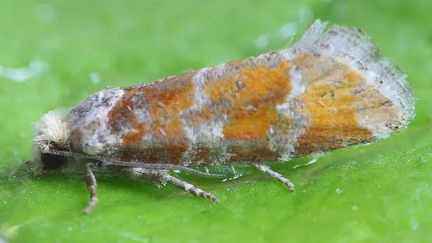
The Eastern Pine Shoot Borer (Eucosma gloriola) is a small moth whose larvae tunnel into developing pine shoots, causing shoot dieback, distorted growth, and reduced ornamental quality. This insect is associated with several pine species in eastern North America and is particularly important in young pine plantings, nurseries, and Christmas tree production.
Unlike insects that feed openly on needles, eastern pine shoot borer larvae spend much of their development concealed within new shoots. Their feeding damages internal tissues, interrupting shoot growth and causing the affected tips to wilt, brown, or die. Repeated attacks may produce irregular crowns and multiple competing leaders.
The pest is generally more significant for tree appearance and form than for the survival of established forest trees. However, damage to the terminal leader of young pines can substantially reduce their commercial or landscape value.
Taxonomy and Classification
- Common Name: Eastern Pine Shoot Borer
- Scientific Name: Eucosma gloriola
- Order: Lepidoptera
- Family: Tortricidae
- Genus: Eucosma
- Species: E. gloriola
- Primary Hosts: Pine trees (Pinus species)
- Pest Type: Shoot-boring moth
The Eastern Pine Shoot Borer belongs to the family Tortricidae, commonly known as leafroller moths. Although many tortricid caterpillars feed on leaves, this species develops within tender pine shoots.
Physical Description and Identification
Adult Moths: Adults are small, grayish to brownish moths with narrow forewings and subtle markings. They are relatively inconspicuous when resting on bark or vegetation.
Eggs: Eggs are small and deposited near suitable pine growth where newly hatched larvae can reach developing shoots.
Larvae: Caterpillars are pale to pinkish or cream-colored with darker head capsules. They possess a segmented body and develop while tunneling through shoot tissues.
Pupae: Pupation occurs in protected locations associated with the host tree or nearby debris.
Key Identification Features
- Wilting or browning of current-season pine shoots.
- Small entry holes in tender shoots.
- Frass or resin near feeding sites.
- Internal tunnels containing caterpillars.
- Dead terminal shoots and lateral branches.
- Distorted tree form following repeated attacks.
Distribution and Habitat
Eastern pine shoot borer occurs in eastern North America, where suitable pine hosts are present. It may be encountered in natural pine stands, Christmas tree plantations, ornamental landscapes, shelterbelts, and forest nurseries.
Young trees are particularly vulnerable to visible growth distortion because damage to a single terminal shoot can affect the overall shape of the tree. Open plantings containing abundant tender pine growth provide suitable conditions for egg laying and larval development.
The insect’s importance varies with pine species, local abundance, and the timing of shoot development. Trees growing under stressful conditions may recover more slowly from repeated injury.
Life Cycle and Reproduction
Eastern pine shoot borer undergoes complete metamorphosis, developing through egg, larval, pupal, and adult stages. Its seasonal development is closely associated with pine shoot growth.
Adult Emergence
Adult moths become active during the growing season and mate before females deposit eggs near suitable pine shoots.
Egg Stage
Eggs hatch into small caterpillars that seek tender developing tissues.
Larval Stage
Larvae bore into young shoots and feed internally. As feeding progresses, the damaged shoot may wilt or become discolored.
Pupal Stage
Mature larvae leave feeding sites or enter protected locations to complete development.
Seasonal Development
The species generally follows a seasonal cycle associated with spring shoot growth. Exact timing varies with climate and location.
Damage and Signs of Infestation
Larval tunneling damages the growing tissues of pine shoots. Symptoms may resemble those caused by other shoot moths, borers, frost injury, or fungal diseases.
- Shoot Dieback: Infested shoots wilt, turn brown, and may die.
- Terminal Leader Injury: Damage to the main leader can alter tree shape.
- Branch Distortion: Surviving lateral shoots may grow unevenly.
- Resin and Frass: Feeding sites may contain resin droplets or caterpillar waste.
- Reduced Ornamental Value: Misshapen trees may be unsuitable for Christmas tree or nursery markets.
- Growth Reduction: Repeated damage can slow development of young trees.
Management and Integrated Pest Management (IPM)
1. Inspect New Pine Growth
Monitor expanding shoots during spring and early summer for wilting, discoloration, and resin around entry holes.
2. Prune Infested Shoots
Remove affected shoots while larvae remain inside them. Dispose of infested material away from susceptible trees.
3. Protect Terminal Leaders
In Christmas tree plantations and nurseries, give priority to protecting the central leader because its loss can reduce tree value.
4. Encourage Natural Enemies
Conserve parasitoid wasps, predatory insects, and birds that contribute to natural pest suppression.
5. Maintain Tree Vigor
Provide appropriate spacing, irrigation during establishment, and sound soil management to support recovery from shoot damage.
6. Use Targeted Treatments When Necessary
If local monitoring indicates significant economic risk, consult extension recommendations for products and timing. Treatments must target exposed stages before larvae become protected inside shoots.
Conclusion
The Eastern Pine Shoot Borer (Eucosma gloriola) is a shoot-feeding moth that can distort and weaken young pines. Its concealed larvae make early detection important. Regular inspection, prompt removal of infested shoots, conservation of natural enemies, and careful protection of terminal leaders provide practical management options.