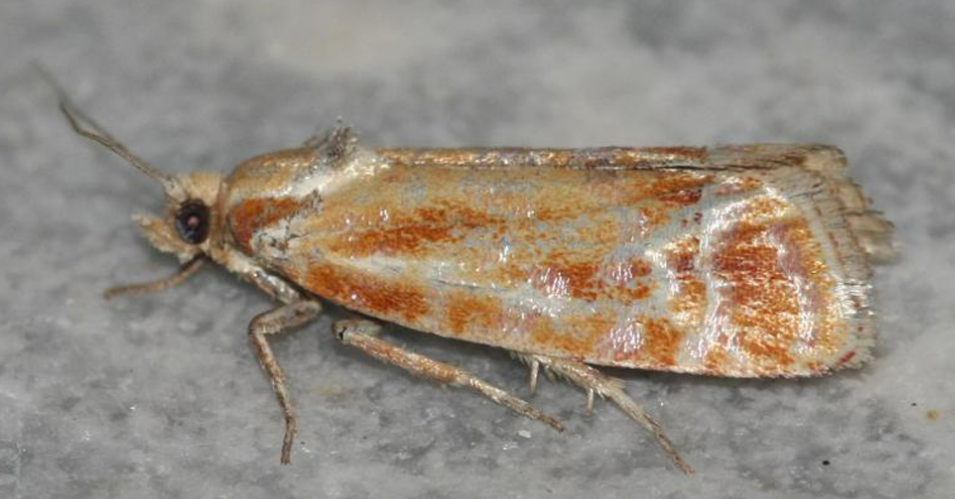
The European Pine Shoot Moth (Rhyacionia buoliana) is an invasive moth pest whose larvae feed within pine buds and developing shoots. Native to Europe and parts of Asia, this species has become established in several regions outside its original range, including North America.
The insect is particularly important in pine nurseries, Christmas tree plantations, ornamental landscapes, and young forest plantings. Larval feeding damages developing shoots, causing wilting, browning, distortion, and sometimes death of the terminal leader.
Repeated infestations can produce crooked stems, forked trunks, shortened branches, and irregular crowns. Although mature trees often tolerate limited damage, young trees may experience substantial reductions in ornamental or commercial value.
European pine shoot moth damage can resemble injury caused by other pine shoot borers, fungal diseases, or environmental stress. Examining damaged buds and shoots for caterpillars and feeding galleries helps confirm identification.
Taxonomy and Classification
- Common Name: European Pine Shoot Moth
- Scientific Name: Rhyacionia buoliana
- Order: Lepidoptera
- Family: Tortricidae
- Genus: Rhyacionia
- Species: R. buoliana
- Primary Hosts: Pine trees (Pinus species)
- Pest Type: Bud- and shoot-feeding moth
The European Pine Shoot Moth belongs to the family Tortricidae, a diverse group of moths that includes leafrollers, budworms, and shoot-feeding species.
Physical Description and Identification
Adult Moths: Adults are relatively small moths with reddish-orange to rusty-brown forewings marked by irregular silvery or pale lines. Their wingspan is commonly approximately 18–25 millimeters.
Eggs: Females deposit small eggs on pine needles and developing shoots.
Larvae: Caterpillars are initially pale and become reddish-brown or pinkish as they develop, with darker head capsules.
Pupae: Pupation occurs within protected feeding sites associated with pine shoots.
Key Identification Features
- Reddish-brown adult moths with pale wing markings.
- Wilting or browning of young pine shoots.
- Resin deposits around infested buds.
- Caterpillar galleries inside developing shoots.
- Curved or distorted terminal growth.
- Forked stems and irregular tree crowns.
Distribution and Habitat
European pine shoot moth is native to Europe and parts of Asia and has been introduced into North America and other pine-growing regions.
It inhabits pine plantations, nurseries, ornamental landscapes, Christmas tree farms, and suitable forest stands.
Scots pine, Austrian pine, and several other Pinus species may be attacked. Susceptibility varies among host species and growing conditions.
Young trees are especially vulnerable to growth distortion because injury to a terminal leader can permanently alter tree form.
Life Cycle and Reproduction
The European Pine Shoot Moth generally completes one generation annually in temperate regions.
Adult Emergence
Adults emerge during the growing season, mate, and deposit eggs on suitable pine tissues.
Egg Stage
Eggs hatch into small caterpillars that begin feeding on needles or tender shoot tissues.
Early Larval Feeding
Young larvae enter protected areas around buds and developing shoots.
Overwintering
Larvae overwinter in sheltered feeding sites associated with pine buds.
Spring Feeding
Overwintered larvae resume feeding as temperatures increase, damaging expanding shoots.
Pupation
Mature larvae pupate within protected shoot tissues before adults emerge.
Damage and Signs of Infestation
Larval feeding affects pine shoot development and tree form.
- Bud Destruction: Larvae feed within developing buds.
- Shoot Dieback: Infested shoots may wilt, brown, and die.
- Terminal Leader Damage: Injury can cause crooked or forked stems.
- Resin Accumulation: Feeding sites may contain resin and frass.
- Reduced Growth: Repeated attacks can slow development of young trees.
- Commercial Loss: Misshapen nursery and Christmas trees may lose market value.
Management and Integrated Pest Management (IPM)
1. Inspect Pine Buds
Monitor buds and new shoots for resin, discoloration, and evidence of internal feeding.
2. Prune Infested Shoots
Remove damaged shoots containing larvae before adult emergence.
3. Monitor Adult Flight
Species-specific pheromone traps may help identify adult activity and improve treatment timing.
4. Encourage Natural Enemies
Parasitoid wasps, predatory insects, and birds may contribute to natural suppression.
5. Protect Terminal Leaders
Give priority to young nursery and Christmas trees where damage to the central leader has the greatest economic impact.
6. Select Suitable Pine Species
Where practical, use pine varieties with lower susceptibility to shoot moth injury.
7. Apply Targeted Treatments
When infestations justify intervention, use registered products timed to exposed larvae before they become protected inside buds.
Conclusion
The European Pine Shoot Moth (Rhyacionia buoliana) is a significant shoot-feeding pest of young pine trees. Its larvae damage buds and shoots, potentially producing crooked stems and irregular crowns. Early monitoring, pruning, pheromone trapping, and properly timed treatments can help preserve pine growth and ornamental quality.