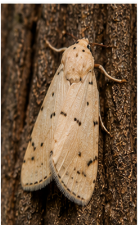
Peachtree Borer Moths (Synanthedon exitiosa) are among the most destructive insect pests of peach trees and other stone fruit crops throughout North America. Although the adult moth resembles a harmless wasp, the larval stage is responsible for extensive damage by tunneling beneath the bark and feeding on the cambium and vascular tissues near the base of the trunk and major roots. Severe infestations weaken trees, reduce fruit production, increase susceptibility to disease, and can ultimately kill young or stressed trees.
Peachtree Borers are especially problematic in commercial orchards, home fruit gardens, and ornamental landscapes containing peaches, nectarines, cherries, plums, apricots, and other members of the genus Prunus. Because the larvae spend most of their lives hidden beneath the bark, early detection and preventative management are essential components of an effective Integrated Pest Management (IPM) program.
Overview
The Peachtree Borer belongs to the clearwing moth family (Sesiidae), whose members closely resemble wasps or hornets. This remarkable mimicry helps protect the adults from predators, even though the moths cannot sting.
Unlike most moths, Peachtree Borer adults are active during daylight hours rather than at night. Females lay eggs near the soil line of susceptible trees, and newly hatched larvae bore directly into the bark where they remain concealed for nearly a year.
Taxonomy and Classification
- Order: Lepidoptera
- Family: Sesiidae
- Genus: Synanthedon
- Species: Synanthedon exitiosa
- Common Name: Peachtree Borer Moth
The species undergoes complete metamorphosis, progressing through egg, larva, pupa, and adult stages.
Identification
Adult Peachtree Borer Moths closely resemble paper wasps, making identification easier than many moth species.
- Wingspan: Approximately 25–35 mm.
- Body: Metallic dark blue to black.
- Wings: Mostly transparent with narrow dark margins.
- Legs: Long with orange or yellow highlights.
- Female: Larger with a broad orange band across the abdomen.
- Male: Smaller with several narrow yellow abdominal bands.
The clear wings and slender body make adults appear remarkably similar to stinging wasps, although they are completely harmless.
Larval Identification
The caterpillar is the destructive stage of the life cycle.
- Length: Up to 30 mm.
- Color: Creamy white body.
- Head: Dark reddish-brown.
- Body: Smooth with sparse hairs.
Larvae remain hidden beneath the bark where they feed throughout most of their development.
Distribution and Habitat
Peachtree Borer Moths are widespread throughout North America wherever stone fruit trees are grown.
Typical habitats include:
- Commercial orchards
- Backyard fruit gardens
- Home landscapes
- Nurseries
- Research orchards
- Abandoned orchards
The insect is particularly common in regions with warm summers that favor rapid larval development.
Host Plants
Peachtree Borers attack numerous members of the rose family (Rosaceae), especially stone fruits.
- Peach
- Nectarine
- Cherry
- Plum
- Apricot
- Almond
- Wild Prunus species
Young peach trees are especially vulnerable because even limited tunneling can girdle the trunk.
Life Cycle
Adult moths emerge during summer and mate shortly afterward. Females deposit eggs on bark near the soil line, around wounds, or at the base of tree trunks.
Upon hatching, larvae bore through the bark and begin feeding within the cambium and sapwood. Feeding continues throughout late summer, autumn, and the following spring.
As larvae mature, they construct pupal chambers just beneath the bark. Adults emerge through distinctive empty pupal skins that often protrude from the trunk, leaving behind evidence of infestation.
Most populations complete one generation annually.
Damage and Signs of Infestation
The larvae cause serious injury by destroying the tissues responsible for transporting water and nutrients.
Common symptoms include:
- Amber-colored gum mixed with sawdust-like frass near the base of the trunk.
- Oozing sap around entry holes.
- Wilting foliage.
- Reduced tree vigor.
- Poor fruit production.
- Branch dieback.
- Tree death following severe girdling.
Young trees are particularly susceptible because a relatively small amount of feeding can completely girdle the trunk.
Integrated Pest Management (IPM)
Successful management combines monitoring, sanitation, cultural practices, and targeted treatments.
Monitoring
- Inspect tree bases regularly for gum and frass.
- Use pheromone traps to monitor adult moth emergence.
- Watch for empty pupal skins protruding from bark.
Cultural Controls
- Maintain vigorous tree health.
- Avoid mechanical injuries to trunks.
- Protect trunks from mower and string trimmer damage.
- Remove severely infested trees.
Mechanical Control
Small infestations may sometimes be managed by carefully removing larvae from tunnels using a flexible wire, although this method is labor intensive and practical only for individual trees.
Biological Control
Several natural enemies attack Peachtree Borers.
- Parasitic wasps
- Predatory beetles
- Entomopathogenic nematodes
- Beneficial fungi
Beneficial nematodes have shown promising results when applied around the tree base to target young larvae.
Chemical Control
Preventive trunk sprays timed to coincide with egg hatch remain one of the most effective control methods in commercial orchards. Timing is critical because larvae become well protected once they enter the bark.
Pheromone monitoring helps determine the optimum treatment period while minimizing unnecessary insecticide applications.
Ecological Importance
Although considered serious orchard pests, Peachtree Borers also serve as prey for birds, predatory insects, and parasitic wasps. Their interactions with natural enemies provide valuable opportunities for biological control research.
Conservation and Research
Researchers continue developing improved pheromone lures, mating disruption systems, biological control agents, and environmentally sustainable management practices that reduce reliance on conventional insecticides.
Current studies also investigate resistant rootstocks and improved monitoring technologies capable of detecting infestations before visible damage develops.
Conclusion
Peachtree Borer Moths (Synanthedon exitiosa) are among the most economically important pests of peaches and other stone fruits in North America. Their hidden larval feeding beneath the bark can seriously weaken or kill trees if infestations go unnoticed. Early monitoring, proper orchard sanitation, pheromone trapping, and Integrated Pest Management remain the most effective tools for protecting valuable fruit trees from this destructive clearwing moth.