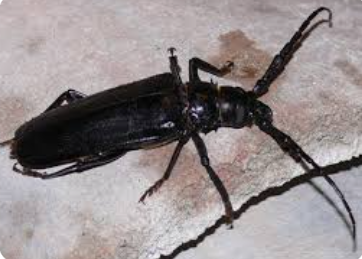
The Palo Verde Beetle (Derobrachus hovorei and related Derobrachus species) is one of the largest beetles found in the Southwestern United States. Known for its massive size, long antennae, and intimidating appearance, this beetle is commonly associated with the desert regions of Arizona, New Mexico, southern California, and parts of northern Mexico. Despite its frightening look, the Palo Verde Beetle is generally harmless to humans. However, its larvae can damage the roots of trees, particularly palo verde trees, making it an important pest in desert landscaping and urban environments.
Taxonomy and Classification
The Palo Verde Beetle belongs to the longhorn beetle family Cerambycidae, a group known for elongated bodies and extremely long antennae. The genus Derobrachus contains several large root-boring beetle species native to arid climates.
- Order: Coleoptera
- Family: Cerambycidae
- Genus: Derobrachus
- Common Name: Palo Verde Beetle
These beetles are closely related to other Longhorn Beetles and are well adapted to harsh desert conditions. Their large size and nocturnal habits make them one of the most recognizable beetles in the American Southwest.
Physical Description
Adult Palo Verde Beetles are enormous insects that may reach lengths of 3 to 5 inches when including their antennae. Their bodies are dark brown to black, with a glossy or rough-textured exoskeleton. Males often possess longer antennae than females, a characteristic common among longhorn beetles.
The larvae, commonly referred to as “grubs,” are thick-bodied, creamy white, and capable of growing several inches long beneath the soil surface. These larvae are the damaging stage of the insect’s life cycle because they feed on tree roots for multiple years before emerging as adults.
Adult beetles have powerful legs with sharp claws designed for climbing and digging. While they can fly, they are often seen crawling on sidewalks, roads, patios, or near outdoor lights during the summer monsoon season.
Distribution and Habitat
Palo Verde Beetles are native to desert and semi-desert regions throughout the Southwestern United States and northern Mexico. They are especially common in Arizona, where they are strongly associated with palo verde trees and desert landscaping.
These beetles thrive in hot, dry environments with sandy or loose soil that allows larvae to tunnel underground. Urban development in desert cities such as Phoenix and Tucson has increased encounters between humans and Palo Verde Beetles because landscaped yards often contain the trees they prefer.
The larvae feed primarily on the roots of:
- Palo verde trees
- Mesquite trees
- Acacia species
- Desert shrubs
- Occasionally citrus or ornamental trees
Adult beetles are most active during the summer monsoon season, typically between June and August, when warm nighttime temperatures and increased humidity encourage emergence.
Life Cycle
The Palo Verde Beetle undergoes complete metamorphosis consisting of egg, larval, pupal, and adult stages. The majority of the insect’s life is spent underground as a larva.
Females lay eggs in soil near the roots of host trees. After hatching, larvae burrow into the ground and begin feeding on roots. The larval stage can last up to three years depending on environmental conditions and food availability.
As larvae grow, they create extensive tunnels in the soil and around root systems. Mature larvae eventually pupate underground before emerging as adults during summer rains. Adult beetles have relatively short lifespans and focus primarily on reproduction.
Adults are strongly attracted to lights at night and may accidentally enter garages, patios, or homes. Despite their alarming appearance, adult Palo Verde Beetles generally do not feed heavily and cause minimal direct damage compared to larvae.
Damage and Economic Importance
The larval stage is responsible for most of the damage associated with Palo Verde Beetles. Root feeding weakens trees by interfering with water and nutrient uptake. Young or stressed trees are especially vulnerable.
Common symptoms of infestation include:
- Declining tree vigor
- Yellowing foliage
- Branch dieback
- Reduced growth
- Tree instability
- Sudden collapse in severe cases
Healthy mature trees can often tolerate some root feeding, but prolonged infestations may contribute to stress and make trees more susceptible to drought, disease, or secondary pests. Newly planted desert trees are at higher risk because their root systems are smaller and less established.
In urban Arizona landscapes, Palo Verde Beetles are considered nuisance pests due to their size and startling appearance. Homeowners frequently report large beetles buzzing around porch lights or crawling across sidewalks during monsoon evenings.
Behavior
Palo Verde Beetles are nocturnal insects. Adults hide during the daytime under rocks, debris, or soil and become active after sunset. Their emergence often coincides with monsoon storms, leading to sudden spikes in sightings.
Although they possess strong mandibles capable of pinching if handled roughly, these beetles are not aggressive toward humans. They do not sting or transmit disease. Most encounters occur accidentally when adults are attracted to outdoor lighting.
The beetles are surprisingly strong flyers despite their heavy bodies. Their loud buzzing flight and large size can alarm homeowners unfamiliar with desert insects.
Management and Control
Managing Palo Verde Beetles primarily involves maintaining healthy trees and reducing stress factors that attract or favor infestations. Preventive landscape care is often more effective than attempting to eliminate established larvae underground.
- Maintain proper irrigation for desert trees
- Avoid overwatering or root damage
- Remove severely infested or dead trees
- Monitor young trees for decline symptoms
- Reduce outdoor lighting during peak emergence periods
Because larvae live deep underground, chemical treatment is difficult and often impractical. Professional arborists or Arizona pest control companies may recommend soil treatments or tree health management strategies in severe infestations.
Homeowners should avoid unnecessary panic when adult beetles appear during monsoon season. In most cases, adults are temporary nuisance insects that disappear after the breeding season ends.
Ecological Importance
Despite being considered pests in some landscapes, Palo Verde Beetles are part of the natural desert ecosystem. Their larvae help break down decaying root material and contribute to nutrient cycling in arid environments.
Adult beetles also serve as prey for birds, reptiles, mammals, and other desert predators. Their presence reflects the biodiversity of Southwestern desert habitats.
Conclusion
The Palo Verde Beetle is one of the most iconic insects of the American Southwest. While its enormous size and intimidating appearance often alarm homeowners, this beetle is generally harmless to people. The primary concern comes from the larval stage, which feeds on tree roots and may weaken desert trees over time.
Understanding the biology, life cycle, and seasonal behavior of Palo Verde Beetles can help homeowners better manage desert landscapes and reduce unnecessary fear during monsoon season. Healthy tree maintenance remains the most effective long-term strategy for minimizing damage from these remarkable desert insects.