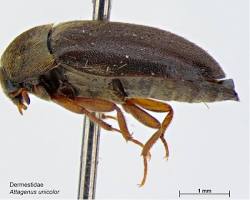
Black Carpet Beetles (Attagenus unicolor) are among the most destructive fabric and stored-product pests found in homes and commercial buildings. These small beetles belong to the family Dermestidae and are closely related to other carpet beetles. While adult beetles primarily feed on pollen and nectar outdoors, the larvae are responsible for damaging natural fibers, stored foods, taxidermy specimens, pet hair, feathers, wool, silk, leather, and other organic materials inside structures.
Black carpet beetles are considered major household pests because infestations often go unnoticed until damage becomes extensive. Larvae hide in dark undisturbed areas such as closets, attics, wall voids, carpets, stored clothing, air vents, and beneath furniture. Their ability to feed on a wide variety of animal-based materials allows populations to survive for long periods indoors.
Quick Facts
- Scientific Name: Attagenus unicolor
- Family: Dermestidae
- Common Name: Black Carpet Beetle
- Size: 1/8 to 3/16 inch long
- Color: Dark brown to black
- Habitat: Homes, attics, carpets, stored products
- Diet: Animal fibers, fabrics, stored food products
- Status: Household pest
Identification
Adult black carpet beetles are small oval-shaped beetles with smooth dark bodies.
Important identification features include:
- Dark brown or black coloration
- Oval elongated body shape
- Short clubbed antennae
- Smooth shiny wing covers
- Slow crawling movement
The larvae are more destructive and easier to identify than adults.
Larval characteristics include:
- Golden brown coloration
- Long carrot-shaped body
- Bristly hairs covering the body
- Distinct tail tuft of hairs
- Segmented appearance
Larvae may grow up to:
- 1/4 inch long
Distribution and Habitat
Black carpet beetles occur worldwide and are common throughout North America.
They frequently infest:
- Homes
- Apartments
- Museums
- Warehouses
- Pet stores
- Storage facilities
Indoor hiding locations commonly include:
- Closets
- Carpets
- Air ducts
- Baseboards
- Stored clothing
- Attics
- Furniture padding
- Dead insect accumulations
Outdoors, adults may be found near:
- Flowers
- Bird nests
- Dead animals
- Stored grain
Life Cycle
Black carpet beetles undergo complete metamorphosis consisting of:
- Egg
- Larva
- Pupa
- Adult
Females lay eggs near food sources suitable for larvae.
Larvae may develop for several months depending on:
- Temperature
- Humidity
- Food availability
Under ideal indoor conditions, multiple generations may occur each year.
Adults are often attracted to:
- Windows
- Light sources
- Flowering plants
Behavior and Feeding
The larval stage is responsible for nearly all household damage.
Larvae feed on materials containing:
- Keratin
- Animal proteins
- Natural fibers
Commonly damaged items include:
- Wool carpets
- Blankets
- Fur
- Leather
- Silk
- Feathers
- Taxidermy
- Stored clothing
- Pet food
- Dry pantry goods
Larvae prefer:
- Dark undisturbed locations
- Hidden storage areas
- Accumulated lint and debris
Adult beetles generally feed outdoors on:
- Pollen
- Nectar
Signs of Infestation
- Irregular holes in fabrics
- Shed larval skins
- Hairy larvae in closets or carpets
- Adult beetles near windows
- Damage to stored clothing
- Accumulations of tiny fecal pellets
- Infested pet food or dry goods
Damage is often mistaken for:
- Clothes moths
- Silverfish
- Rodent damage
Pest Status
Black carpet beetles are considered serious:
- Fabric pests
- Stored product pests
- Household pests
Although they do not bite humans, larval hairs may occasionally trigger:
- Skin irritation
- Allergic reactions
- Dermatitis-like symptoms
Infestations can become extensive if hidden food sources remain undetected.
Prevention
Good sanitation and proper storage are critical for prevention.
- Vacuum carpets regularly
- Clean beneath furniture
- Store fabrics in sealed containers
- Inspect wool and natural fiber items
- Remove lint accumulations
- Seal cracks and crevices
- Store pet food properly
- Inspect bird nests near structures
- Reduce indoor dust and debris
Frequent inspection of stored materials helps prevent severe infestations.
Control
Successful control usually involves locating and removing the larval food source.
Management methods may include:
- Deep vacuuming
- Steam cleaning carpets
- Discarding heavily infested items
- Freezing contaminated fabrics
- Heat treatment
- Insecticide applications
- Professional pest control services
Persistent infestations often require treatment of:
- Wall voids
- Air ducts
- Attics
- Hidden nesting areas
Ecological Importance
In natural environments, dermestid beetles play important roles in:
- Decomposition
- Nutrient recycling
- Breakdown of animal remains
Some dermestid beetles are even used by museums and taxidermists for:
- Cleaning skeletal specimens
Interesting Facts
- Black carpet beetle larvae can survive for months without food.
- Adults are commonly attracted to light and windows.
- Larvae are more destructive than adult beetles.
- The species can infest both fabrics and pantry products.
- Dermestid beetles are important decomposers outdoors.
- Larval hairs may trigger allergic skin reactions in sensitive individuals.