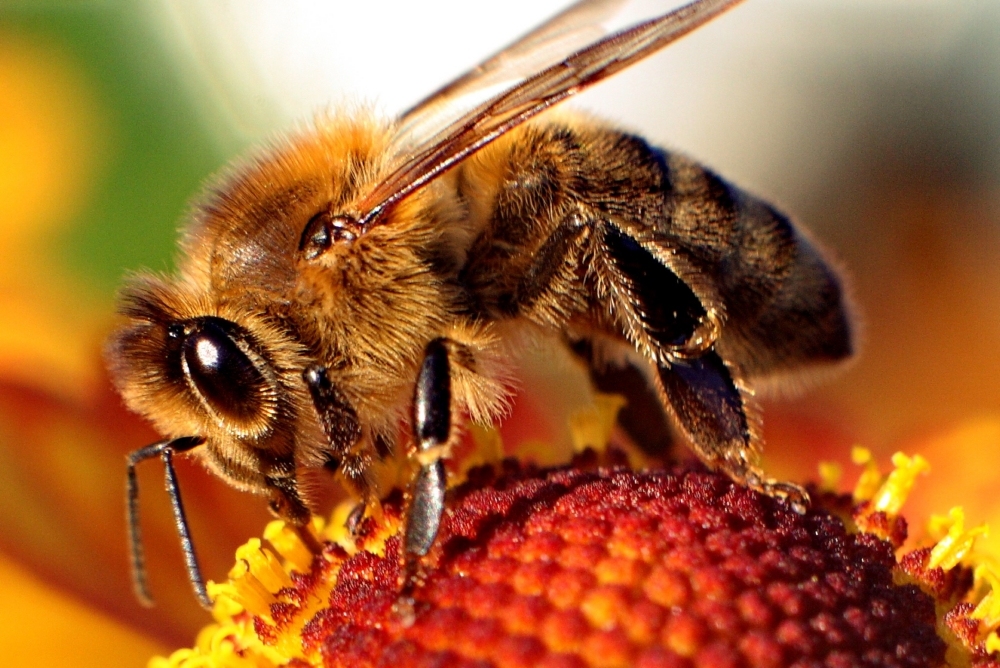
Bees are flying insects belonging to the superfamily Apoidea and are among the most important pollinators in the world. These highly beneficial insects play a critical role in natural ecosystems, agriculture, and food production by transferring pollen between flowers. There are more than 20,000 known species of bees worldwide, ranging from highly social honey bees and bumble bees to solitary species such as mason bees and carpenter bees. Although some species may occasionally become nuisance pests near homes or structures, bees are overwhelmingly considered beneficial insects essential to biodiversity and crop production.
Quick Facts
- Order: Hymenoptera
- Superfamily: Apoidea
- Habitat: Gardens, forests, meadows, farms, and urban landscapes
- Diet: Nectar and pollen
- Status: Essential pollinator and beneficial insect
Identification
Bees vary greatly in size, coloration, and behavior depending on species, but most share several common characteristics.
- Fuzzy or hairy bodies adapted for pollen collection
- Two pairs of transparent wings
- Large compound eyes
- Antennae used for navigation and communication
- Specialized pollen-carrying structures on legs or abdomen
Coloration ranges from black and yellow to metallic green, blue, orange, or brown depending on the species.
Unlike many flies, bees possess four wings and often have noticeably hairy bodies that help trap pollen grains during flower visits.
Distribution and Habitat
Bees occur on every continent except Antarctica and inhabit an enormous variety of ecosystems.
Common habitats include:
- Flower gardens
- Forests and woodland edges
- Grasslands and meadows
- Agricultural fields
- Urban landscapes
- Deserts and alpine regions
Different bee species use different nesting locations:
- Honey bees build wax comb colonies in cavities.
- Bumble bees often nest underground.
- Carpenter bees tunnel into wood.
- Mason bees use hollow stems or small holes.
- Mining bees nest directly in soil.
Healthy flowering habitats with diverse nectar and pollen sources are essential for maintaining stable bee populations.
Life Cycle and Social Structure
Bees undergo complete metamorphosis consisting of:
- Egg
- Larva
- Pupa
- Adult
Some bee species are highly social, while others are solitary.
Social Bees
Species such as honey bees and bumble bees live in colonies containing:
- Queens
- Workers
- Drones
Worker bees perform tasks such as:
- Foraging for nectar and pollen
- Feeding larvae
- Building comb
- Defending the colony
- Regulating hive temperature
Honey bees communicate food locations using the famous “waggle dance,” a sophisticated behavior that conveys distance and direction to flowering resources.
Solitary Bees
Most bee species are actually solitary. Individual females independently build nests, collect food, and raise offspring without forming colonies.
Solitary bees are generally non-aggressive and highly efficient pollinators.
Ecological Importance
Bees are among the most important pollinators in terrestrial ecosystems.
As bees move between flowers collecting nectar and pollen, they transfer pollen grains that allow plants to reproduce.
This pollination supports:
- Wildflower reproduction
- Fruit and seed production
- Crop yields
- Forest regeneration
- Food webs supporting wildlife
Many important agricultural crops rely heavily on bee pollination, including:
- Apples
- Blueberries
- Almonds
- Cucumbers
- Pumpkins
- Melons
- Tomatoes
- Strawberries
Without bees and other pollinators, global food production would be severely impacted.
Human Interaction
Most bees are non-aggressive and sting only when threatened or defending nests.
Honey bees and bumble bees may sting if:
- Nests are disturbed
- They become trapped
- They perceive threats nearby
For most people, stings cause temporary pain, redness, and swelling.
However, individuals with bee sting allergies may experience severe allergic reactions requiring immediate medical attention.
Despite occasional stings, bees are overwhelmingly beneficial and should be protected whenever possible.
Threats to Bee Populations
Bee populations worldwide face numerous environmental pressures including:
- Habitat loss
- Pesticide exposure
- Climate change
- Diseases and parasites
- Reduced floral diversity
- Urbanization
One major concern in honey bees is Colony Collapse Disorder (CCD), a phenomenon involving sudden loss of worker bees from colonies.
Conservation efforts increasingly focus on creating pollinator-friendly habitats and reducing pesticide impacts.
Prevention and Management
Because bees are beneficial insects, prevention generally focuses on avoiding conflicts rather than eliminating populations.
- Seal structural gaps to prevent nesting inside walls.
- Remove abandoned hives carefully with professional assistance.
- Plant pollinator-friendly flowers.
- Avoid unnecessary pesticide use.
- Provide water sources in dry climates.
- Protect native flowering habitats.
If bee colonies develop in unsafe locations near homes or high-traffic areas, relocation by licensed beekeepers is often preferred over extermination.
Interesting Facts
- Honey bees can visit thousands of flowers in a single day.
- Bees can see ultraviolet light invisible to humans.
- Bumble bees are capable of “buzz pollination,” vibrating flowers to release pollen.
- Some orchid species mimic female bees to attract pollinators.
- Bees have existed for over 100 million years.