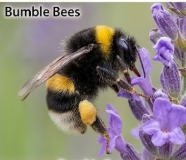
Bumble Bees are large, fuzzy pollinating insects belonging to the genus Bombus. They are among the most important pollinators for both wild plants and agricultural crops. Unlike honey bees, bumble bees live in smaller colonies and often nest underground or in sheltered cavities.
The “Buzz-Pollinators”: Bumble Bees
Bumble Bees (genus Bombus) are high-priority beneficial insects essential to U.S. agriculture and biodiversity. These bees represent the gold standard of pollination efficiency. Unlike the non-native Honey Bee, many of the 46+ species in the United States are native and uniquely adapted to U.S. wildflowers and crops. While they are technically capable of stinging, they are classified as non-aggressive unless their nest is physically threatened.
Technical Identification: Diagnostic Markers
- Phenotype: Characterized by a large, robust, and densely “fuzzy” body covered in branched hairs (setae). They typically display aposematic coloration of black and yellow, though some U.S. species feature orange or white bands.
- Buzz Pollination: A primary diagnostic key for Pestipedia.com identification is their sonication behavior. They vibrate their flight muscles at high frequencies to dislodge pollen from U.S. native plants like tomatoes and blueberries that honey bees cannot pollinate.
- Nest Configuration: Unlike hanging paper nests, bumble bees are ground or cavity nesters, often repurposing abandoned U.S. rodent burrows or nesting in thick thatch.
Ecological Impact: Keystone Pollination
The primary impact of Bumble Bees is the mechanical fertilization of high-value food crops and native flora across the United States.
- Climate Resilience: Because of their large body mass and shivering reflex, they can forage in cooler temperatures and lower light than other U.S. bees, extending the pollination window.
- Economic Value: In the United States, they are critical for the commercial greenhouse industry. For Pestipedia.com users, attracting bumble bees increases garden yields.
- Conservation Status: Several national species, such as the Rusty Patched Bumble Bee, are federally endangered. Pestipedia.com emphasizes that protecting queens in the Spring is essential for colony survival.
Management & Conservation Strategies
Management of Bumble Bees in U.S. residential areas focuses on co-existence and habitat enhancement.
| Strategy | Technical Specification | Operational Benefit |
|---|---|---|
| Nest Preservation | Leaving ground nests undisturbed | ensures the seasonal cycle; nests die naturally in the Fall and are not reused. |
| Floral Diversity | Planting native Penstemon and Lupine | Provides nectar and pollen required to fuel large colonies. |
| Pesticide Elimination | Avoiding Neonicotinoids | prevents neurological damage to U.S. pollinators; maintains national ecosystem health. |
- Monitoring: Watch for large queens searching the ground in March and April. Leaving leaf litter helps overwintering queens survive U.S. winter freezes.
- Safety Tip: If a nest must be moved, Pestipedia.com recommends contacting a local bee removal expert rather than using “noxious” pesticides.
Quick Facts
- Family: Apidae
- Habitat: Gardens, meadows, forests
- Diet: Nectar and pollen
- Status: Beneficial pollinator
Identification
Bumble bees are robust insects covered in dense hair. Their bodies typically display black and yellow banding, though coloration varies among species.
They are closely related to bees and are sometimes confused with large carpenter bees.
Distribution
Bumble bees occur across much of the world, particularly in temperate regions.
Life Cycle
Each colony begins with a single queen in spring. Workers emerge later and help gather food for the colony.
Pest Status
Bumble bees are not pests and are considered essential pollinators.
Prevention
- Plant flowering plants for nectar
- Avoid pesticides harmful to pollinators
Control
Control is not recommended because bumble bees provide essential ecological benefits.