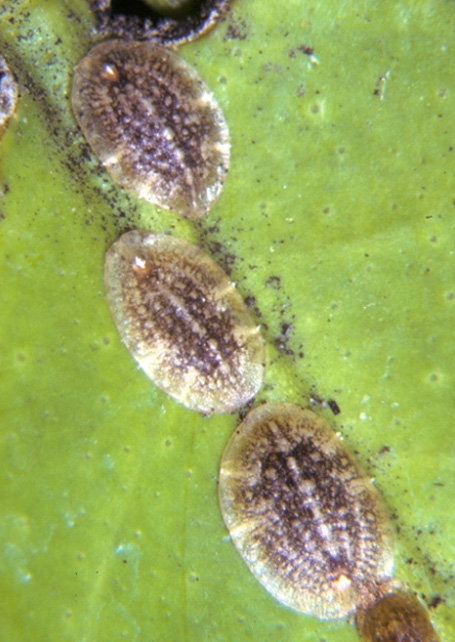
The Citricola Scale (Coccus pseudomagnoliarum) is a soft scale insect that attacks citrus trees and several other woody hosts. It is an important agricultural pest because its feeding produces large quantities of honeydew, encouraging the development of black sooty mold on leaves and fruit.
Citricola scale infestations can reduce citrus tree vigor, interfere with photosynthesis, and diminish fruit quality. The insect is particularly important in certain California citrus-growing regions, where management programs focus on monitoring and conserving natural enemies.
Taxonomy and Classification
- Common Name: Citricola Scale
- Scientific Name: Coccus pseudomagnoliarum
- Order: Hemiptera
- Family: Coccidae
- Genus: Coccus
- Species: C. pseudomagnoliarum
- Primary Hosts: Citrus trees and other woody plants
Physical Description and Identification
Adult Females: Mature females are oval, flattened to slightly convex, and generally grayish-brown. Their soft protective body covering distinguishes them from armored scales.
Nymphs: Young scales are smaller, flatter, and lighter-colored. They may occur on leaves before moving to twigs as they mature.
Eggs: Eggs develop beneath the female’s body and produce mobile crawlers.
Key Identification Features
- Oval soft scales on citrus leaves and twigs.
- Sticky honeydew covering foliage.
- Black sooty mold on leaves and fruit.
- Ant activity associated with honeydew.
- Yellowing or weakened foliage during heavy infestations.
Distribution and Habitat
Citricola scale occurs in citrus-growing regions and is particularly associated with orchards in California.
It inhabits citrus trees, ornamental woody plants, and other suitable hosts. Population abundance is influenced by temperature, host condition, and natural enemy activity.
Life Cycle and Reproduction
Citricola scale generally completes one generation annually in California citrus production areas.
Egg Stage
Females produce eggs beneath their bodies.
Crawler Stage
Newly hatched crawlers move to suitable feeding locations, commonly on leaves.
Nymphal Stage
Immature scales feed and develop, with seasonal movement to twigs occurring as they mature.
Adult Stage
Adult females settle and reproduce, completing the annual cycle.
Damage and Signs of Infestation
- Honeydew: Sticky secretions accumulate on plant surfaces.
- Sooty Mold: Black fungal growth develops on honeydew.
- Reduced Photosynthesis: Heavy mold coverage interferes with light absorption.
- Fruit Contamination: Sooty mold reduces fruit appearance and marketability.
- Tree Stress: Persistent feeding can reduce vigor.
Management and Integrated Pest Management (IPM)
1. Monitor Scale Populations
Inspect citrus leaves and twigs for developing scales and honeydew.
2. Encourage Natural Enemies
Parasitoid wasps and predators can contribute to citricola scale suppression.
3. Manage Ants
Where ants protect honeydew-producing scales, ant management may improve biological control.
4. Avoid Disruptive Pesticides
Broad-spectrum insecticides can harm beneficial insects and contribute to scale outbreaks.
5. Use Registered Treatments
Apply locally recommended products when monitoring indicates that economic thresholds have been reached.
6. Maintain Tree Health
Proper irrigation, nutrition, and pruning support citrus vigor.
Conclusion
The Citricola Scale (Coccus pseudomagnoliarum) is an important honeydew-producing pest of citrus. Monitoring, natural enemy conservation, ant management, and carefully selected treatments can reduce infestations and protect fruit quality.