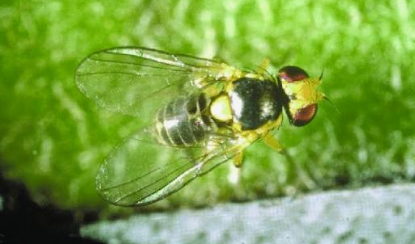
The Chrysanthemum Leafminer (Chromatomyia syngenesiae) is a small fly whose larvae tunnel through the internal tissues of chrysanthemum leaves. The resulting pale, winding mines reduce ornamental quality and may interfere with photosynthesis when infestations become severe.
Chrysanthemum leafminers are important pests in greenhouses, nurseries, commercial flower production, and ornamental gardens. Their larvae remain protected within leaf tissues, making early detection and carefully timed management essential.
Taxonomy and Classification
- Common Name: Chrysanthemum Leafminer
- Scientific Name: Chromatomyia syngenesiae
- Order: Diptera
- Family: Agromyzidae
- Genus: Chromatomyia
- Species: C. syngenesiae
- Primary Hosts: Chrysanthemums and related plants
Physical Description and Identification
Adults: Adults are small flies, typically a few millimeters long, with dark and yellowish body markings.
Eggs: Females insert eggs into leaf tissues.
Larvae: The larvae are pale, legless maggots that feed between the upper and lower leaf surfaces.
Pupae: Pupation occurs in a protective puparium associated with the leaf mine, often near the end of the feeding tunnel.
Key Identification Features
- Pale, winding tunnels within chrysanthemum leaves.
- Dark frass visible inside some mines.
- Small puncture marks caused by adult feeding or egg laying.
- Yellowing or damaged foliage during heavy infestations.
- Small fly adults near affected plants.
Distribution and Habitat
Chrysanthemum leafminers occur in regions where suitable ornamental and wild host plants are available. They are associated with greenhouse production, nurseries, gardens, and other cultivated environments.
Protected growing conditions may allow populations to persist through multiple generations.
Life Cycle and Reproduction
Egg Stage
Females insert eggs into leaves using specialized egg-laying structures.
Larval Stage
Larvae tunnel through internal leaf tissues, producing visible mines as they feed.
Pupal Stage
Mature larvae form puparia and undergo transformation into adults.
Adult Stage
Adults emerge, mate, and deposit eggs on suitable host foliage. Development may occur rapidly under favorable temperatures.
Damage and Signs of Infestation
- Leaf Mines: Winding pale tunnels reduce ornamental appearance.
- Reduced Photosynthesis: Extensive mining destroys functional leaf tissue.
- Leaf Yellowing: Severely damaged leaves may become chlorotic.
- Premature Leaf Drop: Heavy infestations may contribute to defoliation.
- Reduced Marketability: Visible mines lower the value of ornamental plants.
Management and Integrated Pest Management (IPM)
1. Inspect Foliage
Check plants regularly for new mines and adult feeding punctures.
2. Remove Infested Leaves
Prune and dispose of heavily mined leaves before adult emergence where practical.
3. Encourage Parasitoids
Parasitic wasps that attack leafminer larvae can contribute to natural suppression.
4. Monitor Adult Flies
Yellow sticky traps can help detect adult activity in protected growing environments.
5. Maintain Greenhouse Sanitation
Remove infested crop residues and inspect incoming plants.
6. Use Selective Treatments
Where necessary, use registered products effective against leafminers while conserving beneficial parasitoids.
Conclusion
The Chrysanthemum Leafminer (Chromatomyia syngenesiae) is an ornamental pest whose larvae create visible tunnels within leaves. Early monitoring, sanitation, removal of infested foliage, and biological control can help protect chrysanthemums from damaging populations.