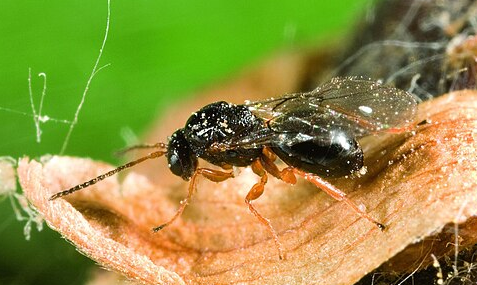
The Chestnut Gall Wasp (Dryocosmus kuriphilus), also known as the Asian chestnut gall wasp, is an invasive insect pest that attacks chestnut trees by inducing abnormal growths called galls. These galls form on developing buds, leaves, and shoots, interfering with normal plant growth and reducing nut production.
Native to China, the species has spread to chestnut-growing regions in Asia, Europe, and North America. It is considered one of the most serious insect pests of chestnut cultivation.
Unlike many wasps, chestnut gall wasps do not sting people. Their importance lies in their ability to alter plant tissue development and reduce the productivity of susceptible chestnut trees.
Taxonomy and Classification
- Common Name: Chestnut Gall Wasp
- Alternative Name: Asian Chestnut Gall Wasp
- Scientific Name: Dryocosmus kuriphilus
- Order: Hymenoptera
- Family: Cynipidae
- Genus: Dryocosmus
- Species: D. kuriphilus
- Primary Hosts: Chestnut trees (Castanea species)
Physical Description and Identification
Adult Wasps: Adults are tiny, dark-colored wasps approximately 2.5–3 millimeters long. Their bodies are compact, with transparent wings and relatively short antennae.
Eggs: Eggs are deposited inside developing chestnut buds and are difficult to observe externally.
Larvae: Larvae are small, pale, legless grubs that develop inside plant galls.
Galls: The most recognizable signs are rounded or irregular green, pinkish, or reddish swellings on leaves, petioles, and shoots.
Key Identification Features
- Swollen galls on chestnut buds and new growth.
- Green to reddish gall coloration during development.
- Distorted leaves and shortened shoots.
- Small pale larvae inside gall chambers.
- Reduced flowering and nut production.
- Old, dried galls persisting on branches.
Distribution and Habitat
Chestnut gall wasp is native to China and has become established in Japan, Korea, Europe, and parts of North America.
It occurs in commercial chestnut orchards, ornamental plantings, forest environments, and chestnut breeding or restoration programs.
Susceptible Castanea species may experience varying levels of damage depending on tree genetics, infestation intensity, and environmental conditions.
Life Cycle and Reproduction
The Chestnut Gall Wasp generally produces one generation annually and reproduces primarily through parthenogenesis.
Egg Stage
Females deposit eggs into developing chestnut buds during the growing season.
Overwintering Larvae
Larvae develop slowly within buds and remain concealed through winter.
Gall Formation
As buds begin growing in spring, larval activity stimulates the formation of galls around developing insects.
Pupal Stage
Larvae pupate inside gall chambers.
Adult Emergence
Adults emerge during the growing season and deposit eggs into new buds, continuing the annual cycle.
Damage and Signs of Infestation
- Gall Formation: Abnormal plant growth develops around larvae.
- Reduced Shoot Growth: Infested buds may produce distorted or shortened shoots.
- Leaf Deformation: Galls interfere with normal leaf expansion.
- Reduced Flowering: Heavy infestations can reduce reproductive growth.
- Lower Nut Production: Severe attacks may substantially reduce chestnut yields.
- Tree Stress: Repeated infestations weaken susceptible trees.
Management and Integrated Pest Management (IPM)
1. Biological Control
The parasitoid wasp Torymus sinensis is an important biological control agent used in several countries to suppress chestnut gall wasp populations.
2. Plant Resistant Cultivars
Where available, choose chestnut varieties with demonstrated resistance or tolerance.
3. Inspect Nursery Stock
Examine chestnut plants carefully and follow applicable plant movement restrictions.
4. Prune Small Infestations
On young trees, removing newly formed galls before adult emergence may reduce local populations. Avoid excessive pruning that weakens trees.
5. Protect Natural Enemies
Avoid unnecessary insecticide applications that may harm parasitoid wasps.
6. Monitor Orchard Health
Maintain appropriate irrigation, nutrition, and pruning practices to support tree vigor.
Conclusion
The Chestnut Gall Wasp (Dryocosmus kuriphilus) is a significant invasive pest that threatens chestnut production and tree health. Its concealed development within buds and galls makes chemical control difficult. Resistant cultivars, biological control, careful plant movement, and regular monitoring provide the most practical long-term management strategies.