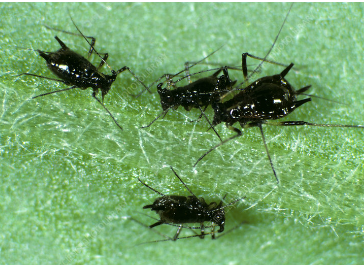
The Chrysanthemum Aphid (Macrosiphoniella sanborni) is a small, dark-colored sap-feeding insect that primarily attacks chrysanthemums. It is a common pest in ornamental gardens, greenhouses, nurseries, and commercial flower production.
These aphids cluster on tender shoots, flower buds, and young foliage, where they extract plant sap using piercing-sucking mouthparts. Heavy infestations may cause distorted growth, weakened plants, reduced flower quality, and accumulation of sticky honeydew.
Because chrysanthemums are grown primarily for their ornamental appearance, even moderate aphid populations can reduce the marketability of cut flowers and potted plants.
Taxonomy and Classification
- Common Name: Chrysanthemum Aphid
- Scientific Name: Macrosiphoniella sanborni
- Order: Hemiptera
- Family: Aphididae
- Genus: Macrosiphoniella
- Species: M. sanborni
- Primary Host: Chrysanthemums
Physical Description and Identification
Adults: Chrysanthemum aphids are small, soft-bodied insects, commonly dark brown to nearly black. Their bodies are pear-shaped, with long antennae and a pair of cornicles near the rear of the abdomen.
Winged Forms: Winged adults develop when colonies become crowded or environmental conditions encourage dispersal.
Nymphs: Young aphids resemble smaller adults and feed on the same tender plant tissues.
Key Identification Features
- Dark brown or black aphids clustered on chrysanthemum stems.
- Colonies around developing flower buds.
- Sticky honeydew on foliage.
- Curled or distorted young leaves.
- Reduced flower development during severe infestations.
- Black sooty mold growing on honeydew deposits.
Distribution and Habitat
Chrysanthemum aphids occur in many regions where chrysanthemums are cultivated.
They are particularly common in greenhouses, nurseries, ornamental gardens, and commercial flower-growing facilities.
Protected environments can allow populations to persist for extended periods, especially when suitable host plants remain available.
Life Cycle and Reproduction
Chrysanthemum aphids can reproduce rapidly, particularly in protected growing environments.
Nymphal Development
Young aphids begin feeding soon after birth and pass through several molts before becoming adults.
Adult Reproduction
Females commonly reproduce without mating under favorable conditions, producing live offspring.
Winged Dispersal
Winged adults may develop when colonies become crowded or plants deteriorate, allowing infestations to spread.
Overlapping Generations
Multiple generations can develop throughout the growing season and continuously in suitable greenhouses.
Damage and Signs of Infestation
- Distorted Growth: Feeding causes curled leaves and abnormal shoots.
- Bud Damage: Heavy colonies interfere with flower development.
- Honeydew: Sticky deposits accumulate on leaves and stems.
- Sooty Mold: Dark fungal growth develops on honeydew-covered surfaces.
- Reduced Vigor: Persistent feeding weakens plants.
- Marketability Loss: Visible aphids and contaminated flowers reduce ornamental value.
Management and Integrated Pest Management (IPM)
1. Inspect Plants Frequently
Examine tender shoots, flower buds, and leaf undersides for developing colonies.
2. Remove Infested Growth
Prune heavily infested shoots where practical.
3. Encourage Beneficial Insects
Lady beetles, lacewings, hoverfly larvae, and parasitoid wasps can suppress aphid populations.
4. Use Water Sprays
On sturdy plants, carefully directed water sprays may dislodge aphids.
5. Apply Insecticidal Soap
Registered insecticidal soaps may provide control when thoroughly applied. Test sensitive chrysanthemum varieties before widespread treatment.
6. Maintain Greenhouse Sanitation
Remove infested plant debris and inspect incoming nursery stock to reduce reinfestation.
Conclusion
The Chrysanthemum Aphid (Macrosiphoniella sanborni) is a common ornamental pest that can rapidly reduce the appearance and health of chrysanthemums. Regular inspection, natural enemy conservation, sanitation, and selective treatments can prevent populations from becoming damaging.