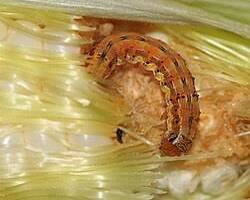
Zucchini Budworms (primarily the Tobacco Budworm, Chloridea virescens, and the Corn Earworm, Helicoverpa zea) are high-priority O-Status caterpillar pests that target the reproductive floral tissue of Cucurbits. Unlike foliage-feeding pests, budworms attack flower buds, blossoms, and tender growing points, directly preventing pollination and fruit set. In the United States, they are most prevalent across the Southwest (Arizona and California) and Southeast, thriving in peak summer temperatures. To understand our pest classification system, refer to our guide on what O-Status means in pest information.
Technical Identification: Diagnostic Markers
- Larval Phenotype: Caterpillars are highly variable in coloration, ranging from light green to reddish-brown or maroon. Key diagnostic markers include rough, micro-spiny skin and dark longitudinal stripes along the body.
- Feeding Behavior: Larvae specialize in feeding on flower buds and blossoms. Unlike loopers, they rarely feed on mature zucchini leaves, preferring nutrient-dense floral organs.
- Adult Phenotype: Adults are nocturnal, light green to tan moths marked with wavy dark bands across the forewings. Females oviposit directly on or adjacent to unopened flower buds.
Because the larvae bore into or shelter within floral structures, they frequently go undetected during routine leaf checks. Gardeners typically discover infestations only after opening wilted blossoms and finding frass and feeding cavities within.
Host Plants
Budworms feed across a wide spectrum of flowering vegetables and ornamentals. In garden ecosystems, alternate host crops and flowering weeds sustain local moth populations. When zucchini plants initiate bloom cycles, moths migrate into beds to lay eggs, making surrounding weed management and garden sanitation essential.
Infestation Impact: Reproductive Failure and Fruit Abortion
The primary impact of budworms is the interruption of the plant’s fruiting cycle through direct consumption of embryonic floral tissue.
- Floral Destruction: Larvae bore into the center of unopened buds, destroying petals, stamens, and pistils. This halts pollination and triggers premature blossom drop.
- Blossom-End Fruit Boring: When young fruit begins to set, budworms tunnel directly into the blossom end. This feeding invites secondary pathogens, causing internal fruit rot and unmarketable produce.
- Reduced Crop Yield: Continued destruction of blossoms forces the zucchini plant to expend energy on aborted flowers, substantially lowering seasonal harvest yields.
Life Cycle
Budworms progress through four developmental stages: egg, larva, pupa, and adult moth. Adult moths deposit eggs near floral structures, providing newly hatched larvae immediate access to food. Caterpillars progress through several instars within flowers before pupating in the top layer of soil or garden debris. In warm climates, several generations overlap throughout the summer growing season.
Signs of Infestation
- Unopened buds with small entry holes and dark granular frass.
- Deformed, shredded, or failed blossoms.
- Premature drop of healthy-appearing buds and flowers.
- Small fruit aborting or rotting at the blossom end.
Management & Conservation Strategies
Effective management in garden beds focuses on blossom sanitation, biological controls, and cultural prevention.
| Strategy | Technical Specification | Operational Benefit |
|---|---|---|
| Biological Sprays | Bacillus thuringiensis (Bt) or Spinosad | Effective when applied directly to active buds; apply at dusk to protect foraging pollinators. |
| Manual Scouting & Sanitation | Inspecting and removing wilted or holed buds | Removes feeding larvae before they bore into developing zucchini fruit. |
| Beneficial Insect Release | Trichogramma pretiosum (Parasitic Wasps) | Parasitizes budworm eggs prior to larval hatch, delivering sustained biological suppression. |
- Monitoring: Check newly emerging floral buds daily during peak summer for entry holes and frass. Pinching off infested buds early preserves downstream flower production.
- Natural Predators: Support native predators such as Big-Eyed Bugs (Geocoris spp.) and Minute Pirate Bugs (Orius spp.). Avoid broad-spectrum synthetic pyrethroids to protect natural enemy populations inside zucchini blooms.
Integrated Pest Management (IPM) Summary
A resilient IPM framework for zucchini budworms integrates routine scouting, physical removal of damaged buds, conservation of natural enemies, and targeted biological treatments. Intercepting budworms at the initial flowering stage ensures steady pollination and protects total fruit yield.