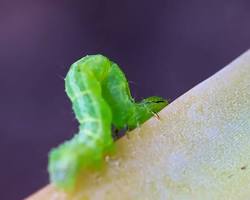
Zucchini loopers are green, leaf-feeding caterpillars that attack zucchini and other plants in the cucurbit family. The name does not usually refer to one formally recognized species. Instead, it describes looping caterpillars found feeding on zucchini, especially the cabbage looper (Trichoplusia ni). Other related looper moth larvae may cause similar damage in some regions. These pests move by arching the middle of their bodies into a distinctive loop, giving them their common name.
Small populations generally cause only cosmetic leaf damage, but heavy infestations can weaken plants, reduce fruit development, and contaminate marketable zucchini. Young plants and transplants are particularly vulnerable because they have less foliage available to tolerate feeding.
Taxonomy and Classification
- Common name: Zucchini looper or cabbage looper
- Primary species: Trichoplusia ni
- Order: Lepidoptera
- Family: Noctuidae
- Type: Moth larva
- Primary host: Zucchini and other vegetable crops
The cabbage looper has an exceptionally broad host range. In addition to zucchini, larvae may feed on squash, cucumbers, melons, cabbage, broccoli, lettuce, spinach, beans, peas, peppers, potatoes, and numerous weeds. This wide selection of host plants allows populations to move between crops during the growing season.
Identification
Zucchini loopers are usually pale to bright green caterpillars with slender bodies. Mature cabbage looper larvae can reach approximately 1 to 1.5 inches long. They often have thin white lines running lengthwise along their backs and a more noticeable pale stripe on each side.
Unlike many caterpillars, loopers have fewer functional abdominal prolegs. This arrangement forces them to pull the rear portion of the body forward when moving. The middle of the caterpillar rises into an arch before the front end extends again. This looping motion is one of the easiest ways to distinguish them from other caterpillars found on zucchini.
Adult cabbage looper moths are mottled grayish-brown and have a wingspan of approximately 1.25 to 1.5 inches. Each forewing commonly bears a small, silvery-white marking resembling a figure eight or a bent letter. The moths are active primarily at night and may remain hidden among vegetation during the day.
Eggs and Young Larvae
Female moths deposit small, rounded eggs individually or in small groups, usually on the undersides of leaves. The eggs are pale yellowish-white or greenish-white and have fine ridges radiating across their surfaces. Their small size makes them difficult to see without careful inspection.
Newly hatched larvae are tiny, pale caterpillars that begin by scraping tissue from the leaf surface. As they grow, they become greener and chew completely through the leaves. Young larvae may remain on the protected lower surfaces of leaves, where they are less visible to gardeners and natural enemies.
Life Cycle
Zucchini loopers undergo complete metamorphosis consisting of egg, larval, pupal, and adult stages. Eggs hatch after several days, depending on temperature. The larvae feed and molt through several growth stages over approximately two to four weeks. Warm weather can accelerate their development.
Once fully grown, a larva forms a thin, silken cocoon on the underside of a leaf, within folded foliage, or among plant debris. The pupa initially appears green but gradually turns brown as the adult moth develops. A new moth may emerge after one or two weeks during warm conditions.
Several generations may occur each year. In warm southern locations, loopers may remain active for much of the year. In colder northern areas, cabbage loopers generally cannot survive severe winters. Adult moths migrate northward during spring and summer, allowing infestations to appear later in the growing season.
Signs of Zucchini Looper Damage
- Small, irregular holes in zucchini leaves
- Large missing sections along leaf edges
- Transparent or window-like patches caused by young larvae
- Green caterpillars moving with a looping motion
- Dark pellets of caterpillar waste on leaves or fruit
- Silken cocoons attached to the undersides of leaves
- Scarring or shallow feeding marks on developing zucchini
- Reduced plant vigor during severe infestations
Early feeding may look like minor scraping or small holes between the veins. Larger larvae consume more leaf tissue and can create ragged openings across the plant. Although established zucchini plants can tolerate some defoliation, the loss of too many leaves reduces the plant’s ability to produce energy and protect developing fruit from intense sunlight.
Loopers occasionally feed on zucchini blossoms or the surface of young fruit. Direct fruit damage may leave shallow scars that reduce marketability even when the zucchini remains edible. Caterpillars and their droppings can also contaminate harvested produce.
Monitoring Zucchini Plants
Inspect zucchini plants at least once or twice per week, paying particular attention to the undersides of older leaves. Look for pale eggs, small green larvae, fresh holes, droppings, and silken cocoons. Monitoring should become more frequent after adult moths are observed or when new feeding damage appears.
Not every hole in a zucchini leaf is caused by a looper. Cucumber beetles, grasshoppers, slugs, snails, squash bugs, and other caterpillars may produce similar injury. The caterpillar’s looping movement, green body, and pale longitudinal stripes help confirm its identity.
Natural Enemies
Zucchini loopers have numerous natural enemies. Parasitic wasps and flies attack the eggs or larvae, while birds, spiders, predatory bugs, and other beneficial animals consume exposed caterpillars. Viral and fungal diseases may also reduce looper populations during humid conditions.
Avoiding unnecessary broad-spectrum insecticide use helps conserve these beneficial organisms. Flowering plants near the garden can provide nectar and pollen for adult parasitic wasps and other helpful insects. However, weeds that serve as looper hosts should be managed around zucchini beds.
Management and Control
Hand Removal
In home gardens, handpicking is often sufficient. Remove visible caterpillars and cocoons, and inspect damaged leaves for hidden larvae. Eggs can be crushed or removed with the affected portion of the leaf. Plants should not be heavily pruned because healthy foliage is essential for fruit production.
Row Covers
Lightweight insect netting or floating row covers can prevent adult moths from reaching young zucchini plants. Covers should be installed before moths begin laying eggs and secured along every edge. Because zucchini flowers require pollination, covers must be removed during flowering or temporarily opened so bees can reach the blossoms.
Biological Insecticides
Products containing Bacillus thuringiensis var. kurstaki, commonly called Bt, can control young looper caterpillars when applied to foliage they are actively eating. Bt generally works best on small larvae and must be consumed to be effective. Spinosad products may provide another option where their labels permit use on zucchini or squash.
Any pesticide should be specifically labeled for the crop and pest. Follow all directions concerning application rates, protective equipment, pollinator precautions, and the required interval between treatment and harvest. Apply treatments only when monitoring shows that control is necessary.
Preventing Future Infestations
- Inspect transplants before bringing them into the garden.
- Remove weeds that can support looper populations.
- Clear heavily infested crop debris after harvest.
- Rotate zucchini with unrelated crops when practical.
- Use row covers before adult moths begin laying eggs.
- Encourage beneficial insects and avoid unnecessary pesticide use.
- Check the undersides of leaves regularly throughout the season.
Conclusion
Zucchini loopers are recognizable by their green coloring and unusual looping movement. Their feeding produces irregular holes, ragged leaf edges, droppings, and occasional fruit scarring. Healthy plants can withstand limited damage, but growing caterpillars may consume foliage rapidly. Regular inspection, hand removal, exclusion, natural enemies, and carefully selected biological treatments provide effective control while protecting zucchini plants and beneficial pollinators.