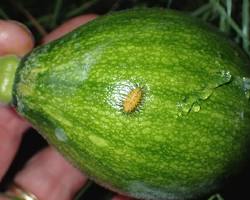
Zucchini beetles are small leaf beetles that feed on zucchini plants, flowers, and developing fruit. The name does not refer to a single formally recognized species. In most gardens, “zucchini beetles” are either striped cucumber beetles (Acalymma vittatum) or spotted cucumber beetles (Diabrotica undecimpunctata howardi). Both species attack plants in the cucurbit family, including zucchini, summer squash, cucumbers, pumpkins, gourds, watermelons, and muskmelons.
Adult beetles chew holes in leaves, flowers, stems, and fruit. Their feeding is especially dangerous to seedlings and young transplants. Cucumber beetles may also spread bacterial wilt and certain plant viruses, making them more damaging than their small size suggests.
Taxonomy and Classification
- Common name: Zucchini beetle or cucumber beetle
- Striped species: Acalymma vittatum
- Spotted species: Diabrotica undecimpunctata howardi
- Order: Coleoptera
- Family: Chrysomelidae
- Type: Leaf beetle
- Primary hosts: Zucchini and other cucurbit crops
The striped cucumber beetle is a specialist that strongly favors cucurbit plants. The spotted cucumber beetle has a broader diet and may also feed on beans, corn, potatoes, flowers, and other crops. Its larvae are sometimes called southern corn rootworms because they can damage the underground portions of corn and other plants.
Identification
Striped Cucumber Beetles
Adult striped cucumber beetles are approximately 1/4 inch long. They have yellow wing covers marked with three lengthwise black stripes. The head is black, and the section immediately behind the head is usually yellowish or orange. Their narrow bodies and bold stripes make them relatively easy to recognize on zucchini leaves and flowers.
Spotted Cucumber Beetles
Adult spotted cucumber beetles are slightly larger and commonly measure about 1/4 to 3/8 inch long. They have yellow or yellowish-green wing covers marked with 12 round black spots. Their heads, legs, and antennae are dark. They may resemble yellow lady beetles, but their bodies are more elongated and their antennae are noticeably longer.
Eggs and Larvae
Females lay small yellowish or orange eggs in the soil, usually close to the base of a host plant. The slender larvae are white or cream-colored with brown heads and three pairs of small legs near the front of the body. They remain underground, where they feed on roots and belowground stem tissue. Because the larvae are hidden in soil, gardeners are more likely to notice the adult beetles.
Distribution and Habitat
Striped and spotted cucumber beetles are widely distributed across the United States. Their seasonal behavior varies by region. Striped cucumber beetles commonly overwinter as adults beneath leaves, plant debris, logs, or other protected material. They emerge during spring and move into gardens as cucurbit seedlings appear.
Spotted cucumber beetles survive winter most successfully in warmer southern areas. In many northern states, adults arrive later in the season after migrating from the south. Beetles are frequently found in vegetable gardens, commercial fields, weedy borders, compost areas, and landscapes containing flowering plants.
Life Cycle
Zucchini beetles undergo complete metamorphosis with egg, larval, pupal, and adult stages. After mating, females deposit eggs in moist soil around the roots of suitable plants. The eggs generally hatch within one to three weeks, depending on temperature and moisture.
Larvae feed underground for several weeks before forming pupal chambers in the soil. The new adults then emerge and begin feeding on leaves, blossoms, pollen, and fruit. One or more generations may develop each year, depending on the species, climate, and length of the growing season.
Adult populations may be particularly noticeable in spring when zucchini seedlings emerge and again later when plants begin flowering. Beetles are attracted to chemicals called cucurbitacins produced by zucchini and related plants. These compounds stimulate feeding and can cause beetles to gather on cucurbit crops.
Damage to Zucchini Plants
Adult zucchini beetles chew irregular holes through leaves and may scrape away only part of the leaf surface. This partial feeding creates thin, brown, window-like patches. Large populations can skeletonize young leaves or destroy newly emerged seedlings before the plants become established.
Beetles also feed on zucchini flowers. Damaged blossoms may fall prematurely or fail to develop into fruit. Feeding on young zucchini can produce pits, scars, and rough patches that reduce the appearance and marketability of the crop. Larval root feeding is usually less visible but can weaken plants when populations are high.
Signs of a Zucchini Beetle Infestation
- Yellow beetles with three black stripes or 12 black spots
- Small or irregular holes in zucchini leaves
- Thin, brown, window-like areas on foliage
- Beetles gathering inside yellow zucchini blossoms
- Chewed flower petals or damaged stamens
- Scars and shallow pits on developing fruit
- Seedlings that appear clipped, wilted, or heavily defoliated
- Plants that suddenly wilt despite adequate soil moisture
Bacterial Wilt and Plant Diseases
Cucumber beetles can spread the bacterium Erwinia tracheiphila, which causes bacterial wilt of cucurbits. The bacteria enter plants through feeding wounds and multiply inside the vascular tissue. This interferes with water movement, causing leaves and vines to wilt.
Cucumbers and muskmelons are generally more vulnerable to bacterial wilt than zucchini, pumpkins, and certain other squash. However, summer squash can still become infected. Affected leaves may wilt during the heat of the day at first and partially recover overnight. As the disease progresses, the vines remain wilted, turn yellow or brown, and may eventually die.
There is no pesticide treatment that will cure bacterial wilt after a plant becomes infected. Severely affected plants should be removed so beetles do not feed on them and then carry the bacteria to healthy zucchini plants. Cucumber beetles may also transmit squash mosaic virus and other plant pathogens.
Monitoring Zucchini Plants
Begin inspecting plants as soon as seedlings emerge or transplants are placed outside. Examine both surfaces of the leaves, the growing point, stems, and open flowers. Beetles often hide inside blossoms early in the morning or beneath leaves when disturbed.
Young zucchini plants require the greatest protection because even a few beetles can remove a significant percentage of their foliage. Continue monitoring throughout flowering and fruit development. Check wilted plants carefully to distinguish beetle-transmitted disease from drought stress, squash vine borers, root injury, and stem damage.
Management and Control
Use Row Covers
Floating row covers or insect netting can prevent adult beetles from reaching young zucchini plants. Install covers immediately after planting and secure the edges so beetles cannot crawl underneath. Remove or open the covers when female flowers appear because bees and other insects must reach the blossoms for pollination.
Handpick Beetles
Small garden infestations can be managed by removing beetles by hand and dropping them into a container of soapy water. Early morning is often the easiest time to collect them because cooler temperatures make the beetles less active. Place a sheet or container beneath the plant to catch beetles that drop when disturbed.
Manage the Garden
Remove cucurbit crop debris after harvest and control weeds that may provide food or shelter. Rotate zucchini and related crops to a different section of the garden when space permits. Healthy plants supplied with appropriate water and nutrients are better able to tolerate limited feeding damage.
Trap Crops
Highly attractive squash varieties, such as Blue Hubbard squash, are sometimes planted around the edge of a garden as trap crops. Beetles may gather on these plants instead of the main zucchini crop. The trap plants must be monitored and managed so they do not become breeding sites that increase the overall beetle population.
Insecticide Considerations
Insecticides should be considered only when beetle numbers threaten young plants or continue causing unacceptable damage. Any product must be labeled for use on zucchini or summer squash. Follow all application rates, harvest intervals, and safety directions.
Zucchini flowers attract bees, and many insecticides can harm pollinators. Avoid treating open blossoms or applying products while bees are actively foraging. Spot treatments directed at beetle feeding locations may reduce unnecessary exposure. The product label remains the controlling source for legal and safe use.
Conclusion
Zucchini beetles are usually striped or spotted cucumber beetles feeding on zucchini plants. Adults damage leaves, flowers, and fruit, while larvae feed belowground on roots. Their ability to spread bacterial wilt and plant viruses makes early monitoring especially important. Row covers, hand removal, sanitation, crop rotation, and protection of pollinators form the foundation of an effective integrated management program.