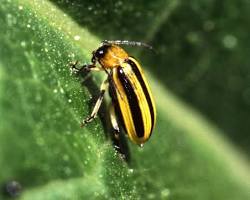
Zucchini leaf beetles are chewing pests that feed on the foliage of zucchini plants, creating holes, ragged edges, and weakened leaves that can reduce plant vigor over time. The term may apply broadly to several beetle species that consume leaf tissue on cucurbits, but the general pattern is the same: adult beetles chew visible damage on leaves, and in some cases larvae may contribute additional injury. Because zucchini relies on large, healthy leaves to support rapid growth and fruiting, repeated beetle feeding can interfere with the plant’s overall performance.
Leaf beetles are especially frustrating in gardens because their damage is easy to see, yet the insects themselves may blend in with foliage or escape quickly when disturbed. Some species feed lightly and cause mostly cosmetic injury, while others can build up and create significant stress, especially on smaller plants. When feeding is concentrated on young zucchini, the crop may lose valuable leaf area at the exact time it needs it most.
Identification
Leaf beetles vary in size, color, and pattern depending on the species. Some are green, yellow, striped, spotted, or metallic, while others are duller brown or tan. What they share is a hard beetle body and chewing mouthparts designed to remove plant tissue. Adults are often found on upper or lower leaf surfaces where they feed openly. Larvae, when present on zucchini, may be found on leaves or in nearby soil depending on the species.
Because several beetle groups can be described casually as leaf beetles, identification may not always be exact in a home garden setting. Still, the management principles are similar: observe feeding injury, confirm the presence of beetles, and respond before defoliation becomes severe.
Host Plants
Zucchini leaf beetles feed primarily on zucchini and related cucurbits such as squash, pumpkins, and cucumbers, though some species also use unrelated host plants. Nearby weeds, volunteer cucurbits, or leftover garden plants can support beetle populations between crop cycles. This means the garden environment as a whole often influences how much beetle pressure develops on zucchini.
Damage to Zucchini
The main symptom is leaf chewing. Beetles may create holes scattered across the leaf blade, chew from the edges inward, or remove sections between veins depending on their feeding style. Small amounts of damage on large established plants may not affect productivity much. On seedlings, small transplants, or heavily infested plants, however, the loss of leaf area can reduce growth, weaken vigor, and slow fruit production.
If numerous beetles are present, foliage may become ragged and less efficient at capturing sunlight. Repeated defoliation also increases plant stress during hot weather and can expose fruit to more intense sun. In some cases, damaged leaves may dry more quickly or become more vulnerable to secondary injury from weather and disease. While leaf beetles are usually not stem borers or internal pests, their cumulative feeding can still have a substantial effect over the course of a season.
Life Cycle
Adult leaf beetles typically lay eggs near host plants. Depending on the species, larvae may feed on foliage, roots, or plant debris before pupating and emerging as adults. Overwintering often occurs in soil, debris, or nearby protected locations. In warm regions or long seasons, several generations may occur, which can lead to increasing beetle pressure over time if early infestations are ignored.
This life cycle means that sanitation and crop cleanup are important not only for the current year’s zucchini but also for reducing the beetle population available to return next season.
Signs of Infestation
Signs include visible beetles on leaves, irregular feeding holes, ragged foliage, and sometimes frass or eggs depending on the species. Damage often begins on young, tender leaves and expands as the beetles continue feeding. Gardeners may notice beetles more easily in the morning or evening when temperatures are cooler and the insects are less active.
Routine inspection is important because leaf beetle feeding can increase gradually. Catching the problem while only a few plants are affected allows for easier control and less overall leaf loss.
Prevention and Management
Preventive steps include removing plant debris, controlling weeds, rotating cucurbit crops, and scouting regularly. Hand-picking adults can be practical in small gardens, especially when done early before numbers build. Row covers may help protect young zucchini from beetle invasion during the earliest stages, though covers must eventually be managed to allow pollination.
Healthy zucchini plants can tolerate some leaf feeding better than stressed plants, so maintaining good fertility, watering, and spacing supports resilience. Natural enemies such as birds, predatory insects, and parasitic organisms may reduce beetle numbers, so broad insecticide use should be approached carefully. If treatment becomes necessary, early intervention usually works better than waiting for substantial defoliation.
Integrated Pest Management for Leaf Beetles
Integrated pest management for zucchini leaf beetles combines sanitation, regular scouting, physical removal, exclusion of young plants, and support for beneficial organisms. Since leaf damage is easy to see, the key is to inspect promptly and determine whether the population is increasing. The earlier the beetles are addressed, the easier it is to preserve the healthy canopy needed for productive zucchini growth.
Conclusion
Zucchini leaf beetles are foliage-feeding pests that can reduce leaf quality and plant vigor through repeated chewing damage. While light feeding may be mostly cosmetic on large plants, early or heavy infestations can slow crop establishment and reduce productivity. With good sanitation, close monitoring, and timely action, gardeners can keep leaf beetle damage manageable and protect the leafy structure that drives zucchini growth and fruit production.