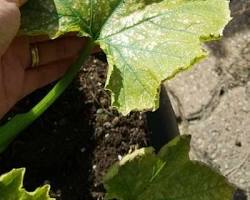
Zucchini spider mites are tiny plant-feeding arachnids that attack the leaves of zucchini and other cucurbit crops. The species most often responsible is the twospotted spider mite (Tetranychus urticae). These pests feed by piercing individual plant cells and removing their contents, producing pale spots, yellowing, bronzing, leaf decline, and reduced plant vigor.
Spider mite outbreaks are most common during hot, dry weather, particularly when zucchini plants are stressed by inadequate irrigation. Because the mites reproduce quickly and remain primarily on the undersides of leaves, infestations may become severe before the pests are noticed. Fine silk webbing is one of the clearest signs of an established population.
Taxonomy and Classification
- Common name: Zucchini spider mite or twospotted spider mite
- Scientific name: Tetranychus urticae
- Class: Arachnida
- Order: Trombidiformes
- Family: Tetranychidae
- Type: Plant-feeding mite
- Primary host in this article: Zucchini
Spider mites are not insects. They are arachnids and are more closely related to ticks and spiders. Adult spider mites have eight legs, while newly hatched larvae have six. Twospotted spider mites have an extremely broad host range and can feed on hundreds of vegetable, fruit, field, and ornamental plant species.
Identification
Adult twospotted spider mites are extremely small, generally measuring less than 1/50 inch long. Individual mites can be difficult to see clearly without a hand lens. Their bodies may be pale green, yellowish, orange, or reddish, depending on their age, diet, and seasonal condition.
Most adults have two dark areas visible through the body, one on each side. These spots are internal accumulations of food and waste rather than permanent external markings. Adult females are larger and more rounded than males. Males tend to have narrower bodies that taper toward the rear.
The eggs are tiny, round, and translucent when first laid. They may become cream-colored or yellowish as they mature. Eggs are deposited on leaf surfaces, frequently beneath protective webbing. Immature mites resemble small adults but pass through several developmental stages before reaching maturity.
Where Spider Mites Live on Zucchini
Zucchini spider mites usually establish colonies on the undersides of leaves. This location protects them from direct sunlight, rainfall, and some predators. The mites may gather along leaf veins, where they feed and lay eggs beneath thin layers of silk.
Infestations often begin on older leaves near the base of the plant. Mites may then spread upward into newer foliage as their population increases. Plants located near dusty paths, dry field edges, greenhouse vents, or infested weeds may develop problems first.
Life Cycle
Zucchini spider mites develop through egg, larval, nymphal, and adult stages. Females deposit eggs on leaves within or near their silk webbing. A six-legged larva emerges from each viable egg and begins feeding. After several molts and resting periods, it develops into an eight-legged adult.
The complete life cycle may take only one to two weeks during very warm weather. This rapid development allows several overlapping generations to occupy a zucchini plant at the same time. A small, overlooked colony can therefore become a serious infestation within a short period.
In regions with cold winters, twospotted spider mites commonly survive in protected locations, including plant debris, soil cracks, weeds, and greenhouse structures. When favorable conditions return, females move to suitable host plants and begin laying eggs. In greenhouses and other protected growing areas, reproduction may continue for much of the year.
Spider Mite Damage to Zucchini
Each mite punctures plant cells and consumes their contents. The empty or damaged cells produce tiny white or yellow dots known as stippling. A small number of mites may create only scattered spots, but continued feeding causes the affected areas to merge.
Heavily damaged leaves may appear mottled, grayish, yellow, bronze, or scorched. They can become dry and brittle before curling and falling from the plant. Extensive leaf loss reduces photosynthesis and exposes developing zucchini fruit to direct sunlight, increasing the risk of sunscald.
Severe infestations may reduce zucchini growth, flower production, fruit size, and overall yield. Young or drought-stressed plants are less able to tolerate feeding than vigorous, established plants. Spider mites do not usually feed deeply inside zucchini fruit, but weakened plants may produce fewer or lower-quality squash.
Signs of a Zucchini Spider Mite Infestation
- Tiny white or yellow dots across zucchini leaves
- Mottled, faded, or bronze-colored foliage
- Fine silk webbing beneath leaves or between stems
- Minute moving dots on the undersides of leaves
- Dry, curling, or prematurely dropping foliage
- Leaf damage that begins near the bottom of the plant
- Slowed growth or reduced fruit production
- Rapid plant decline during hot, dry weather
How to Check for Spider Mites
Inspect zucchini plants regularly during warm, rainless periods. Turn leaves over and examine the areas along the veins with a hand lens. Look for round eggs, crawling mites, shed skins, stippling, and webbing.
A simple detection method involves holding a sheet of white paper beneath a leaf and tapping the foliage firmly. Spider mites that fall onto the paper will look like tiny moving specks. Rubbing a speck across the paper may leave a greenish, yellowish, or reddish streak.
Spider mite injury can resemble drought stress, nutrient problems, leaf diseases, or natural aging. The presence of mites, eggs, and fine webbing helps confirm the diagnosis. Thick, messy webbing containing relatively large spiders generally belongs to harmless predatory spiders rather than spider mites.
Natural Enemies
Spider mites have several natural enemies, including predatory mites, minute pirate bugs, lacewing larvae, predatory thrips, and small lady beetles in the genus Stethorus. These beneficial organisms may prevent low mite populations from becoming damaging infestations.
Broad-spectrum insecticides can kill these predators while failing to provide lasting mite control. Some insecticides may even encourage spider mite outbreaks by removing natural enemies or increasing mite reproduction. Conserving beneficial species is therefore an important part of long-term management.
Management and Control
Maintain Healthy Plants
Provide consistent irrigation so zucchini plants do not become drought-stressed. Water the soil deeply enough to reach the root zone, but avoid keeping it constantly saturated. A suitable layer of mulch can conserve soil moisture and moderate temperature. Excessive fertilizer should be avoided because overly lush growth may favor certain pest problems.
Wash Mites from Leaves
A firm stream of water directed at the undersides of leaves can dislodge mites, eggs, and webbing. Repeat the treatment as needed while checking that the force of the water does not break stems or damage flowers. Washing is most effective when an infestation is detected early.
Remove Heavily Infested Leaves
A few badly infested lower leaves may be removed and discarded. Do not strip away too much healthy foliage because zucchini plants need their large leaves to produce energy and shade the developing fruit. Infested material should be placed in a sealed container rather than left beside the garden.
Manage Weeds and Dust
Control weeds around zucchini beds because they can serve as alternative spider mite hosts. Avoid allowing dust to coat the foliage, particularly near unpaved paths. However, removing heavily infested weeds during the growing season may force mites onto the crop, so nearby zucchini plants should be inspected closely afterward.
Insecticidal Soap and Horticultural Oil
Commercial insecticidal soaps and horticultural oils may suppress spider mites when their labels allow application to zucchini or summer squash. These contact products must directly reach the mites, making thorough coverage of the undersides of leaves essential. More than one application may be needed because eggs can survive an initial treatment.
Do not substitute household dish detergent for a labeled insecticidal soap. Homemade mixtures can injure zucchini foliage. Oils and soaps may also damage plants when applied during extreme heat, to drought-stressed plants, or in incompatible combinations. Follow every label instruction, including application rates and harvest intervals.
Preventing Future Infestations
- Inspect zucchini transplants before planting them.
- Check older leaves regularly during hot, dry weather.
- Maintain consistent soil moisture without overwatering.
- Reduce dust around vegetable beds.
- Manage weeds that can harbor mites.
- Avoid unnecessary broad-spectrum insecticides.
- Preserve predatory mites and beneficial insects.
- Remove infested crop debris after harvest.
Conclusion
Zucchini spider mites are tiny arachnids capable of causing substantial damage during hot, dry conditions. Early symptoms include pale stippling on leaves, followed by yellowing, bronzing, webbing, and leaf decline. Regular inspection is essential because mites reproduce quickly and remain hidden beneath foliage. Proper watering, water sprays, sanitation, natural enemies, and carefully applied soaps or oils can protect zucchini plants while reducing the need for disruptive pesticides.