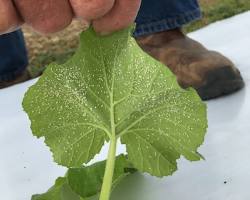
Zucchini whiteflies are small sap-feeding insects that can become persistent pests on zucchini and other cucurbit crops. Although they are tiny, their impact can be significant when populations build. Whiteflies feed by inserting needle-like mouthparts into plant tissues and extracting sap, weakening the plant over time and reducing vigor, growth, and productivity. In addition to direct feeding damage, they also excrete sticky honeydew that can lead to sooty mold growth on leaves, making plants look dirty and reducing the plant’s ability to photosynthesize efficiently.
Because zucchini plants grow rapidly and produce large leaves, they can provide an inviting environment for whiteflies, especially in warm weather and protected garden conditions. Infestations often begin quietly on the undersides of leaves, where adults and immature stages remain concealed from casual view. By the time a gardener notices yellowing foliage or clouds of tiny white insects fluttering up when leaves are disturbed, the population may already be well established.
Identification and Appearance
Adult whiteflies are very small, soft-bodied insects with pale yellow bodies and powdery white wings. At first glance, they can resemble tiny moths. They typically rest on the undersides of leaves and fly up in a brief flutter when the plant is touched. The immature stages are flatter and scale-like, remaining attached to the leaf surface while feeding. Eggs are tiny and usually laid in clusters or arcs on leaf undersides.
Because the immature stages do not move much once settled, gardeners may overlook them unless they inspect the leaf undersides carefully. A hand lens is helpful for confirming a whitefly problem, especially early in the infestation. Adults are more visible during heavy infestations, but the nymphs are responsible for much of the sustained feeding pressure on the plant.
Host Plants and Range
Whiteflies are not limited to zucchini. They attack a wide range of plants, including other cucurbits such as cucumbers, squash, pumpkins, and melons, along with tomatoes, peppers, beans, ornamentals, and greenhouse crops. This broad host range makes them especially challenging because they can move between crop types and survive on nearby weeds or volunteer plants.
In zucchini plantings, whiteflies are often more common during warm, dry periods when plant growth is lush and surrounding vegetation supports population buildup. Protected growing environments such as greenhouses, hoop houses, or dense backyard plantings can make infestations worse by reducing natural disruption and favoring rapid reproduction.
Damage to Zucchini Plants
The direct damage from zucchini whiteflies comes from sap removal. As they feed, leaves may develop yellowing, stippling, curling, or general loss of vigor. Heavily infested plants can appear weak, stressed, and less productive. In severe cases, leaves may dry out prematurely or drop, reducing the plant’s ability to support fruit development.
The indirect damage is often even more noticeable. Whiteflies excrete honeydew, a sugary substance that coats leaves and nearby plant surfaces. Sooty mold fungi grow readily on this sticky residue, darkening the foliage with a black film. While sooty mold does not directly invade the plant, it blocks sunlight from the leaf surface and interferes with photosynthesis. Sticky leaves can also make the plant more difficult to inspect and handle.
Some whitefly species are also capable of transmitting plant viruses, which can make them more serious than their size suggests. In zucchini and related crops, virus transmission can lead to stunted growth, distorted leaves, poor fruit set, and reduced harvest quality. This means that even a moderate whitefly infestation can sometimes cause larger crop issues than simple feeding alone would indicate.
Life Cycle
Whiteflies undergo a life cycle consisting of egg, immature feeding stages, and adult. Females lay eggs on leaf undersides, where the young hatch and settle to feed. The immature stages remain attached to the leaf while developing. Adults eventually emerge and begin the cycle again. In warm conditions, this cycle can move quickly, allowing multiple generations in a single growing season.
Because reproduction can be rapid, whitefly populations often seem to surge suddenly. What begins as a small unnoticed colony under a few leaves can spread across a planting if weather remains favorable and no management steps are taken. This is why routine inspection is so important in zucchini plantings.
Signs of Infestation
One of the easiest ways to detect whiteflies is to disturb the plant gently and watch for a small cloud of white insects rising from the leaves. Other signs include yellowing foliage, sticky honeydew, black sooty mold, and the presence of tiny scale-like nymphs attached to the undersides of leaves. In severe cases, plants may look dull, wilted, or generally unhealthy even when water and fertility are adequate.
Gardeners should pay particular attention to the lower and middle canopy, where whiteflies often begin building colonies. Looking beneath several leaves rather than just examining the top growth gives a much clearer picture of the true infestation level.
Prevention and Management
Preventing zucchini whitefly problems begins with good garden sanitation and regular monitoring. Remove weeds and alternate host plants near the crop, since these can harbor whiteflies between plantings. Avoid excessive nitrogen fertilization that leads to overly lush, tender growth, as this can make plants more attractive to sap-feeding insects. Spacing plants well and improving airflow can also make the environment less favorable for rapid population buildup.
Yellow sticky traps can help monitor adult activity, especially in greenhouses or enclosed spaces. In small gardens, strong water sprays directed at leaf undersides may dislodge adults and reduce numbers temporarily, although this is rarely enough by itself in a heavy infestation. Removing heavily infested leaves can help when the problem is caught early, but care should be taken not to reduce the plant’s photosynthetic capacity too much.
Natural enemies such as lady beetles, lacewings, and parasitic wasps often help suppress whiteflies, so conserving beneficial insects is valuable. Broad-spectrum insecticide use can backfire by reducing these helpful predators and allowing whitefly populations to rebound. If treatment is necessary, products labeled for edible crops and whiteflies should be chosen carefully, with special attention to undersides of leaves where the insects are feeding. Repeated follow-up may be needed because eggs and immature stages are protected on the leaf surface.
Integrated Pest Management for Zucchini Whiteflies
An integrated approach works best. This includes inspecting leaves regularly, reducing weed hosts, supporting beneficial insects, improving plant spacing, and treating only when needed. Rather than reacting after leaves are coated with honeydew and mold, growers should aim to detect small populations before they reach damaging levels. In zucchini, this is especially important because the crop grows quickly and can move from healthy to stressed within a relatively short period during warm weather.
Conclusion
Zucchini whiteflies are small but potentially damaging pests that weaken plants through sap feeding and create additional problems through honeydew, sooty mold, and possible virus transmission. Their tendency to gather on the undersides of leaves means infestations can be missed until plants begin showing clear stress symptoms. Careful monitoring, sanitation, and conservation of natural enemies are key to long-term control. For home gardeners and growers alike, managing whiteflies early is the best way to protect zucchini health, leaf quality, and fruit production throughout the season.